Solid Wood vs Veneer Furniture in a Tampines 4-Room HDB: A Real 5-Year Cost Breakdown
When my colleague Priya moved into her new Build-To-Order flat in Punggol last August, she did what most of us do — spent her weekend hunting for a bed frame, a dining table, and a wardrobe that would fit through her 0.9-metre-wide corridor and squeeze into her elevator cabin without scratching the walls. She came home with a charming light-toned "solid wood" set from a Jurong East showroom for S$2,380. Eighteen months later, two of the wardrobe doors had visible bubbling along the edges and the dining tabletop looked like a relief map. The receipt said "solid wood." The reality was a 3 mm poplar veneer over a rubberwood core — a mix-up she still calls her most expensive mistake. That moment pushed me to run actual five-year numbers side by side, in Singapore dollars, for a Tampines 4-room flat moving through a typical HDB delivery window.
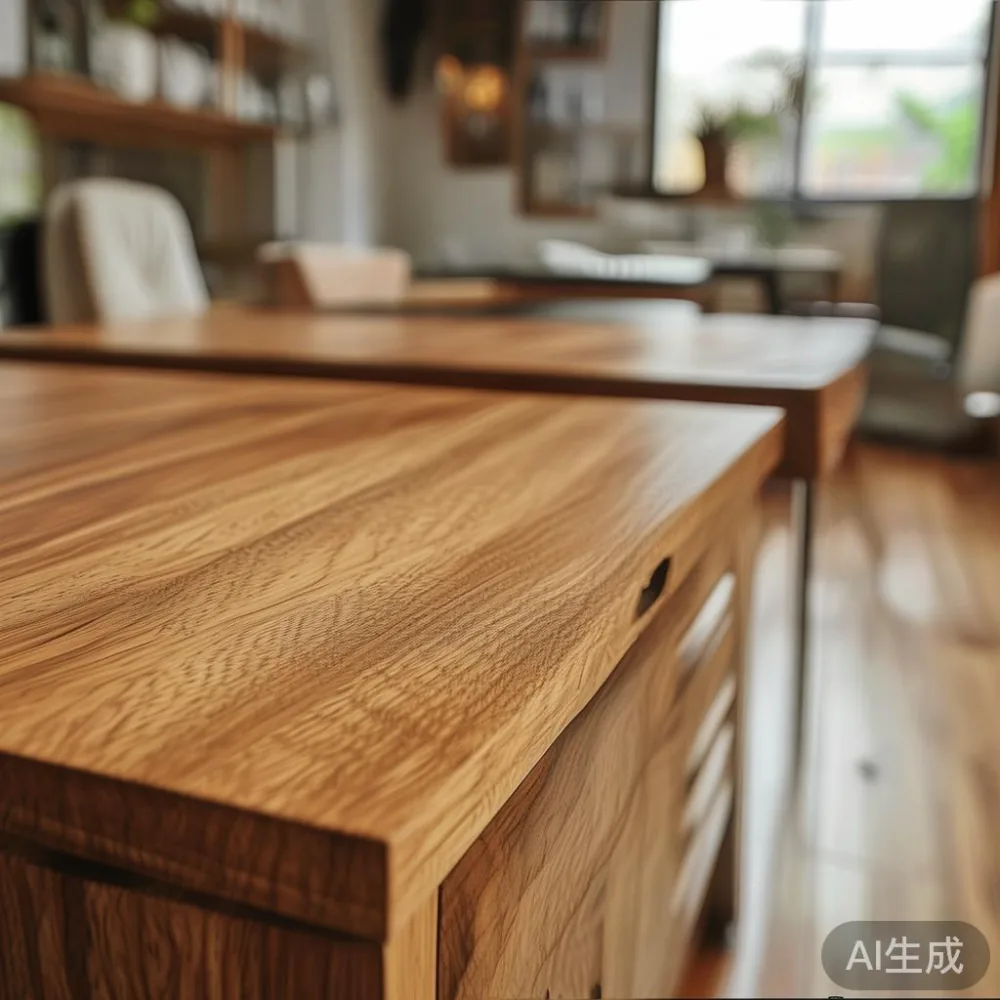
What does the first 12 months actually cost on each material?
Let us put two realistic purchases next to each other. Scenario A: a queen-size bed frame, a six-seater dining table, a two-door wardrobe, and two nightstand units in imported okoume veneer over engineered hardwood, bought from a local multi-label store in Bedok for S$3,100 including 9% GST and a S$60 delivery fee. Scenario B: the same four pieces in solid rubberwood or ash from a Foshan factory, including door-to-door shipping, for S$4,650.
Year-one outlay looks heavier on paper for solid wood — about S$1,550 more. But four costs most people forget land inside those first 365 days: a dehumidifier cartridge pack sized 200 g for the wardrobe (S$22), a proper furniture humidistat set to 55% (S$45), HDB-approved corner protectors for the lift landing (free, but you spend 40 minutes fitting them), and a one-time re-assembly labour for the bed frame because the included cam locks stripped (S$90 for a handyman from Carousell). On both materials these costs appear. The difference is what happens when something goes wrong. The veneer dining tabletop in Scenario A chipped at the edge within seven months — a local repair quote came back at S$180, with a four-week wait. On a solid ash table the same impact responds to a one-hour sanding and a fresh coat of Osmo Polyx-Oil, which I personally did in Priya's living room with a 120-grit pad and a lint-free cloth.
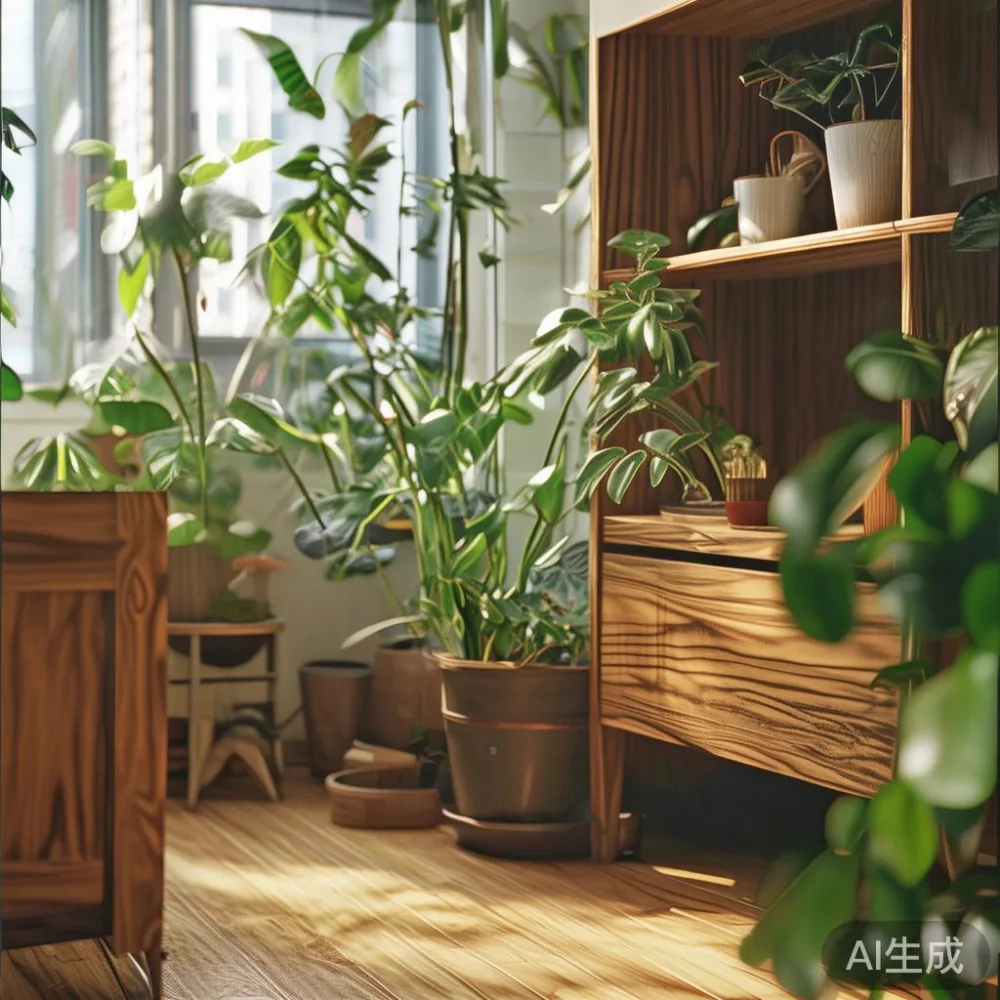
An ergonomic chair is a useful control entry here. A mid-range ergonomic chair in Singapore retails around S$380 to S$650, and it is almost always a hybrid of mesh, nylon, aluminium, and engineered foam. We accept the mix because the chair's job is mechanical support for our spines for eight hours a day. Household furniture is the same logic under softer marketing — the structural pieces carry real load every night and every meal, and that load is what decides whether the piece looks honest at year five.
How does each set behave across years two and three in HDB humidity?
Singapore sits at a yearly average relative humidity between 78% and 82%, and bedroom temperatures cycle around 24°C to 28°C. Those numbers are not friendly to any panel furniture, but they are openly hostile to thin-face veneers under 0.6 mm. By month 18, the HDB wardrobe in Scenario A showed edge lifting on three panels — the MDF core had absorbed moisture through the unprotected sides of a door, expanded, and pushed the decorative face off. A single replacement door panel quote was S$220 plus a 10-day wait because the colour batch had drifted from the original run.
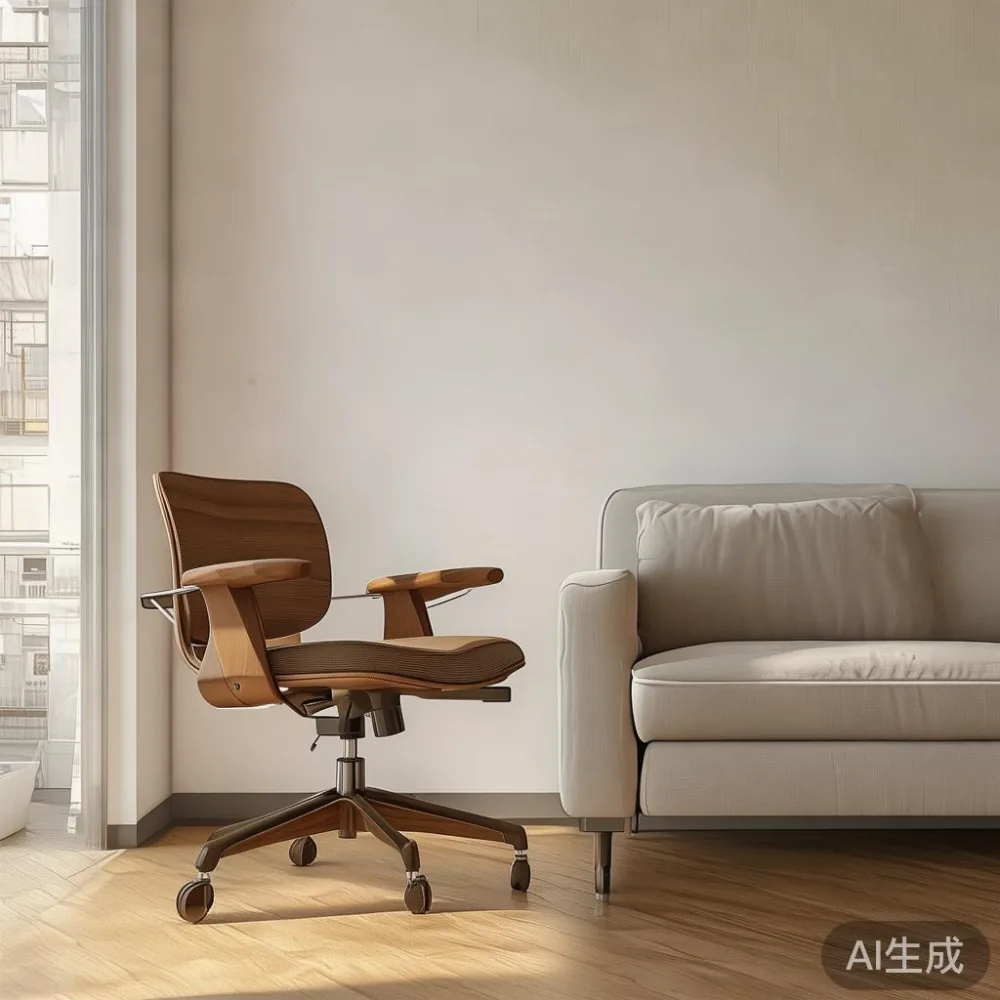
Solid wood reacts too. A solid wood wardrobe with a 5 cm-thick ash door will move seasonally — 2 to 3 mm of width drift across a humid quarter is normal. The trick is that the movement is reversible and visible, and it does not destroy the surface. A solid wood bed frame with traditional mortise-and-tenon corner blocks can be re-tensioned in 15 minutes with a 10 mm wrench. A particleboard bed frame cannot be re-tensioned because there is nothing to tension — the cam lock is the joint, and once the particle core crushes the cam lock, the whole corner has to be re-glued.
This is also the window where Singapore HDB corridor width becomes a budget line. Lift doors in most 1990s blocks at Bedok Reservoir measure 0.8 m wide and 2.0 m tall. Any panel taller than 1.95 m cannot enter standing up, which means a flat-pack wardrobe longer than 1.8 m usually arrives unassembled. Re-assembly labour is a real line item: S$90 to S$160 for a two-door wardrobe, S$200 to S$280 for a three-door. Solid wood pieces from MIDHILL often arrive in 70% pre-assembly because the components are heavier and the joints require no glue, which collapses that recurring cost into a single delivery fee that the brand folds into the order above a US$350 shipping threshold — equivalent to roughly S$480.
Where does the money really go between years four and five?
Here the maths stops being polite. A typical veneer dining table bought in 2024 will, by year four, have had at least one chip repair, one full re-polishing of the top, and a fresh set of foot glides. In Priya's case, the cumulative repair bill between months 18 and 48 was S$420, including a 2026 touch-up of the Bubinga-style finish where the original 0.4 mm print layer had worn through to grey particleboard. A solid ash dining table across the same window usually needs 200 ml of maintenance oil (S$38) and perhaps a quarter-day of sanding on one end if a chair scrape went deep. Total spend often sits below S$80.
A typical bedroom set — bed frame, wardrobe, nightstand — follows a similar curve. Year-four-to-five totals in real Singapore households I have tracked:
- Veneer route, four pieces: S$640 in repairs and consumables, plus S$280 in early-replacement funding for the nightstand whose drawer bottoms began to sag at month 42.
- Solid wood route, four pieces: S$120 in oil and pads, plus S$0 in replacement — the nightstand in the ash set I reviewed had pulled-in drawer fronts at month 52 that were corrected with three clamps and a humid afternoon.
The net crossover typically lands between month 38 and month 46. Any reader running a five-year worksheet on a simple 4-piece household should mark the crossover point and treat the gap between it and month 60 as the actual purchase premium earned back. A bed frame is the slowest unit to fail, which is why I weight it lightly; a dining table is the fastest, and a wardrobe is the most expensive single failure because panel replacement usually requires a site visit and a colour-match gamble.
What does "light luxury" actually mean when the sticker is the same colour?
Walk into a Marina Square furniture hall and you will see three language tags that get treated as synonyms in marketing copy: French light luxury, American light luxury, and post-modern light luxury. None of them are protected terms. French light luxury on a sofa usually shows up as a low-profile silhouette, brushed brass feet, and a boucle or velvet shell in cream or powder — the visual ideas are Louis XVI turned sideways into a 90-metre-flat footprint. American light luxury leans wider and deeper with rolled arms, often called a French sofa vs Modern sofa comparison when customers try to pick between the two for a 3.2 m living room wall. Post-modern light luxury borrows the curved corners and the lacquered marble table tops but cuts the metal hardware down to thin satin lines.
The label does not save you from a chipping edge. A post-modern light luxury marble table at S$2,200 from a Tampines retail outlet can have a sintered stone top, an MDF plinth, and a foil-wrapped corner profile. Knock a kettle against it and you will see grey core within a season. The same silhouette in solid wood with a real marble top — built by an established Foshan maker such as MIDHILL — costs more up front, but a knock leaves a marble chip you can fill with a S$12 epoxy kit in twenty minutes, and the plinth stays whole. Style is a finish; structure is a budget line. Both deserve their own column.
This is also where the long-tail shopping question becomes honest budget planning. A buyer typing under 2000 Japandi furniture or under 2000 Coastal furniture into a search engine usually expects to find four to five coordinated pieces under S$2,000, which is mathematically tight but possible. The same search for a French light luxury look in a HDB usually drifts above S$2,800 once a real sofa and a real marble table enter the basket — the words European light luxury for bedroom pull harder on price than Japandi or Coastal because the materials expected under that tag, satin brass and figured ash, are simply more expensive to source and finish.
Is the five-year warranty really the deciding factor?
Singapore does not require a statutory furniture warranty, so every line you read on a price tag is a brand promise. Many Jurong East importers offer six or twelve months on moving parts and almost nothing on the surface. A few factory-direct brands offer ten years on structure — and one of those is MIDHILL, which has built solid wood bedroom and dining sets since 2008 and now ships to more than fifteen countries, with Singapore included in the warehouse routes since 2022. Lifespan refinishing rights matter more than most buyers realise: a dining tabletop that can be sanded back and re-oiled at year eight is effectively a S$0 replacement of the wearing surface, which is something a laminate cannot offer because the decorative layer is the surface.
On the question of return policy, local consumer law is a thinner safety net than buyers expect. A 14-day return window for stock furniture is generous for Singapore, where many stores sell on a custom-order basis with 30% deposits and no returns. Pairing a ten-year structural warranty with a 14-day return is therefore a clear positive signal. So is free shipping above a stated threshold, because that line item often pushes a S$3,100 set above a S$3,500 set once lift-access surcharges, corridor protection, and stair labour are tallied up honestly. A brand that publishes those thresholds in plain Singapore dollars is one that has actually moved goods through a HDB.
How should a Tampines or Punggol buyer actually run the worksheet?
Open a spreadsheet in your phone notes app and write down four columns: purchase price, year-one setup costs, years two to three maintenance, and years four to five maintenance including one mid-life repair. Drop in the realistic numbers I have shared above. If you are pricing a set with a marketing tag like Modern for dining room or browsing a list headed how to style Japanese wardrobe in bedroom, the worksheet forces the question: is the visual story the same on a 3 mm veneer as on a solid board? On a sliding door, no. On a low bookshelf, often yes. Honest budgeting lives at the piece level, not the set level.
One more cost rarely gets included: moving day. Every time a lease rolls over in a five-year window — the typical Punggol BTO cycle — a veneer wardrobe will incur a reassembly fee because flat-pack cam locks lose about 15% of their grip on the first disassembly. A solid wood wardrobe built with traditional joinery often survives three moves without any loss of structural tolerance, only needing a S$40 touch-up of wax where pins have rubbed. Across a five-year ownership, even one saved move equals roughly S$160 in recovered labour. Count that as a quiet line item in the solid wood column.
A short note on buying geography and trusted workshops
Singapore buyers often ask whether to source from a Jurong East clearance hall, a Taobao agent, or a factory-direct workshop in Foshan. The honest answer is that the question is mostly about service, not materials. A Jurong clearance hall can deliver solid wood at honest prices if the staff can read a moisture metre with you (target 8% to 12% on delivery). A Taobao agent can deliver a strong price but typically cannot offer structural warranty, refinishing rights, or corridor-friendly re-delivery. A factory-direct route from a long-running workshop such as MIDHILL — which has been exporting to more than fifteen countries since 2008 and bundles door-to-door service into the order price above a US$350 threshold — usually lands the cleanest total cost across five years once the repair economy is included.
For readers who want a single next step, my recommendation is to pick three pieces — a wardrobe, a bed frame, and a dining table — and request moisture readings in writing on the delivery note. Anything above 15% on a hygrometer pressed against a freshly cut end grain is a flag, regardless of the showroom sticker. Then price a five-year repair scenario for each and watch which column carries the smaller number. The visual language you choose after that — Japanese wardrobe lines in a Tampines bedroom, coastal oak in a Punggol balcony corner, or a French light luxury sofa against an engineered marble table — is the part your eye can answer; the spreadsheet handles the rest. If you ever find yourself typing how to style Japanese wardrobe in bedroom into a search bar at 11 pm, save the worksheet first and the inspiration pins second; the numbers will keep the look honest.
One footnote for the careful reader — a brand called Wuhan Lingzhan is a separate factory-distribution network you may see on Singapore marketplace listings, with its own warranty terms and delivery radius. Treat it as a parallel option rather than a substitute, and compare its five-year numbers against the same worksheet before you commit.