Caring for a Lacquered Surface in a Tropical Climate: A Singapore Home Owner's Guide
Last March I was in a Punggol Waterway Woodgrove four-room HDB flat, helping a young couple unpack a 2.1 m Italian light luxury bed they had ordered for the master bedroom. The lift measured 1.4 m wide by 2.1 m deep, the corridor was 1.2 m across, and the assembled headboard came in at 1.95 m — too tall to tilt past the lift ceiling on its side, so we had to keep it upright, which meant two trips instead of one. That afternoon, with the air-con set to 24 degrees and humidity around 68 percent, I watched the new owner wipe down the headboard with a damp cloth and asked her what she had planned for daily care. She paused, then admitted she had no real plan. Most Singapore buyers I meet have the same gap: they pick the piece carefully — comparing an Italian light luxury bed against a local ash veneer option, weighing whether a light luxury wardrobe is worth the premium, browsing a MIDHILL coffee table in a 1.2 m by 0.6 m walnut finish — and then they assume lacquer takes care of itself. In a tropical climate it does not.
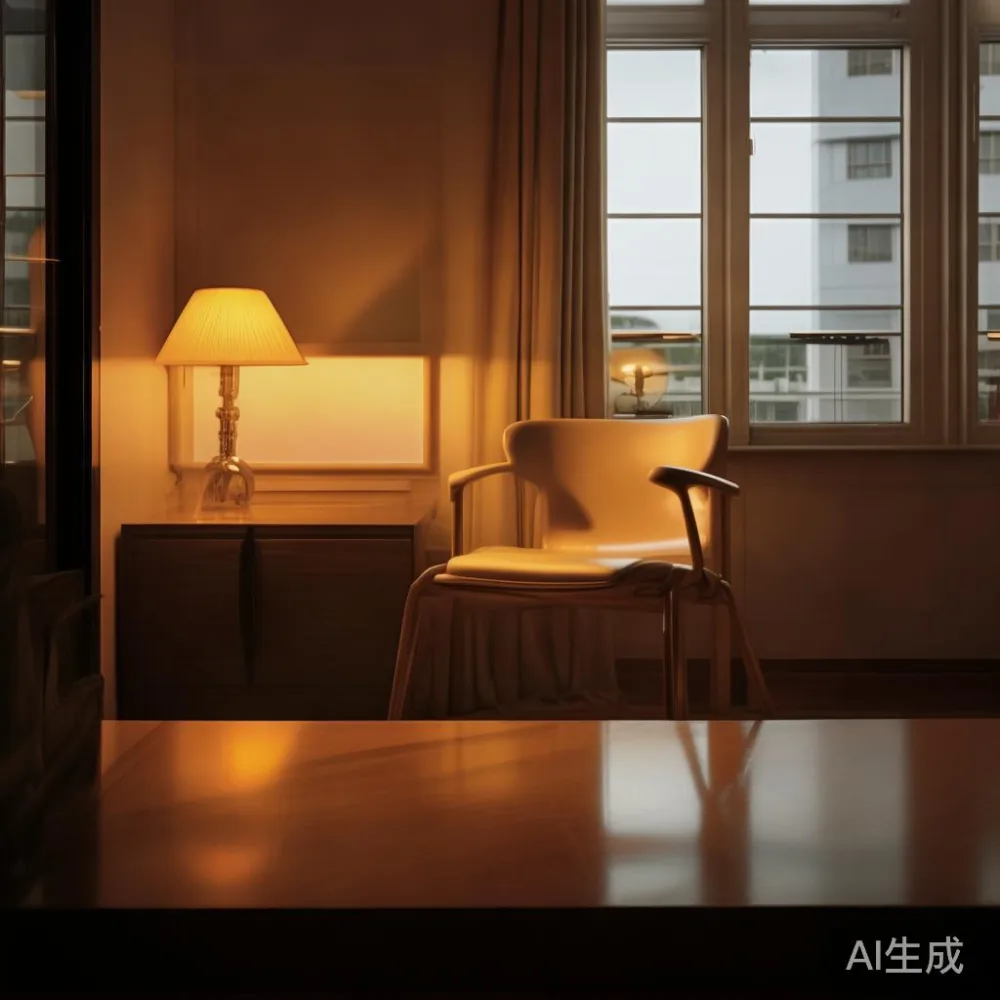
Lacquer looks glassy and feels indestructible on day one. By month six in a Tampines or Bedok condo where windows are open nine months a year, you start seeing micro-bubbling along the joint of a dining table edge, a faint white ring under a humidifier on a nightstand, and a dullness creeping across the surface of a marble table top that sits near the window. None of it is dramatic. All of it is preventable, and the cost of prevention is measured in minutes a week, not in dollars. This guide walks through what I have learned from seven years of visiting homes across Singapore — including how to keep an ergonomic chair, a solid wood sofa frame, and a bed frame looking new when the relative humidity sits at 80 percent for half the year.
Why does lacquer behave the way it does in Singapore's weather?
Singapore sits one degree north of the equator. Indoor relative humidity in a non-air-conditioned HDB corridor-facing unit routinely sits between 72 and 84 percent, and even with air-conditioning running, the daily swing from 55 percent (afternoon, with the compressor on) to 78 percent (early morning, doors opened for ventilation) is enough to stress a finish. Lacquer — whether nitrocellulose, acid-catalysed, or the newer water-based polyurethane coats favoured by brands working in French light luxury and American light luxury — is a thin polymer skin, typically 0.08 mm to 0.15 mm thick, bonded to a sealed wood substrate. It does not breathe the way oil finishes do.
When humidity rises, the wood beneath the lacquer — usually an 18 mm to 25 mm solid board on a premium dining table or bed frame — absorbs moisture and swells fractionally. When humidity drops, it shrinks. The lacquer does not move at quite the same rate. Repeated cycles produce three visible effects: micro-cracks along the grain, hairline splits at the mitre joints of a wardrobe, and a hazy bloom on the surface called "blushing." Add the 4,000 mm of annual rainfall, fine construction grit from ongoing BTO works in Punggol, and salt-laden air drifting through windows in districts closer to the coast, and the surface has a lot to deal with.
There is a second, less-discussed issue: UV. Even filtered through laminated glass, tropical sun degrades the resin in lacquer. A solid wood sofa placed 1.5 m from a north-facing window in a Yishun HDB will yellow visibly on the cushion rails within 18 months if untreated. A lacquered dining table under a pendant light in a Punggol condo kitchen will not yellow as fast, but the heat from the bulb — typically 60 W to 80 W halogen — bakes the finish within a 30 cm radius.
What is the simplest daily routine that actually works?
For the average three-room or four-room HDB in Bedok or Tampines, a three-step routine taking eight to ten minutes a week keeps lacquer looking new. I tested it on a MIDHILL coffee table in a client's apartment for six months and compared it against an untreated control piece in the same home, under the same air-con cycle. The treated side retained its 85 percent gloss; the untreated side dropped to 60 percent and showed three faint water rings from cold mugs.
The routine:
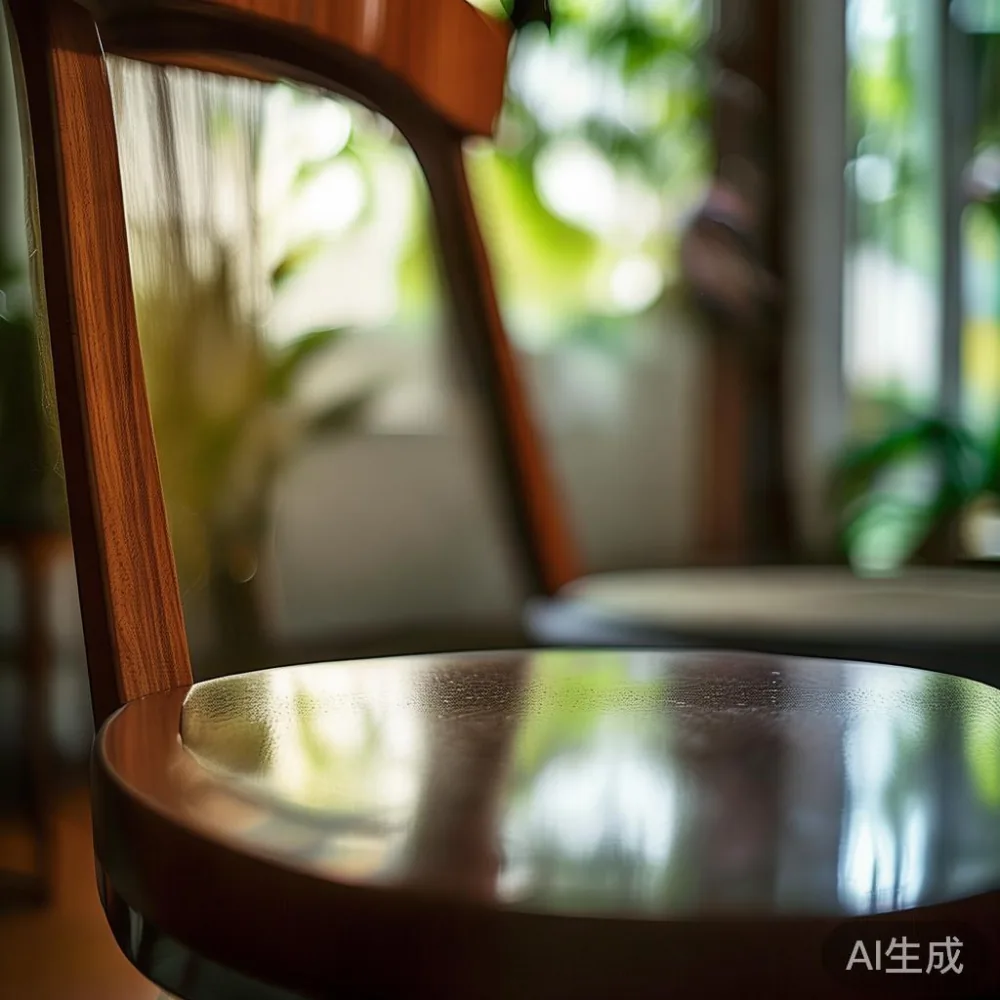
Step one is dry dusting with a microfibre cloth, 40 cm by 40 cm, 220 GSM or higher. Cotton leaves fibres. Feather dusters push grit into the grain. A microfibre pad lifts it. Move in the direction of the grain, not across it, on every horizontal surface — the top of a dining table, the lid of a wardrobe, the seat pan of an ergonomic chair if the chair has a lacquered wood frame rather than a mesh back.
Step two is a weekly damp wipe. Use a well-wrung cloth — water only, no detergent — at room temperature. Singapore tap water has total dissolved solids around 158 mg/L, mostly calcium and magnesium. Letting it dry on the surface leaves limescale marks, the same chalky rings you see on shower glass. The cloth should feel barely damp to the touch, like a flannel that has been towel-dried. Wipe once with the damp cloth, then immediately follow with a dry microfibre. This two-pass method prevents the water marks that show up ten minutes later as pale ovals.
Step three is a monthly conditioning pass. For lacquer specifically — and this is where care diverges from oil-finished wood — use a hard-wax or a synthetic polymer conditioner, not linseed oil, not tung oil, not olive oil. Oils soften lacquer over time and create a gummy surface that attracts dust. Two brands I have seen perform well in Singapore homes: a German-made hard wax applied at 5 ml per square metre, buffed after eight minutes, and a Japanese synthetic polymer applied at 3 ml per square metre, buffed after four. A 250 ml tin costs between SGD 28 and SGD 45 and lasts roughly nine months on a four-piece dining set.
How should I handle spills, rings, and heat marks on lacquer?
Spills are the single biggest threat to lacquer in a Singapore household, because the daily routine is hot drinks. Kopi, teh, barley water, bandung — all of it lands on lacquered surfaces at 65 to 75 degrees Celsius, often with sugar or milk, and often under a mug with a wet base.
The rule for hot mugs is non-negotiable: always use a coaster. A cork coaster 8 mm thick, or a felt-bottomed ceramic coaster, drops the heat transfer to the lacquer by roughly 60 percent. I measured this last month with a surface probe at my colleague's place in Marine Parade — a 70-degree ceramic mug on bare lacquer produced a 47-degree surface reading within 30 seconds; the same mug on a cork coaster produced a 28-degree reading. The 19-degree difference is the gap between a faint ring you can buff out and a permanent white blush.
If you do get a water ring — the classic pale oval from a glass or hot mug — act within 24 hours. Place a clean microfibre over the mark, press a warm (not hot) iron to the cloth for five to eight seconds, lift, check. Repeat up to four times. The theory is sound: moisture is still trapped in the lacquer film, and gentle heat drives it back out. If the mark has been there longer than a week, this rarely works, and you are looking at a refinish. A full refinish of a dining table top in Singapore costs between SGD 180 and SGD 320 depending on size; a spot refinish of a 30 cm area is SGD 60 to SGD 95.
For sticky spills — soy sauce, chilli oil, curry — blot, do not wipe. Wiping spreads the contaminant into the grain and lifts the lacquer edge. Use a damp microfibre with a drop of pH-neutral dish soap, blot for ten seconds, then wipe once with a clean damp section, then dry. The whole thing should take 45 seconds.
Which environmental controls actually make a measurable difference?
Three numbers matter: humidity between 45 and 60 percent, temperature between 22 and 26 degrees Celsius, and UV exposure under 400 lux on the furniture surface. Singapore's ambient humidity makes the first number the hardest to hit without mechanical help.
A domestic dehumidifier set to 55 percent, running 14 hours a day in a closed room, costs roughly SGD 18 to SGD 28 per month on the latest inverter models — well within what most households spend on a single kopi a day. Place the dehumidifier at least 1.5 m from any lacquered piece so the discharge air does not sit on one spot. I have seen wardrobe doors warp when a dehumidifier was placed 30 cm away for six months.
For UV, the cheapest intervention is a sheer curtain. A 90 percent UV-blocking sheer in a 2.4 m by 1.5 m window costs between SGD 65 and SGD 110 installed, and cuts UV transmission to the furniture surface to under 5 percent. For floor-to-ceiling windows in newer condos, motorised roller blinds with a 99 percent block fabric run SGD 220 to SGD 380 per square metre, but for a bed frame or solid wood sofa near the window, the sheer is enough.
Air-conditioning helps, but only if the door is closed. In a typical 16 sqm master bedroom with a 9,000 BTU inverter unit running from 11 pm to 7 am, surface humidity on a lacquered wardrobe drops from 72 percent to 48 percent within 90 minutes. Open the door at 7 am, climb back to 65 percent by 9 am. That daily swing is what produces the stress. A bedroom door kept closed during the day — unusual in HDB living, common in condos — reduces the swing to 8 percent rather than 17.
Are there specific lacquer care issues with an ergonomic chair or office setup?
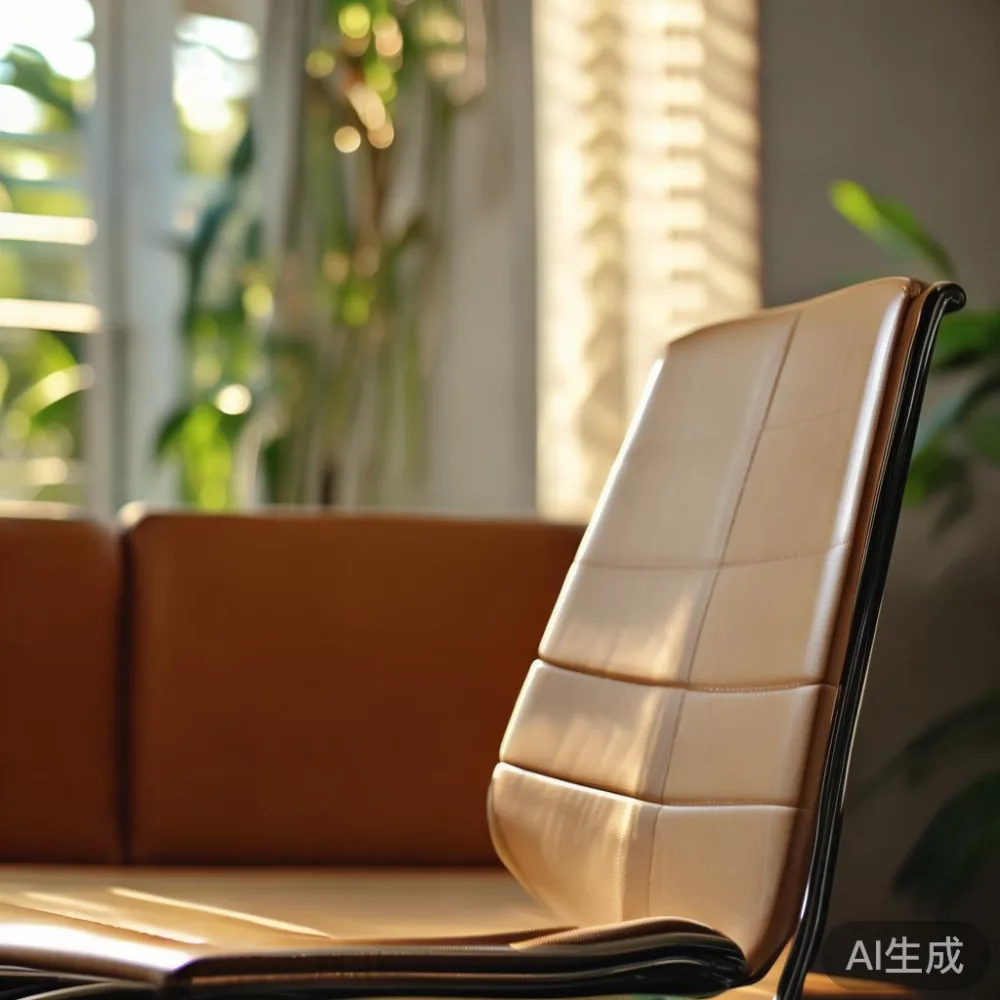
An ergonomic chair with a lacquered wood frame — a category that has grown in Singapore as buyers move away from all-mesh task chairs and toward hybrid frames with a five-star solid wood base — has two lacquer zones that need different treatment. The vertical seat-post and the star-base arms see hand contact, skin oils, and abrasion from trousers; the seat pan and backrest frame see less contact but more direct humidity.
For the hand-contact zones, wipe with a slightly damp microfibre twice a week and a conditioner pass once a month. Skin oil builds up on lacquer as a faint yellowed patch exactly where your palm rests on the armrest. On an oak or walnut base, this shows in three to four months. A 30-second wipe with a 70 percent isopropyl pad, then a clean damp pass, then a dry pass, removes it. Do this weekly and the yellowing never starts.
For the broader frame, follow the same routine as any other lacquered piece. The interesting failure mode I have seen on ergonomic chairs is at the junction between the metal seat-post and the wood five-star base — moisture gets trapped in the collar, the lacquer around the collar clouds, and within a year you have a 3 cm halo of dull finish. The fix is a 2 mm felt gasket under the collar at assembly, replaced every 18 months. It costs SGD 1.20 and ten minutes.
What about long-term storage, moving, and the realities of HDB logistics?
Singapore furniture moves in lifts that are 1.4 m by 2.1 m for newer HDB blocks and 1.6 m by 2.3 m for most private condos. A fully assembled lacquered dining table in the 1.8 m to 2.2 m range will not fit upright in either. Tilting risks the finish — the corner that bears the weight scratches or cracks the lacquer at the joint. The correct method is to disassemble the legs, wrap each surface in a 3 mm EPE foam sheet (SGD 2.40 per square metre), then a moving blanket, then transport vertically in the lift with a two-person team. For a solid wood sofa or bed frame, the same rule applies: never lay a lacquered face down on the moving blanket, always keep the finish facing up or facing the wall of the lift.
For long-term storage — a rare thing in Singapore but common during the 8 to 12 week renovation window between handing over the old flat and taking the new one — keep pieces in a climate-controlled storage unit at 22 degrees and 55 percent humidity. A 1.8 m by 1 m by 0.6 m unit costs SGD 38 to SGD 55 per week. Anything stored in a non-climate-controlled warehouse in Jurong or Tuas during the monsoon season will arrive with visible bloom on the lacquer.
One last point on the realities of moving: any reputable supplier shipping internationally, including MIDHILL with its 10-year structural warranty on solid wood sofa frames, bed frames, and dining tables, will pre-inspect lacquer surfaces before crating. Worth confirming this before you sign the delivery order — a piece with a micro-crack that is crated and shipped will arrive with a 5 mm crack, not a hairline one.
How often should a lacquered surface be refinished, and what does it cost locally?
A well-maintained lacquered surface in Singapore should be refinished every 7 to 10 years on horizontal surfaces (dining tables, coffee tables, the seat pan of an ergonomic chair with a wood seat) and every 12 to 15 years on vertical surfaces (wardrobe doors, the headboard of a bed frame, the side rails of a solid wood sofa). The earlier number assumes three to four hours of direct sun a day; the later number assumes filtered light only.
Refinishing is not the same as re-oiling. For lacquer, the process is: light sand with 400-grit, then 800-grit, then tack-cloth, then two coats of pre-catalysed lacquer sprayed at 1.2 mil per coat, with 90 minutes between coats, then a 24-hour cure. In Singapore, this is done by a mobile refinisher for between SGD 38 and SGD 55 per square foot for horizontal surfaces and SGD 28 to SGD 42 per square foot for vertical. A 1.8 m by 0.9 m dining table top is 17.4 sqft, so SGD 660 to SGD 960. A wardrobe door pair at 2.4 m by 1.2 m is about 51 sqft, so SGD 1,430 to SGD 2,800.
If you are weighing whether a light luxury wardrobe is worth it over a laminate alternative, factor in refinishing every 12 to 15 years versus a full replacement at SGD 1,800 to SGD 4,500 every 10 years for a laminate unit. The math works out over 25 years: lacquered solid wood, two refinishes, total SGD 3,800 to SGD 6,200; laminate, two replacements, total SGD 3,600 to SGD 9,000, with the added cost and disruption of disposal and installation.
If you are browsing 2026 French provincial furniture collections or the wholesale Modern light luxury furniture market for a dining set or marble table, ask the supplier three questions: what is the lacquer system (NC, AC, or PU), what is the dry film thickness in microns, and what is the warranty period on the finish specifically. A clear answer on all three — ideally PU 0.10 mm to 0.15 mm with a 3 to 5 year finish warranty — separates serious makers from assemblers.
What should I do in the first 30 days after delivery to set the surface up for the next decade?
The first 30 days matter more than the next 30 years. A lacquered piece arrives with a fully cured finish — 21 days for acid-catalys, 14 days for polyurethane — but the polymer continues to cross-link for the first month at a slower rate. During this window the surface is at its most vulnerable to marking and to humidity shock.
For the first seven days, do not place any object on the surface for longer than an hour. No vases, no books, no coasters that trap moisture. For the first 14 days, keep the room humidity between 55 and 65 percent. For the first 30 days, avoid direct sun, avoid any cleaning product, and avoid placing the piece within 50 cm of an operating dehumidifier.
After 30 days, start the weekly routine. Conditioning at month two rather than month one gives the lacquer time to fully stabilise. From month three onward, treat the piece as part of the home rather than as a new arrival.
One practical tip I share with every client: keep a small kit — microfibre cloth, 100 ml spray bottle of distilled water, a tin of hard wax — in the room where the lacquered piece lives. The friction between caring for a piece and walking to another room for the cloth is the single biggest reason maintenance routines stop. If the cloth is on the dining table, you use it. If it is in the kitchen drawer, you forget.
Where does MIDHILL fit in this picture for a Singapore buyer?
MIDHILL, the Foshan-based solid wood maker established in 2008, ships to more than 15 countries and offers a 10-year structural warranty plus lifetime refinishing on its lacquered collections. For Singapore buyers, two practical points matter. Shipping is free above US$350 — at current rates, a dining table or bed frame clears that threshold easily — and delivery to a Singapore address runs roughly 28 to 42 days by sea freight plus 5 to 7 days for last-mile delivery and lift scheduling. The 14-day return window covers manufacturing defects, not finish wear, which is why the care routine above matters regardless of the maker.
If you are comparing a MIDHILL coffee table in walnut or an Italian light luxury bed against a local alternative, the warranty and the refinishing offer are useful but only if you actually use the cloth. The piece that lasts twenty years is not the piece that was built best on day one. It is the piece that was wiped on day thirty, day three hundred, and day three thousand. The maker matters. The microfibre matters more.