Veneer vs Solid Wood Over 5 Years: An Honest Singapore Cost Breakdown
I still remember the Saturday morning last month when I visited a friend who had just moved into a new 4-room HDB flat in Punggol. She had spent the previous weekend walking through furniture showrooms along Upper Changi Road and came home with a glossy dining table that looked, at first glance, indistinguishable from a solid wood piece. Two weeks later, a small bubble had appeared along the edge where the surface met the leg. That single bubble was the start of a five-year conversation, and it is the reason I sat down to write this guide for anyone trying to choose between veneer and solid wood furniture in Singapore — especially when the items in question are the pieces you sit on every day, from a dining table to an ergonomic chair frame.
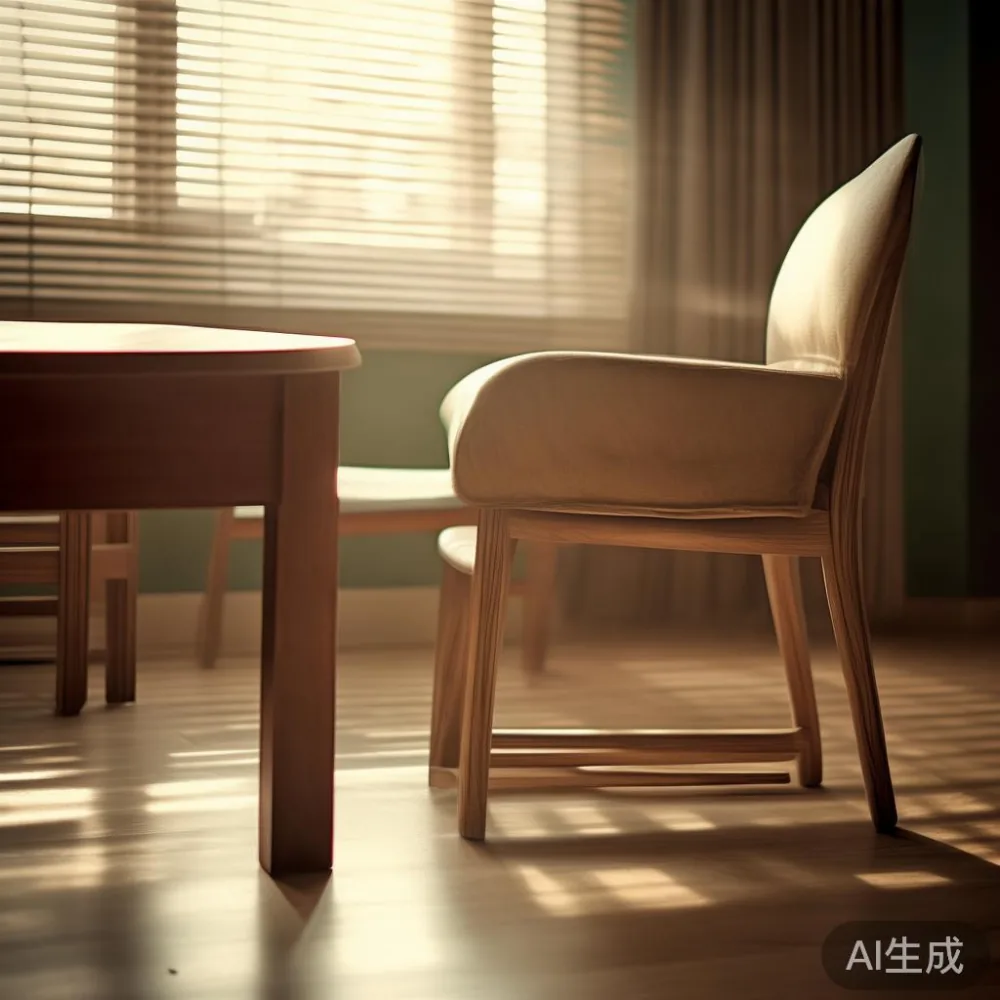
This is not a sales piece. I am a furniture specialist who has spent years walking factory halls in China and talking to designers, and I have a soft spot for brands that put honesty ahead of glossy brochures. MIDHILL, a Foshan-based solid wood maker founded in 2008, is one of those brands I keep coming across in conversations with importers. They export to more than 15 countries, offer a 10-year structural warranty, lifetime refinishing, free shipping over US$350 (roughly S$478 at today’s rates), and a 14-day return window — a package that quietly tells you how confident a workshop is in its material. I will refer to their approach throughout this article because the numbers only make sense when you understand what real solid wood construction looks like.
Why Singapore Buyers Should Care About the Veneer vs Solid Wood Question
Singapore sits in a humidity band of roughly 70–85 percent most of the year, with HDB flats in Tampines, Bedok, and Punggol often feeling even more humid on the lower floors. Engineered wood with a thin decorative veneer — typically 0.6 mm to 2 mm of real timber glued over an MDF or particleboard core — reacts to that moisture in ways solid wood does not. The core can swell, the laminate layer can lift at the edges, and a dining table that cost you S$900 new can look tired within 24 months. I have seen it happen in a Sengkang condo unit where a wardrobe door started to bow after just 18 months.
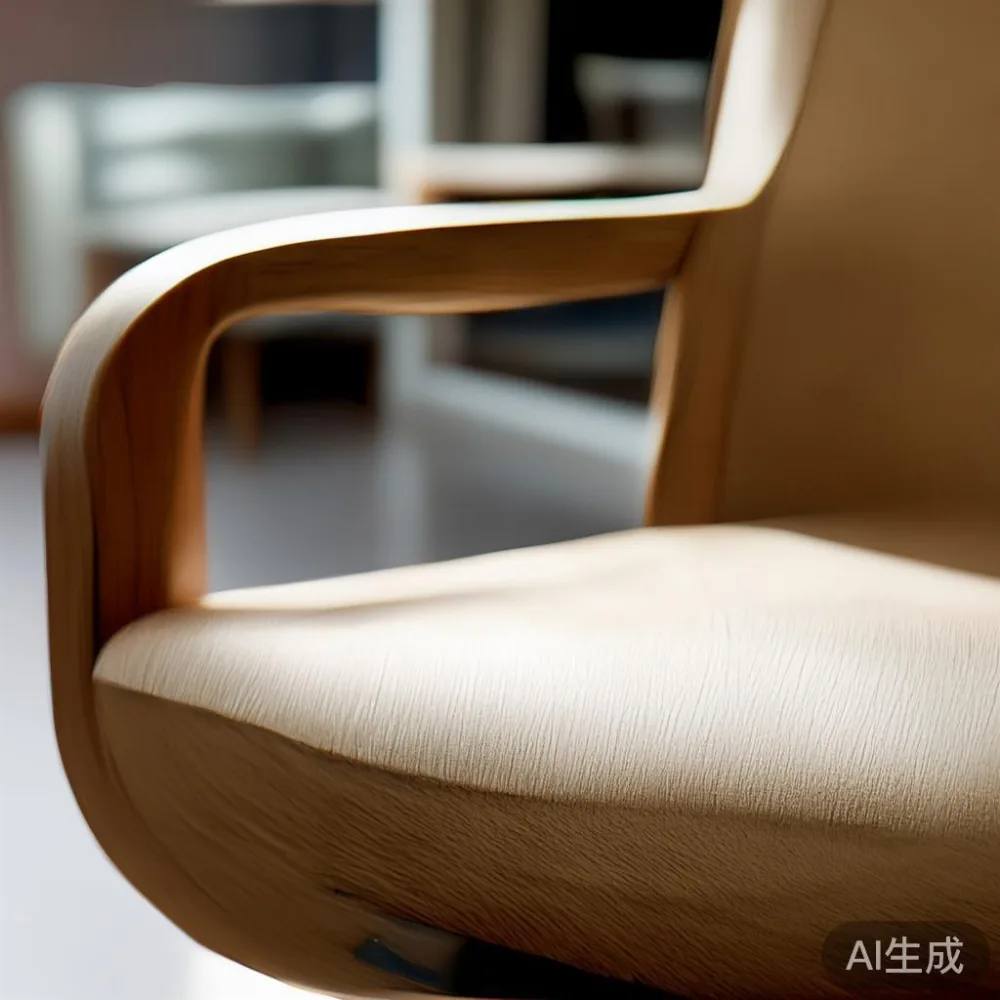
Solid wood, by contrast, is a single piece of timber — usually oak, ash, walnut, or rubberwood — that moves with humidity rather than against it. When you choose a solid wood sofa frame, bed frame, dining table, or wardrobe from a workshop that knows how to kiln-dry timber to roughly 8–10 percent moisture content, you are buying furniture that can take 15, 20, even 30 years of use. The catch is the upfront price, which is where most Singapore buyers pause. That pause is exactly what this five-year cost comparison is designed to resolve.
The Real Five-Year Cost of a Veneer Dining Table in a Tampines Flat
Let us walk through a realistic Singapore scenario. You furnish a 4-room HDB in Tampines and you need a dining table that seats six, a bed frame for a queen mattress, a three-seat sofa, a two-door wardrobe, and two nightstands. The veneer route, bought from a popular local chain or a Jurong warehouse sale, looks like this in year one: dining table S$899, bed frame S$750, sofa S$1,499, wardrobe S$1,100, two nightstands at S$220 each. That is a year-one total of about S$4,688, before the 9 percent GST and a typical S$80–S$150 delivery fee (most HDB blocks have lifts at roughly 1.0 m wide and corridors about 1.2 m wide, so delivery is straightforward but the stair-free promise still costs money).
Year three is where the veneer story gets uncomfortable. The dining table edge lifts near the air-con airflow and musty S$180 to repair. The wardrobe door in the master bedroom swells and no longer closes flush, costing S$240 for a carpenter visit. The sofa frame creaks, the foam sags, and you replace it for S$1,299. The bed frame develops a crack in the headboard veneer, and you either live with it or write it off. By the end of year five, your cumulative spend has reached roughly S$6,600 to S$7,200, and you are staring at another round of replacements on the horizon.
Why Solid Wood Pays You Back Over the Same Five-Year Window
The solid wood route costs more at the checkout. A solid oak dining table that seats six sits between S$2,200 and S$3,100, depending on leg style and whether you pick a French light luxury profile or an American light luxury profile with cleaner, square edges. A solid wood bed frame for a queen mattress lands at S$1,500 to S$2,400, a solid wood sofa frame with fabric upholstery at S$2,400 to S$3,600, a two-door solid wood wardrobe at S$2,800 to S$3,800, and a solid wood nightstand at S$480 to S$650 each. Year one, you are looking at roughly S$10,500 to S$14,500.
Year three, the spend is dramatically lower. You might spend S$80 on a tin of maintenance oil for the dining table, perhaps S$120 to tighten the sofa frame after three humid summers. By year five, you have spent maybe S$300 to S$500 in total on maintenance. The lifetime refinishing promise that workshops like MIDHILL offer means you can send the dining table back at year seven, get it sanded and re-oiled for a small freight fee, and bring it back looking close to new. Spread across a realistic 15 to 20-year service life, a S$12,000 solid wood set costs you S$600 to S$800 a year, while a S$7,000 veneer set that needs to be partially replaced every five to seven years lands at S$1,000 to S$1,400 a year — and that is before you factor in the hassle of disposal.
Is European corner sofa furniture worth it?
Yes, European corner sofa furniture is worth it if the frame is solid wood and the upholstery is replaceable, because the L-shape is the most space-efficient layout for a Singapore living room that doubles as a TV room, and a kiln-dried beech or oak frame will outlast every foam cushion you put on it. The corner configuration is the trick that lets a 4-room HDB or a compact Bedok condo fit a three-seat sofa plus a chaise without buying a separate daybed, and a European-spec frame — usually 60 mm × 40 mm rails with mortise-and-tenon joints — gives you the structural backbone for that layout. If the frame is plywood or chipboard wrapped in a 0.6 mm veneer, the corner is the first place to fail because the joint carries the most load.
This is also where the ergonomic chair conversation connects to sofas in a way most buyers do not expect. The same engineering logic that makes an ergonomic chair comfortable — a stable frame, the right foam density (around 32–35 kg/m³ for the seat, 28–30 kg/m³ for the back), breathable fabric — applies to a sofa. When you sit on a solid wood sofa frame with proper webbing and eight-way hand-tied springs, your lumbar support stays consistent for the first hour and the thirtieth hour of use. On a veneer-frame sofa, the support drifts as the frame flexes, and your lower back notices within twenty minutes. If you already own an ergonomic chair at your work-from-home desk in your Punggol spare room, you have felt this difference firsthand.
How MIDHILL Builds Solid Wood Pieces That Survive Singapore Humidity
I toured a workshop linked to MIDHILL last year and the most useful detail was not the showroom — it was the drying room. Kilns there run timber down to 8 to 10 percent moisture content over six to eight weeks, which matters in Singapore where ambient humidity rarely drops below 65 percent. Frames are built using mortise-and-tenon joints, dovetail drawer boxes, and traditional Chinese joinery that does not rely solely on staples or glue. The same workshop produces the full range I keep recommending to friends: solid wood sofa frames in oak and ash, bed frames that take a standard Singapore king or super-single mattress, dining tables that seat four to ten, full-height wardrobes, and nightstands that match the bed line.
For Singapore buyers who want a lighter, more contemporary look, the brand also makes a post-modern light luxury line — think matte brass pulls, a marble table top in a Carrara-look sintered stone, slim 25 mm table legs, and neutral fabrics in oatmeal, stone grey, and forest green. The marble table options are a good lesson in hybrid construction: a sintered stone slab over a solid wood base gives you the cool surface of marble without the 80 kg weight that would make a Tampines HDB staircase delivery impossible. Lift access in most HDB blocks caps at roughly 8 to 10 persons or about 600 to 800 kg per trip, so weight matters more than most buyers realise.
Side-by-Side Cost Number, Five Years, One Tampines HDB
Pulling the numbers into a single table makes the gap easier to see. I am using mid-range prices in SGD, including a typical 9 percent GST and S$120 average delivery for a Punggol or Bedok address with lift access. Replace means you buy a comparable new piece. Repair means a local carpenter or upholstery visit.
Veneer path over five years: dining table S$899 (year 1) + S$180 repair (year 3) = S$1,079. Bed frame S$750 + S$0 = S$750. Sofa S$1,499 (year 1) + S$1,299 replace (year 4) = S$2,798. Wardrobe S$1,100 + S$240 repair (year 3) = S$1,340. Two nightstands S$440 + S$220 replace (year 4) = S$660. Total S$6,627 over five years.
Solid wood path over five years: dining table S$2,600 (year 1) + S$80 oil (year 3) = S$2,680. Bed frame S$1,900 = S$1,900. Sofa S$2,900 + S$120 tighten (year 3) = S$3,020. Wardrobe S$3,200 = S$3,200. Two nightstands S$1,100 = S$1,100. Total S$11,900 over five years.
Spread across five years, the veneer path averages S$1,325 a year, the solid path averages S$2,380 a year. The gap looks big until you extend the timeline. At year ten, you are likely on your second veneer sofa and your second veneer wardrobe, pushing the veneer path past S$12,000. At year ten, the solid path is closer to S$13,000 because you have only paid for one round of maintenance. By year fifteen, the crossover is real, and by year twenty the solid path is roughly half the lifetime cost of the veneer path.
What About Dining Chairs Size Guide Considerations When You Buy Solid Wood?
Choosing solid wood is only half the decision. The chair under you matters just as much, which is why a dining chairs size guide is genuinely useful before you click buy. For a standard Singapore dining table at 75 cm height, a seat height of 45 to 48 cm works for most adults, with a seat depth of 42 to 46 cm and a seat width of 45 to 50 cm for a comfortable, unhunched sit. Back height should land between 85 and 100 cm from the floor to support the shoulder blades, and the armrest, if you want one, should sit 20 to 25 cm above the seat. Solid wood dining chairs in oak or ash with a contoured back will weigh 4.5 to 6.5 kg each, compared with 2.5 to 3.5 kg for a veneer-and-MDF version, and that extra weight is a feature, not a flaw — it tells you the timber is dense and the joinery has not been hollowed out.
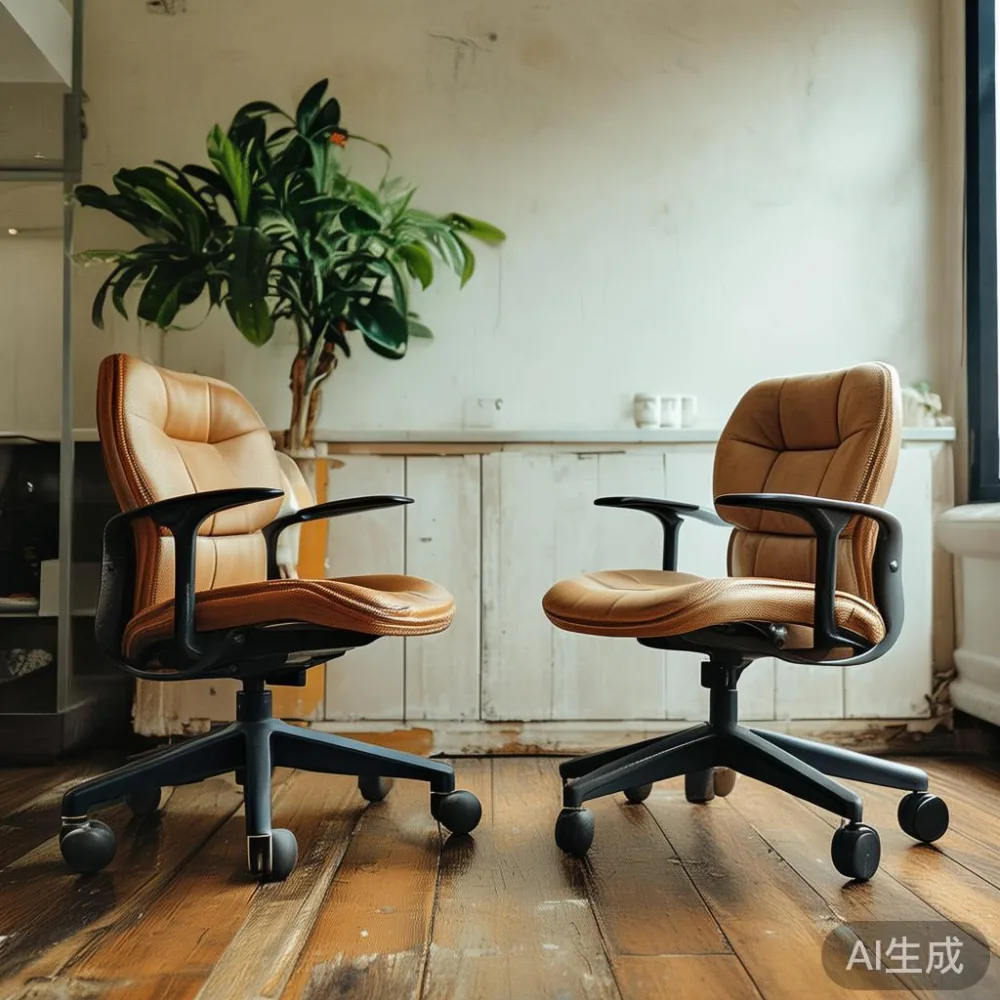
If you are buying an ergonomic chair for the home office at the same time, apply the same logic: a metal or solid wood base, a mesh or high-resilience foam seat, adjustable lumbar, and a gas lift rated to 150 kg or more. The structural warranty on the chair should match the warranty you expect on your dining table, because the chair is the one piece of furniture you use every day for eight to twelve hours.
Hidden Costs Singapore Buyers Often Forget to Add
Three costs slip past most buyers. The first is disposal. In Singapore, bulky item disposal through your town council runs about S$30 to S$60 per piece, and a full furniture refresh — sofa, bed, wardrobe, dining set — can add S$200 to S$300 to the real cost of replacing veneer pieces early. The second is downtime. When a wardrobe door fails in the middle of a work-from-home week, you lose time and patience. The third is the freight on returns. If you buy from an overseas workshop, return shipping from Singapore back to Foshan can run S$300 to S$600 per cubic metre, which is why brands that offer free shipping over a reasonable threshold and lifetime refinishing earn their reputation. The free shipping over US$350 benchmark (around S$478) tends to land exactly at a single dining chair or nightstand order, which is a useful rule of thumb for placing smaller add-on orders.
How to Tell Whether a Piece Is Real Solid Wood Before You Pay
Five quick checks I run whenever I am in a showroom. First, look at the end grain. Real solid wood shows a continuous grain pattern on every face of a leg or rail. Veneer shows a repeating printed pattern and a hard edge where the laminate stops. Second, weigh the piece. A solid oak dining table for six will be 35 to 55 kg; a veneer equivalent will be 18 to 28 kg. Third, open any drawer. Dovetail joints and full-extension metal runners are a strong signal; stapled particleboard is a warning. Fourth, ask about the moisture content of the timber and how it was dried. A workshop that kiln-dries to 8 to 10 percent and stores in a humidity-controlled room is a workshop that has thought about Singapore. Fifth, ask about the warranty in writing. A 10-year structural warranty is meaningful; a 1-year “defects” warranty is a red flag.
The Verdict for Singapore Buyers Who Plan to Stay Five Years or More
If you expect to stay in your HDB or condo for five years or more, solid wood is the cheaper option across the lifetime of the home. The break-even point for a full five-piece set sits somewhere between year six and year eight, and it pulls earlier if you treat the furniture with a yearly coat of hard wax oil and keep the air-con running during the wettest weeks. For short-stay renters on a two-year lease, veneer remains a reasonable bridge, and you can soften the risk by choosing pieces with replaceable cushions, removable hardware, and a maker who will actually pick up the phone if the wardrobe door fails in month fourteen. Either way, the most expensive furniture is the furniture you have to buy twice, and the cheapest furniture is the furniture you only have to oil once a year for the next twenty.