What to Check Before Buying a Sofa You Cannot Sit On — A Singapore Buyer’s Field Guide
Last month I visited the MIDHILL showroom in Foshan with a Singaporean couple who had flown in to shortlist a three-seater for their new Punggol Waterway HDB. The wife refused to sit on a single display sofa. Instead, she crouched, lifted cushions, knocked on frames, and read the care labels out loud. She explained: “In our flat, the sofa goes through the service door, into the lift, around a 90-degree corridor turn, then up two steps. If it does not clear that route, the comfort of the cushion is irrelevant.” That line stayed with me, because it captures a real Singapore problem: many people buy a sofa the way they buy a chair, assuming they can test it in-store and solve logistics later. The opposite is wiser. You start with the route, then the foam, then the fabric, then the frame — and only then do you think about color.
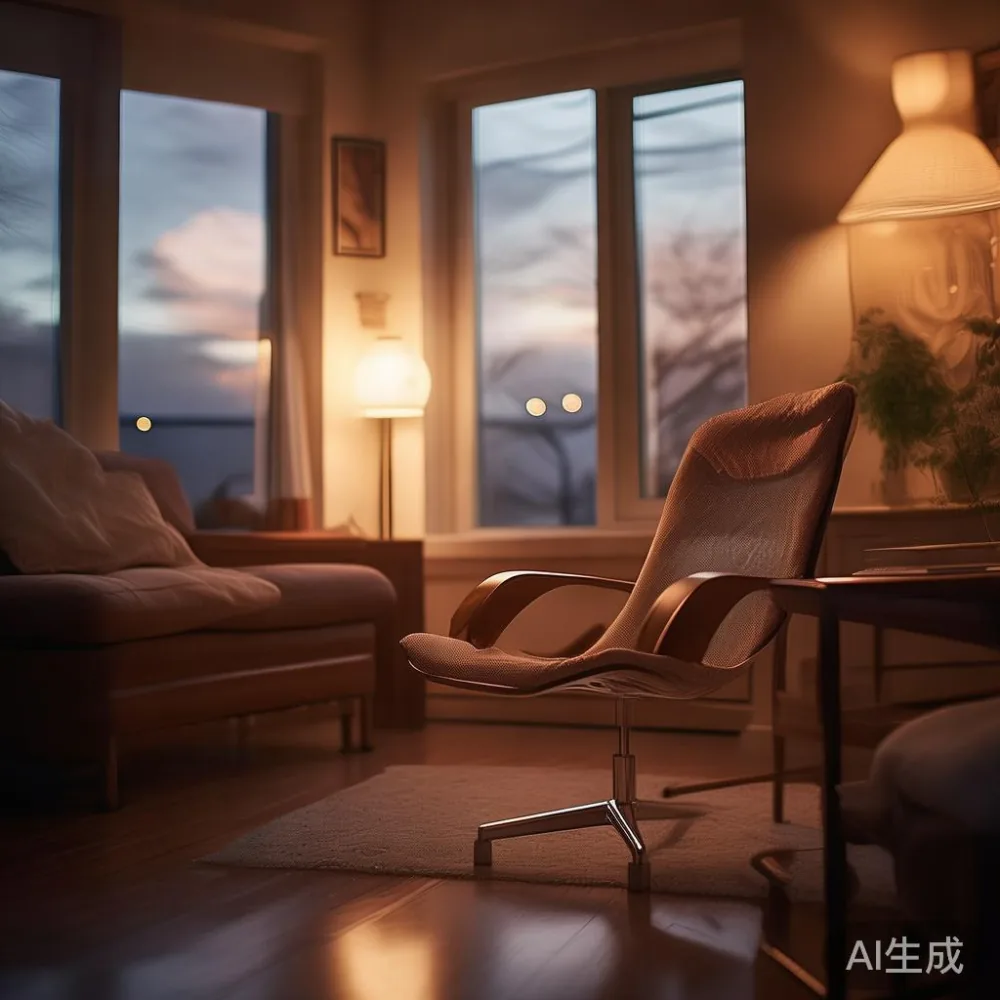
This guide is written for buyers in Tampines, Bedok, Punggol, Toa Payoh, and the newer condos around the Greater Southern Waterfront. It assumes a BTO door width of about 91 cm, a typical service lift car of roughly 1.6 m deep × 1.5 m wide × 2.3 m tall, and a HDB staircase landing that turns sharply at each level. It also assumes you want something light-luxury in mood — French light luxury or American light luxury — without paying full designer prices, and that you may already own an ergonomic chair at your work desk and want the same quality of posture support on the sofa at home. Every figure below is in centimetres, kilograms, and Singapore dollars.
How do you measure a sofa for a Singapore HDB service lift?
You measure the route, not the sofa. Take a steel tape and record, in this order: front door width (BTO: 91–95 cm; older DBSS: up to 100 cm), corridor width at the tightest turn (commonly 120–135 cm), lift door width (service lift: 90–110 cm; passenger lift: 80–90 cm), lift car internal width × depth × height, and any step at the threshold (usually 10–15 cm at HDB floor landings). The sofa’s three critical dimensions are width, the diagonal of the backrest when detached, and the packed carton size if the sofa is shipped flat-pack. A 230 cm three-seater will not fit through a 91 cm door no matter how much you twist. A modular L-shape that splits into two 140 cm halves usually will. At MIDHILL’s Foshan warehouse I watched the team photograph every packed carton with a ruler taped to the floor; that is the standard you should expect from any solid wood sofa exporter shipping to Singapore.

Do the same maths for the marble table you may want to pair with the sofa. A 140 cm round marble table weighs 80–110 kg and arrives in a wooden crate, so you need a clear path with no sharp turns and a lift rated for at least 1,000 kg. The same logic applies to a 1.8 m bed frame, a six-seat dining table, and any wardrobe over 180 cm tall. Tall items may need to be tilted; measure the diagonal against the lift door height before you commit.
What is the difference between Post-modern master bed and modern furniture?
Post-modern master bed refers to a bed frame category that mixes curved or sculpted forms, soft symmetry, and decorative detailing — such as a channel-tufted headboard, rounded corners, or a contrasting inlay on solid wood — into a piece that still functions as the centrepiece of a bedroom. Modern furniture, by contrast, follows the 20th-century modernist rule of clean lines, exposed structure, and minimal ornament, where a bed frame is usually a low rectilinear platform in oak, ash, or walnut. In Singapore bedrooms of about 12–14 sqm, the post-modern master bed tends to read as warmer and more light-luxury, often paired with a French-style nightstand and a marble-top bedside table, while the modern bed reads as cooler and is easier to coordinate with an ergonomic chair placed at a study nook. The two are not mutually exclusive; many MIDHILL designs borrow the post-modern silhouette and use modernist joinery underneath.
How do you check the frame, foam, and fabric without sitting down?
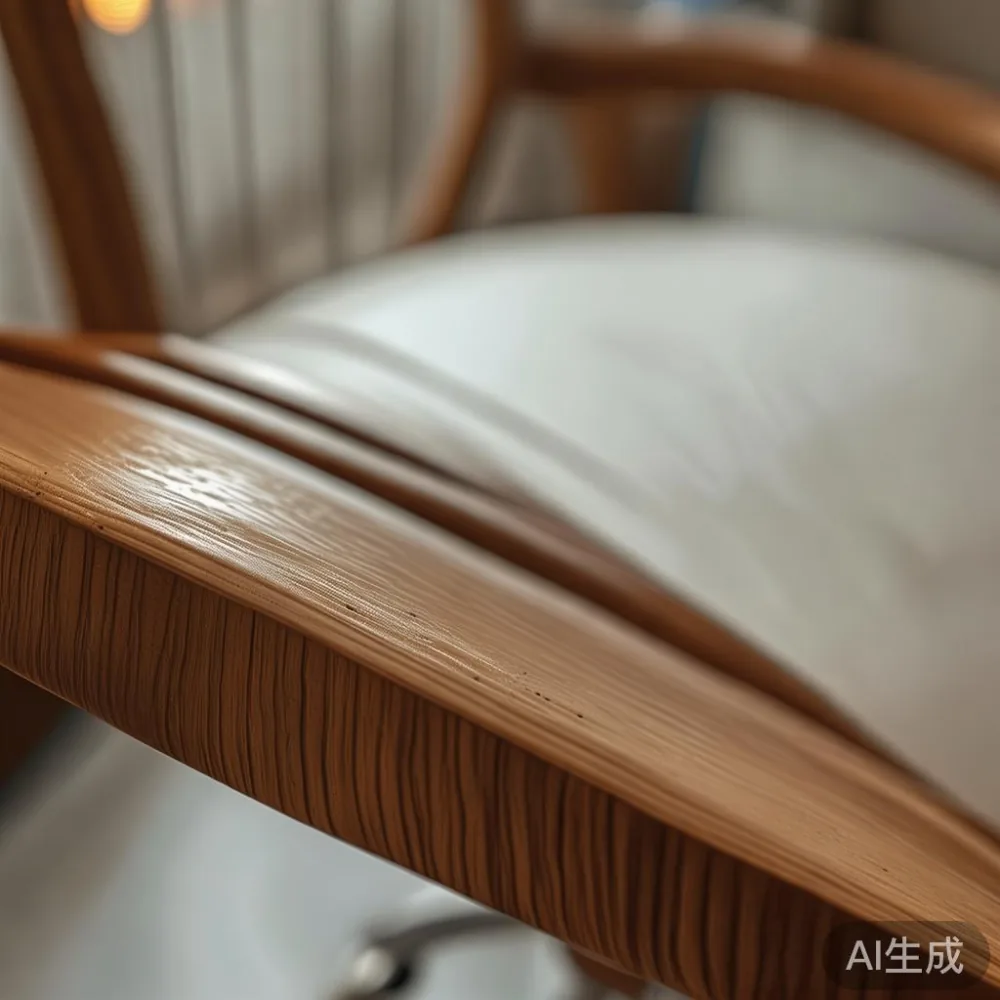
Frame first. Lift one corner of the sofa; a well-built solid wood sofa with a kiln-dried ash or rubberwood frame should feel heavy for its size — usually 38–55 kg for a two-seater and 55–80 kg for a three-seater. Knock on the frame with your knuckle; you want a dull, solid sound, not a hollow rattle. Ask to see the leg-to-rail joint; a mortise-and-tenon or dowelled joint with corner blocks beats staples alone every time. A 10-year structural warranty is a fair indicator that the maker trusts the frame; MIDHILL publishes this on its export documents.
Foam second. Press the centre of the seat cushion with an open palm for ten seconds, then release. High-resilience foam recovers in under 3 seconds; cheap foam stays dented. Density matters more than softness: 32–35 kg/m³ for daily-use seats, 28–30 kg/m³ for back cushions. If you already own an ergonomic chair at home, you know that posture support comes from foam density and frame geometry, not from how squishy a cushion feels in the showroom. Ask for the foam specification sheet; any serious exporter keeps one.
Fabric third. Run a coin gently across the weave to test pilling, drip two drops of water to test absorbency, and hold the swatch up to the window to check for skew. For Singapore’s 80–90% humidity, a removable washable cover at 40 °C is worth the small premium. If you prefer the French light luxury look, look for brushed velvet or linen-cotton blends in muted greige, sage, or oxblood; for American light luxury, expect performance boucle or a flat-weave chenille in cream, camel, or slate.
Will the sofa actually fit your corridor and lift in Tampines or Bedok?
Yes, almost any sofa will fit if you choose the right configuration. The trap is buying a 240 cm one-piece three-seater and discovering your service lift door is 90 cm wide; the sofa cannot enter the lift, and you will pay S$120–S$180 per floor for a manual hoist. Three configurations travel well in Singapore HDBs: (1) a modular sofa that splits into two pieces under 130 cm each; (2) a knock-down design with detachable legs and backrests that flat-packs into cartons of 80–95 cm wide; (3) a compact three-seater under 200 cm All told, which fits most service lifts when stood on its end. For Punggol and newer ECs with wider 1.2 m service lift doors, a 230 cm three-seater is realistic. Always request a packing list with carton dimensions before you pay the deposit.
Weight matters too. A three-seater under 70 kg total can be carried by two movers; over 90 kg you need three, and the delivery fee rises. Standard HDB delivery in Singapore runs S$60–S$120 per trip; island-wide shipping from Foshan by sea-and-truck takes 18–28 days and costs about S$280–S$450 per cubic metre, including the 9% GST on the landed value above S$400. Free shipping thresholds above S$350 are common among light-luxury exporters, so it pays to order the sofa, the matching armchair, the dining table, and a wardrobe in one shipment.
Which sofa style suits a small HDB living room without making it feel crowded?
Three styles consistently work in 14–18 sqm HDB living rooms: a low-profile mid-century inspired three-seater on tapered legs (visual airiness), a slim-arm post-modern light luxury sofa with channel-tufted backrest (vertical lift), and a French neoclassical accent chair malaysia with a curved back and cabriole legs paired with a compact two-seater. The leg height should sit at 12–15 cm so the floor is visible underneath; the arm height at 55–62 cm so it does not block sightlines across the room; the seat depth at 55–60 cm so a 170 cm adult can sit cross-legged without sliding forward. In a 12 sqm bedroom, pair the sofa style with a low post-modern master bed and a single-drawer nightstand so the eye reads one continuous palette.
Light-luxury palettes that travel well in Singapore’s flat, north-facing light: warm white (RAL 9010), putty, sage green, dusty blue, and soft oxblood. Avoid high-contrast black-and-cream in compact rooms; the contrast makes the wall feel closer. If you already own a marble dining table, repeat the marble on a small side table or coffee table to tie the room together — the same Carrara or Calacatta vein pattern works on either surface. A small wardrobe with mirrored doors doubles the perceived width of the room and reflects light onto the sofa fabric, which is why light-luxury showrooms often stage mirrors opposite velvet seating.
How much should a quality light-luxury sofa cost in Singapore?
For a solid wood sofa with kiln-dried frame, HR foam, and removable washable cover, the realistic Singapore landed price sits between S$1,800 and S$3,800 for a three-seater, before GST. A two-seater runs S$1,400–S$2,600; an armchair S$700–S$1,400. Below S$1,500 for a three-seater you are almost always looking at plywood frames and 22–25 kg/m³ foam. Above S$4,000 you are paying for a designer name rather than additional materials. Add a dining table for S$1,200–S$2,800, a bed frame for S$900–S$2,200, a nightstand for S$250–S$550, and a marble table for S$600–S$1,800, and a coordinated light-luxury living-dining set lands between S$4,500 and S$9,500 all-in. A 14-day return window protects you if the foam or colour feels wrong in your flat, and a lifetime refinishing service keeps the solid wood looking new for a decade or longer.
What paperwork should a Foshan exporter provide before you pay a deposit?
Ask for four documents in writing: (1) a proforma invoice with HS code, unit price, and Incoterm (usually FOB Shenzhen or CIF Singapore); (2) a packing list with carton count, gross weight in kg, and three dimensions per carton; (3) a foam specification sheet with density in kg/m³ and compression rating; (4) a warranty certificate stating at least 10 years on the frame and a clear lifetime refinishing clause for solid wood parts. For Singapore, request the FSC or PEFC chain-of-custody number for any wood claimed as sustainable, and confirm that the marble table top is resin-treated for stain resistance. MIDHILL, an established Foshan maker exporting to more than fifteen countries, supplies all four as standard and lets clients inspect cartons at the warehouse before container loading.
Your pre-purchase checklist — 12 things to verify before signing
Use this as a printed sheet when you visit any showroom or factory: (1) width versus your lift door, (2) packed carton width versus your corridor turn, (3) frame wood species and moisture content under 12%, (4) joint type at leg and rail, (5) foam density in writing, (6) fabric Martindale rub count above 30,000 for daily use, (7) removable washable covers at 40 °C, (8) total sofa weight per piece for mover planning, (9) lead time in days from deposit to Singapore delivery, (10) shipping cost including 9% GST, (11) return window of at least 14 days, (12) structural warranty of at least 10 years and lifetime refinishing on solid wood. If the salesperson can answer all twelve without checking a colleague, you are in the right shop.
Why pairing the sofa with an ergonomic chair changes how you choose it
An ergonomic chair at your work desk trains your body to expect lumbar support, a forward seat-pan angle of about 5°, and armrests at desk height. When you bring those expectations home and sit on a sofa for two hours of evening reading or TV, a soft cushion with no lumbar contour will feel disappointing within a week. That is why ergonomic chair thinking matters even on a sofa: choose a seat depth of 50–55 cm, a backrest height of 45–55 cm above the seat, and at least one scatter cushion with lumbar density of 28–32 kg/m³ to support the lower back. The same rule applies to a dining chair (seat height 45–48 cm, depth 40–45 cm) and to a bed frame paired with a nightstand at the right reading height. A living room designed around an ergonomic chair, an ergonomic sofa, and a coordinated post-modern master bed reads as quietly confident rather than as a showroom pastiche — which is exactly the light-luxury mood most Singapore buyers are chasing.
The couple from Punggol eventually ordered a modular 220 cm three-seater in sage velvet, a French neoclassical accent chair malaysia in brushed linen, a six-seat solid wood dining table, a 1.8 m post-modern master bed, and a matching three-door wardrobe. They paid about S$7,400 all-in, cleared the service lift with 4 cm to spare, and sent a photo of the assembled living room two weeks later. The cushions looked exactly as they had in the showroom because the foam specification matched what they had been promised. That is the whole point of buying a sofa you cannot sit on: you verify everything else first, so comfort becomes a certainty rather than a gamble.