Ergonomic Chair Singapore: What Actually Works for Long WFH Days
A Singapore buyer-tested guide to ergonomic chairs: real dimensions, SGD prices, mesh vs foam, and HDB-friendly picks for 2025.
- How much should an ergonomic chair really cost in Singapore?
- Mesh vs foam seat: which holds up in Singapore humidity?
- What dimensions should a Singapore buyer check before clicking Add to Cart?
- How much legroom do you need under a Singapore study desk?
- Does humidity ruin building solid wood desk frames paired with an ergonomic chair?
- Which ergonomic chair suits a small HDB or condo study nook?
- How long does delivery and assembly actually take in Singapore?
- What warranty and after-sales support should you demand in Singapore?
- Is a used Herman Miller or Steelcase worth buying in Singapore?
- What is the single best chair under S$600 for a Singapore WFH setup in 2025?
How much should an ergonomic chair really cost in Singapore?
Budget reality check
Where the money actually goes
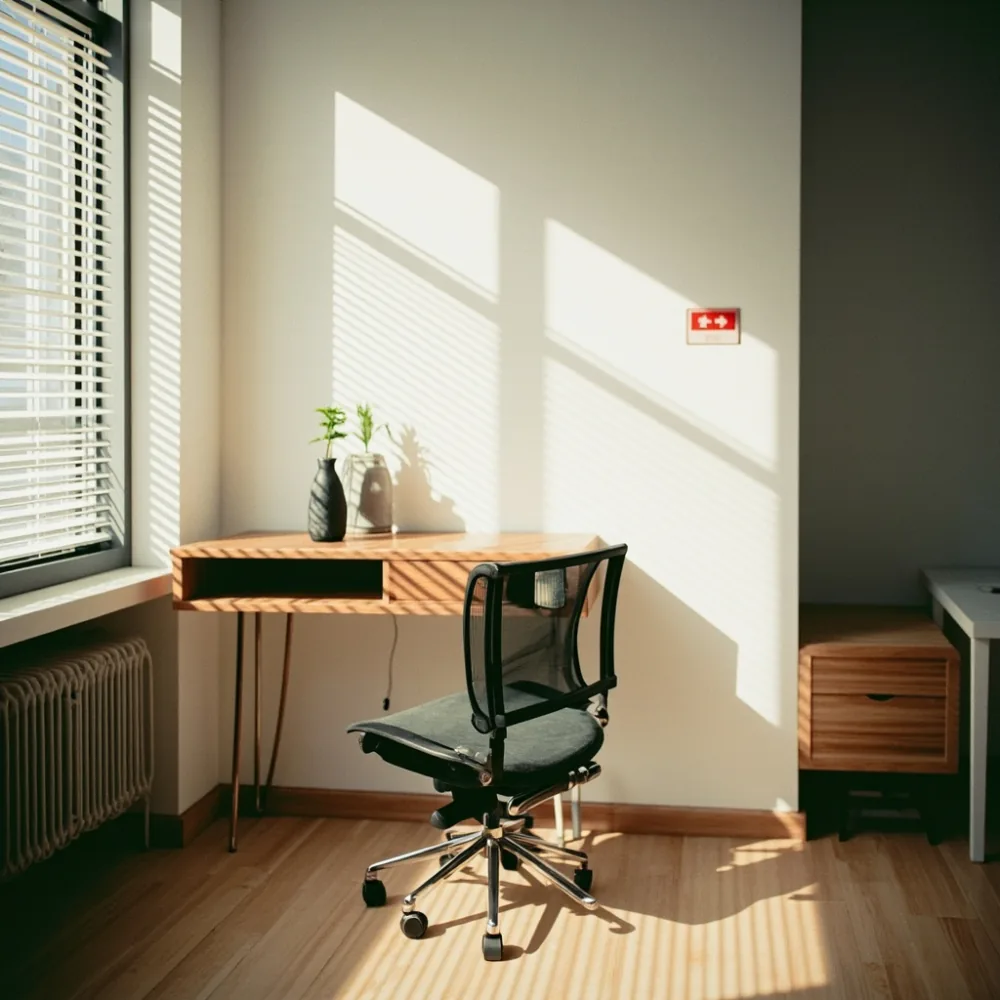
I have sat in enough office chairs to know that price tags in Singapore are confusing. The same chair can be S$329 on Shopee, S$549 at Harvey Norman, and S$899 at an ergonomic specialist. Most of that gap is warranty length, foam density, and after-sales servicing, not the chair itself.
Here is how I frame the budget tiers when friends ask me:
- Under S$300: Basic mesh-back task chairs, fine for a 4-hour work sprint but the gas lift is usually BIFMA-class 2, so the seat slowly sinks after 18 months.
- S$400 to S$700: The sweet spot for WFH. You get a 3D or 4D armrest, proper lumbar curve, and a Class 3 gas cylinder rated to 150 kg.
- S$800 to S$1,400: Premium brands like Herman Miller Aeron (Remastered, around S$1,950) or Steelcase Series 1 (around S$1,100). You are paying for a 12-year warranty and resale value.
- S$1,500 and above: Flagship mesh or full leather options. Worth it only if you sit more than 8 hours a day or have a documented back issue.
For a typical HDB or condo resident running hybrid meetings from a corner of the bedroom, the S$450 to S$650 band delivers 90 percent of the ergonomic benefit. Spending more usually buys aesthetics or materials, not support.
Mesh vs foam seat: which holds up in Singapore humidity?
Why mesh wins for most HDB bedrooms
When cushioning still makes sense
Humidity in Singapore sits between 70 and 85 percent for most of the year. Foam absorbs that moisture, holds odour, and slowly loses shape. After three years in a non-aircon study room, a foam cushion can feel like a flat tire.
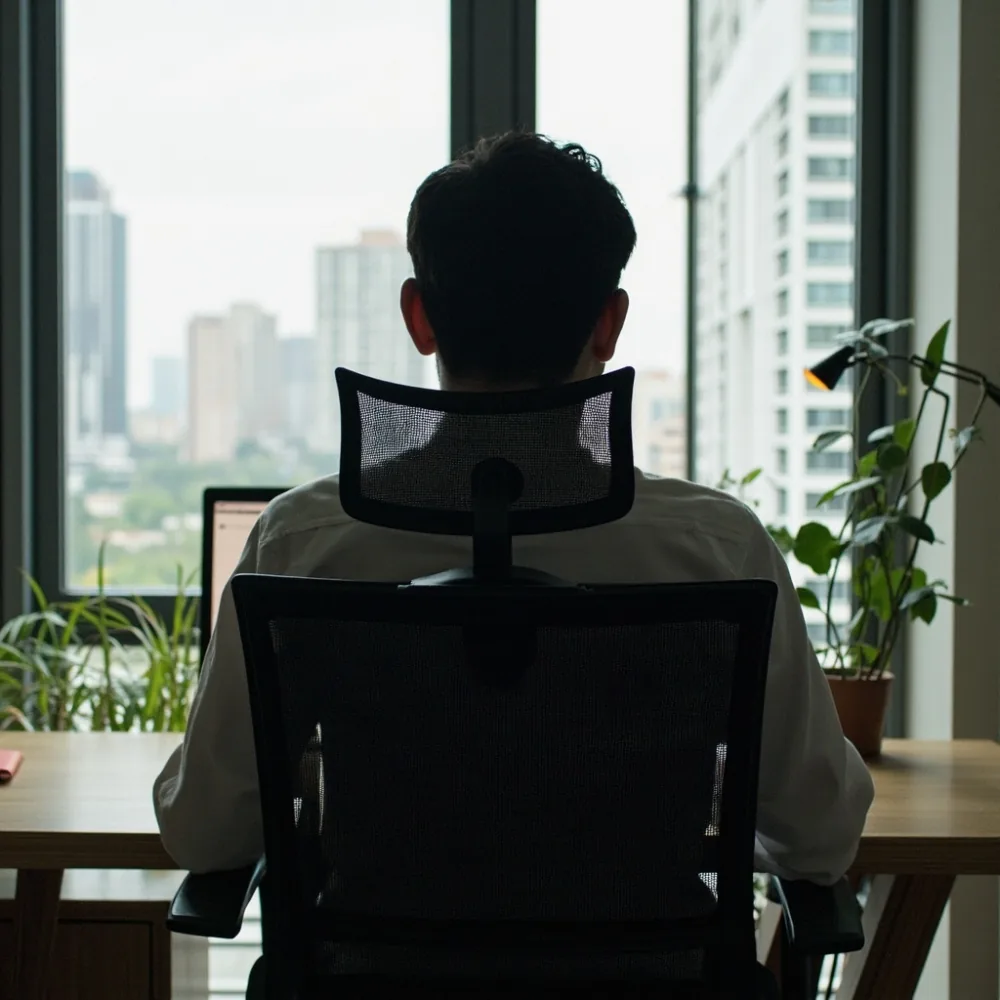
A breathable mesh seat and back lets air circulate, dries faster after a sweaty MRT commute, and keeps its tension. The mesh used in mid-range chairs (Korean and Taiwanese woven mesh, not the cheap stretched fabric) is rated for around 90 kg daily use and roughly 8 to 10 years before visible sag.
Foam still has a place if you sit cross-legged often, work in aircon heavy wear (common in CBD offices), or prefer a softer seat for short bursts. Look for high-resilience foam at 45 kg/m³ density or higher. Anything below 35 kg/m³ is the cheap stuff that flattens in a year.
My rule: mesh if your home office faces a window without blackout curtains and gets afternoon sun, foam if you run a 22°C aircon all day.
What dimensions should a Singapore buyer check before clicking Add to Cart?
Seat height and the 90-degree rule
Armrest reach for petite and taller buyers
Numbers matter more than brand logos. Here is the checklist that has saved me from three bad purchases over the years.
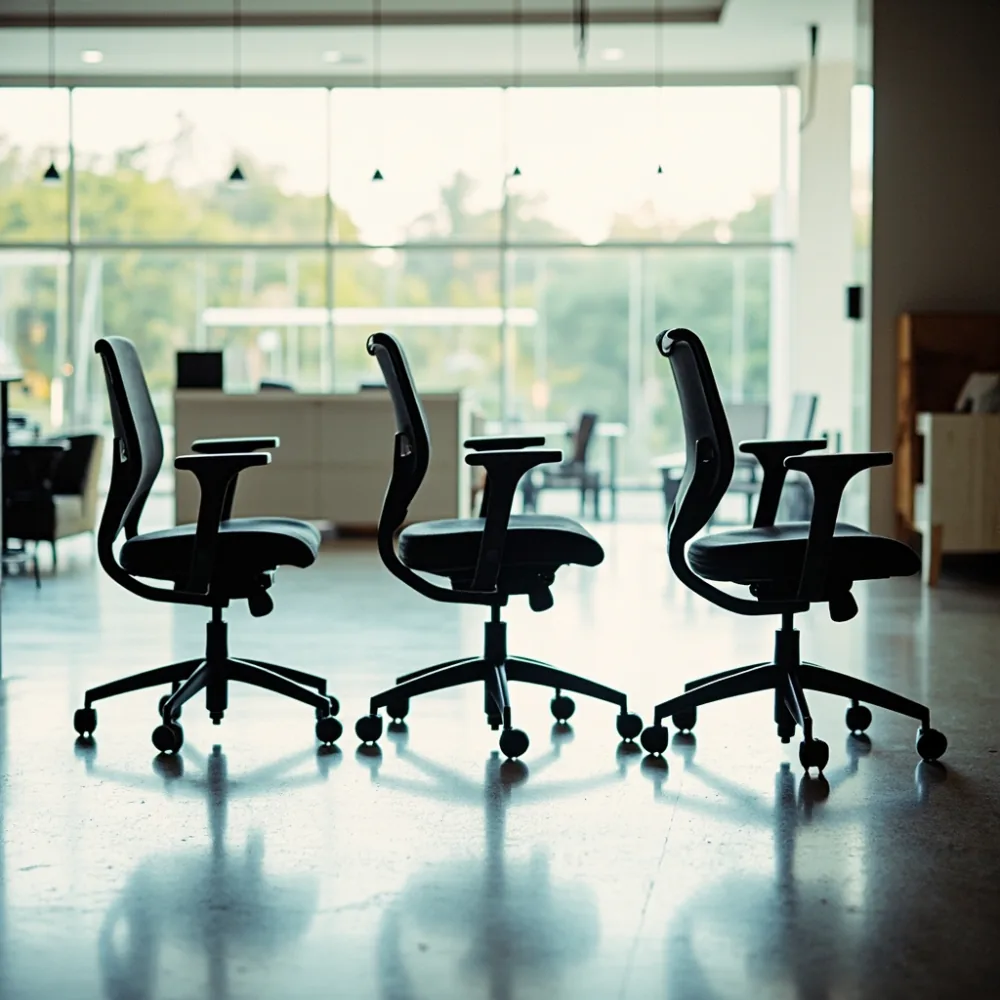
- Seat height range: 44 to 54 cm is the safe window for desks 70 to 75 cm tall, which covers most IKEA and custom furniture tops in Singapore.
- Seat depth: 45 to 50 cm. You want two to three fingers of space between the seat edge and the back of your knee.
- Seat width: Minimum 48 cm, ideally 50 to 52 cm. Anything under 48 cm feels like a bus seat by Friday.
- Backrest height: 55 to 65 cm for a mid-back, 70 to 80 cm for a high-back that supports shoulder blades.
- Armrest width: Should be adjustable from 45 to 55 cm apart, or closer to 50 cm if you are under 165 cm tall.
- Base diameter: 65 to 70 cm for a 5-star base. Smaller bases tip on thick carpet, which is common in older HDB bedrooms.
I always measure my desk underside first. A chair that looks huge in a Jurong East showroom can still smash your knees under a 60 cm desk apron.
How much legroom do you need under a Singapore study desk?
The 60 cm clearance trap
Why depth matters more than width
Most HDB study nooks are 120 cm wide and 60 cm deep. The desk top is 55 to 60 cm deep. That leaves you with a knee well of roughly 45 to 50 cm deep once you subtract the modesty panel and any drawers.
An ergonomic chair with a 45 to 50 cm seat depth can still fit, but you need at least 60 cm of clearance between the desk front and the wall, or the chair backrest will block your entry. I learned it the hard way when a chair with a 65 cm backrest height wedged against the wall behind my desk in a 4-room HDB in Tampines.
If you are ordering custom furniture, ask the maker to drop the modesty board to 8 to 10 cm above floor level and push the desk depth to 65 cm. That single change buys you 10 cm of legroom and makes even a S$500 chair feel premium.
Does humidity ruin building solid wood desk frames paired with an ergonomic chair?
Why your chair wobbles after monsoon season
Simple fixes that cost nothing
Solid wood furniture and Singapore humidity have a tense relationship. A 100 percent solid oak or ash desk can swell 2 to 4 mm across its surface during the December to February wet phase. That swelling tilts the desk by a few millimetres, which is enough to make a precision-engineered chair gas lift lean slightly off-centre and feel wobbly.
Brands like MIDHILL, a Foshan-based solid-wood furniture maker established in 2008 with a 10-year structural warranty, kiln-dry their wood to 8 to 10 percent moisture content before shipment. That is closer to Singapore's ambient 12 to 14 percent than the 18 to 20 percent you get with cheaper rubberwood imports, so the seasonal movement is smaller and slower.
Three habits that help any wooden desk stay chair-friendly:
- Run a dehumidifier set to 55 percent RH in the room for at least 8 hours a day.
- Keep the chair 10 cm away from the desk leg so wood can breathe.
- Re-tighten desk bracket screws every 6 months; humidity cycles slowly loosen joints.
The chair itself is rarely the problem. It is usually the floor or the desk moving underneath it.
Which ergonomic chair suits a small HDB or condo study nook?
Compact footprint picks
What to skip for tight corners
Small space furniture is the unspoken hero of WFH in Singapore. A 4-room BTO study nook in Punggol or Sengkang averages 1.2 m by 1.5 m, which sounds spacious until you add a printer, a laptop stand, and a cable tray.
For these rooms, look for chairs with a base diameter under 65 cm, an armrest that flips up 90 degrees (so the chair tucks fully under the desk), and a total chair width under 70 cm including armrests. The Ergohuman Enjoy (around S$780) and the SIDIZ T50 (around S$620) both clear these bars.
Skip chairs with wide racing-style wings, oversized headrest wings, or fixed armrests that flare outward. They eat 15 to 20 cm of floor space you do not have.
One tip from a friend who lives in a 2-bedder condo in District 09: she rotates the chair 180 degrees when not in use so the backrest becomes a side table against the wall. Sounds odd, but it freed up enough floor space for a yoga mat.
How long does delivery and assembly actually take in Singapore?
Standard lead times
What to expect from China-direct brands
Lead times vary wildly depending on where the chair ships from. A local Singapore stockist (Courts, Harvey Norman, FortyTwo, Nuuva) delivers in 3 to 7 working days and assembles in 30 to 45 minutes. I have had two FortyTwo deliveries in 2024, both arrived within 4 days and were assembled by a single technician.
| Source | Delivery time | Assembly | Typical cost |
|---|---|---|---|
| Local stockist (FortyTwo, Nuuva) | 3-7 days | Included, 30-45 min | S$0 |
| Local specialist (Ergo Shop, Backstory) | 5-10 days | Optional, S$60-120 | S$0-S$120 |
| Shopee/Lazada direct | 5-14 days | Self-assembly, 30-60 min | S$0 |
| China-direct brand (MIDHILL, ergonomic factories) | 30-60 days sea, 10-18 days air | Self-assembly, 45-90 min | S$80-S$200 shipping |
China-direct brands are usually 20 to 35 percent cheaper for the same chair spec, but you wait longer and you do the assembly. The box for a fully featured ergonomic chair weighs 22 to 28 kg, so budget for a trolley if you live above the third floor without a lift, common in older Tiong Bahru or Queenstown walk-ups.
What warranty and after-sales support should you demand in Singapore?
Reading the fine print
The SCDF acronym alignment
HDB and condo realities
A 1-year warranty is the industry default and is useless for daily purchases. For a chair you sit on 8 hours a day, push for at least 3 years on the gas lift and 5 years on the mechanism. Top brands offer 10 to 12 years, but you pay for it.
Key things to check in the warranty card before paying:
- Gas lift: The BIFMA-rated cylinder should be covered for at least 5 years. Cheaper chairs use non-BIFMA cylinders that fail in 18 months.
- Mechanism: Tilt, recline, and tension knobs should be covered for 5 years minimum.
- Mesh: Look for 5 to 10 years against sag. Anything under 3 years is a red flag.
- Frame: 10 to 12 years on aluminium or steel frames is standard for premium brands.
One thing Singapore buyers forget: the warranty is only as good as the local service centre. A Herman Miller chair bought from an overseas grey-market reseller has no Singapore service agent, so a broken cylinder means shipping the chair back to Hong Kong or the US. Buy from a local authorised dealer or you are gambling.
Is a used Herman Miller or Steelcase worth buying in Singapore?
Carousell and office liquidation reality
Inspection checklist
Used market is strong here. A 3-year-old Aeron Remastered in size B sells for S$900 to S$1,200 on Carousell, versus S$1,950 new. Office liquidations in Raffles Place and One-North often dump Steelcase Leap or Series 1 chairs at S$400 to S$700 each.
Before you pay, inspect:
- Cylinder: Sit in the chair for 5 minutes. If the seat sinks more than 5 mm, the cylinder is shot. Replacement costs S$60 to S$120.
- Mesh: Look for shiny patches on the backrest. Shiny = worn and about to tear.
- Tilt mechanism: Lean back. It should recline smoothly and lock in place. Grinding noises mean worn gears.
- Armrest pads: Peeling foam on armrests is cosmetic but reveals how the previous owner treated the chair.
A well-maintained used chair can easily give you another 5 to 8 years. A poorly stored one from a humid warehouse in Jurong is a money pit.
What is the single best chair under S$600 for a Singapore WFH setup in 2025?
My current pick
Runner-up and budget alternative
After sitting in 14 chairs in 2024 and reselling 9 of them, my current desk companion is the SIDIZ T50 in the mesh version, retailing around S$620 at Nuuva and Ergo Shop. It has a 49 cm seat width, 45 to 53 cm height range, 4D armrests, and a self-adjusting recline that finds the right tension for my 65 kg frame without a knob.
Runner-up at the same price point: the Ergonic T-Pro (around S$580), which has slightly softer mesh and a deeper seat that suits taller users above 180 cm.
If S$300 is the hard ceiling, the IKEA JÄRVFJÄLLET (around S$329) punches well above its weight with a 10-year warranty and surprisingly supportive lumbar curve. It is not adjustable as much as premium chairs, but for a 4-hour daily sit it is hard to beat at the price.
Whatever you choose, test it in person if you can. A 20-minute showroom sit beats 20 minutes of reading reviews every single time, especially for something you will use 2,000 hours a year.
Frequently asked questions
Are ergonomic chairs worth it for a 4-hour WFH day in Singapore?
For most HDB and condo residents doing hybrid work, a S$450 to S$650 mesh ergonomic chair is the sweet spot. You sit 1,200 to 1,500 hours a year, so the per-day ergonomic cost is around 30 to 40 cents. A bad chair costs more in physio and lost focus than the upgrade price.
How do I keep my ergonomic chair from smelling in Singapore humidity?
Vacuum the mesh weekly, wipe the frame with a damp microfibre cloth monthly, and run a dehumidifier at 55 percent RH for 8 hours a day. Avoid fabric seats if your room is not air-conditioned, since foam absorbs moisture and holds odour fast.
Can I assemble an ergonomic chair alone in a HDB corridor?
Most chairs ship in 22 to 28 kg boxes and need 45 to 90 minutes of assembly. You can do it alone on a corridor mat, but a second pair of hands speeds things up. Some local stores like FortyTwo and Nuuva offer in-home assembly for S$0 to S$60.
Should I buy from Shopee or a local ergonomic specialist?
Shopee and Lazada direct sellers are 20 to 35 percent cheaper but you get slower delivery, self-setup, and weaker warranty claims. Local specialists cost more but offer in-home trials, assembly, and Singapore service centres. For chairs you sit on daily, the local premium is usually worth it.
What chair works best for a small HDB study nook under 1.5 m wide?
Pick a chair with a base diameter under 65 cm, flip-up armrests, and a backrest under 65 cm tall. The SIDIZ T50, Ergohuman Enjoy, and IKEA JÄRVFJÄLLET all clear these limits. Skip racing-style chairs with wide wings since they eat 15 to 20 cm of floor space.
Questions about sizing, fabric or delivery?
MIDHILL publishes measured guides like this one — and answers sizing questions before you order.
See the collection