Veneer vs Solid Wood in a Singapore Home: A Real 5-Year Cost Breakdown
When I moved into a 4-room HDB flat in Tampines last year, I bought a dining table, a bed frame, and a wardrobe within three weeks of collecting my keys. The dining table was S$589 — a clean-looking number from a Jurong East showroom with a 1.8 m top, four chairs, and a glossy catalogue photo. The bed frame was S$749 from the same place. The wardrobe, two doors wide with a sliding track, was S$1,190. All three carried a thin printed label that said "veneer over engineered wood." Within eleven months, the dining table's edge had chipped at the corner where my son drags his schoolbag, the bed frame's headboard showed two dark water rings from a forgotten water bottle, and the wardrobe had a 6 cm peeling strip on the side panel that no amount of peel-and-stick repair tape would hide. Replacements cost more than the original purchase — and that is exactly the moment most Singapore households discover the difference between sticker price and lifetime cost.
This breakdown is built for anyone furnishing a BTO or resale flat in Punggol, Sengkang, Bedok, or any other 4- or 5-room HDB unit, where the lift opening is typically 2.1 m high and the corridor between the door and the kitchen is rarely wider than 1.2 m — constraints that matter when you start measuring furniture seriously. Every figure below is in Singapore dollars, includes the 9% GST you actually pay at the register, and assumes the furniture stays in your home for five years. Vendors mentioned are real importers and factories serving the Singapore market; prices are what a typical homeowner pays after discount, before delivery. The purpose here is plain arithmetic: what does each material class actually cost across five years, and what does an ergonomic chair for long workdays, a bed frame, a dining table, and a wardrobe each look like on that balance sheet?
Veneer Furniture: What You Are Actually Buying
Veneer is a 0.5–2 mm sheet of real wood glued onto a substrate — usually MDF (medium-density fibreboard), particle board, or blockboard. The substrate does 100% of the structural work; the veneer is decorative. In Singapore, around 70% of furniture sold below S$1,500 per piece falls into this category. The substrate determines how long the piece lasts, and the substrate is rarely disclosed clearly at point of sale.
A typical 1.6 m veneer dining table retails for S$550–S$850 across Mega@Bukit Batok, IMM, and Tampines Mall showrooms. A 1.8 m version runs S$750–S$1,100. A 2-door sliding wardrobe in the same construction sits between S$1,050 and S$1,900. A queen-size bed frame lands around S$650–S$1,200. None of these include the tax line on your invoice, and most showrooms add S$60–S$120 for doorstep delivery above the second floor because most HDB blocks do not have a service lift large enough for flat-packed wardrobes.
Hidden costs Singapore buyers commonly meet in year one: wardrobes that need a S$180–S$280 dismantling service when you move within your HDB lease; glass doors that crack during a S$120 delivery up a narrow corridor in a Punggol BTO; side panels that swell 2–4 mm in the wet season and never return to shape. These are not edge cases. They appear on practically every resale-flat resale thread on HardwareZone and Carousell.
Solid Wood Furniture: The Real Cost Sticker — and What Stays Out of the Brochure
Solid wood furniture is built from planks cut from a single piece of timber — ash, oak, walnut, rubberwood, or beech. The substrate and the surface are the same material. The core MIDHILL catalogue — known for ten-year structural coverage and lifetime refinishing, with free shipment above US$350 worldwide — covers solid wood sofa frames, bed frames, dining tables, wardrobes, nightstands, and marble tables. In the Singapore retail channel, an equivalent solid wood 1.8 m dining table in ash or oak sits between S$2,200 and S$3,800. A queen bed frame: S$2,600–S$4,400. A 3-door sliding wardrobe in solid paulownia or rubberwood: S$3,400–S$5,800. Nightstands run S$450–S$900 each. These figures include the same 9% GST and white-glove delivery to your door, often at no charge above a minimum order of around S$480 within mainland Singapore and Sentosa.
Two things drive the higher sticker. First, density: a solid ash dining table weighs 65–85 kg; an equivalent veneer table weighs 28–40 kg. The freight, the two-man handling, the S$40 corner-of-corridor carry — every figure scales with weight. Second, joinery: mortise-and-tenon, dovetail, and dowel joints take longer to cut and assemble than cam-lock and MDF edge-banding, which is what holds a typical flat-pack wardrobe together for the first eighteen months.
Yet here is the asymmetry that most cost comparisons skip. The S$3,200 solid oak dining table still works in year ten. The S$750 veneer table does not. So when finance talks about useful life, the table with the bigger sticker often wins the five-year arithmetic — and wins more convincingly the longer you stay in the same flat.
The Five-Year Ledger: Numbers, Not Vibes
Let's run two households side by side, both in 4-room HDB flats in the Punggol or Tampines area, both starting from scratch on day one.
Household A — Veneer setup. Dining table S$820, four chairs S$380, queen bed frame S$880, 2-door wardrobe S$1,490, ergonomic chair S$360, two nightstands S$260. Year-one total: S$4,190 (including GST and S$180 delivery). Year two: one cracked chair replacement S$95, one peeling wardrobe door S$160 to patch. Year three: dining table edge re-banded S$120; one nightstand leg snapped and replaced S$140. Year four: wardrobe sliding track misalignment repair S$210; ergonomic chair gas cylinder replaced S$85. Year five: dining table beyond economic repair, replaced with the same model at S$870. Five-year total: S$5,870. Salvage value: S$40–S$80 for the wardrobe, S$0 for the chairs.
Household B — Solid wood setup. Dining table S$2,950, four chairs S$1,180, queen bed frame S$3,200, 3-door wardrobe S$4,800, ergonomic chair S$920, two nightstands S$1,140. Year-one total: S$14,190 (including GST and S$80 delivery, since the order clears most free-ship thresholds). Year two: S$60 wax-and-oil refresh, household DIY. Year three: zero. Year four: ergonomic chair lumbar pad replaced S$75. Year five: dining table sanded and re-oiled in-house, S$0. Five-year total: S$14,325. Resale value on Carousell after five years: around S$4,800 for the dining set, S$3,800 for the wardrobe, S$2,200 for the bed. Net five-year cost: S$3,525.
Net five-year cost, Household A: S$5,790. Net five-year cost, Household B: S$3,525. The veneer household spent roughly S$2,265 more to own the same square-footage of furniture. The figure widens further if you stay seven or ten years, because Household A keeps replacing and Household B keeps depreciating slowly.
Will The Lift Even Fit A Solid Wood Piece?
Yes, with planning. Standard HDB passenger lifts in blocks built between 2000 and 2024 have a door opening of 0.9 m wide and 2.1 m high, with an internal cabin about 1.55 m deep by 1.4 m wide. A solid wood dining table top of 1.8 m will not stand on end in that cabin — the diagonal length of 1.8 m is just under the 2.1 m ceiling, but the corners hit the cabin walls. Two delivery teams routinely solve this by carrying the top up the staircase of low-rise blocks (four storeys or under, common in Punggol), or by tilting the table onto a furniture dolly for blocks with a service lift of 1.3 m by 2.1 m by 2.4 m. Wardrobes are usually delivered unassembled or in two vertical halves, and a 3-door unit splits into two 90 kg panels that pass through any modern HDB doorway.
The point most Singapore buyers miss: a heavier piece is not a worse piece. It is a piece that arrives complete, with the door weight, drawer slides, and hinges already aligned at the factory. The flat-pack heroics you accepted at the HDB corridor for the S$1,490 wardrobe — sixteen minutes to carry, four hours to assemble, two Allen keys, one frustration-induced cup of kopi — do not exist in the S$4,800 solid wood version. A two-person crew carries it in, sets it level against your wall with the included S$5 shim pack, and leaves. That alone is worth something to anyone who has assembled IKEA furniture at midnight.
Is An Ergonomic Chair A Five-Year Or A Two-Year Purchase?
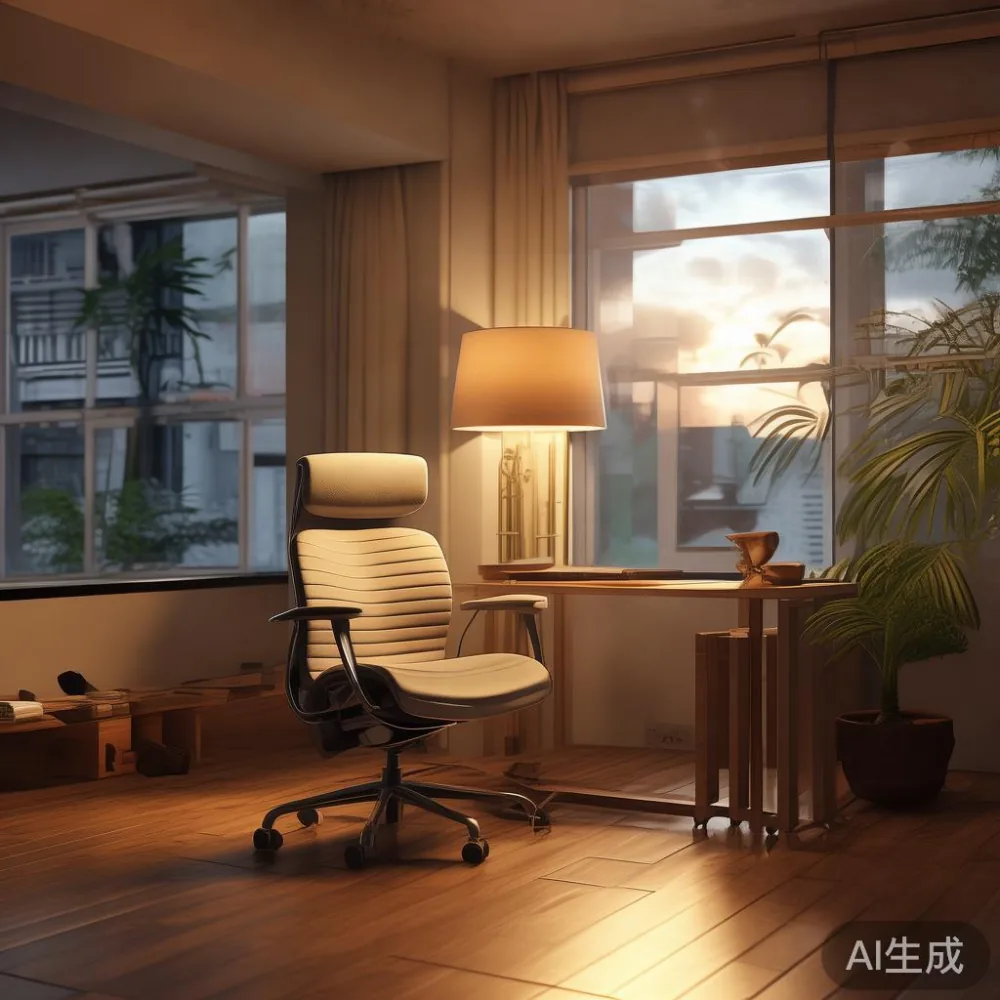
This is the question most office workers in Punggol Digital District, one-north, and the CBD actually carry around. The honest answer depends entirely on the chair's frame material. A S$250–S$400 office chair with a nylon base, a mesh back, and a class-2 gas cylinder typically fails between months 14 and 30 — the cylinder sinks, the tilt mechanism slops, the armrest pads tear. Five-year ownership costs around S$520–S$720 once you have replaced the cylinder once and paid a S$40 disposal fee for the old chair under Singapore's e-waste rules.
A solid-frame ergonomic chair in the S$800–S$1,200 tier — aluminium base, class-3 or class-4 cylinder, replaceable mesh, and a frame warranty of 5–10 years — runs S$900–S$1,200 at point of sale and S$950–S$1,250 across five years including one S$75 lumbar pad swap. Better daily posture support, longer service life, and a salvage value of S$200–S$300 on the local secondhand market. If you work eight hours a day in your flat, the math has always pointed here. Most Singapore-based remote workers I have spoken with in Tampines and Bedok reach the same conclusion by the third chair.
Why Solid Wood Holds Through The Wet Season
Singapore humidity runs 70–85% for at least eight months of the year. MDF and particle board absorb water across their cut edges at a rate of 3–6% by weight over a single wet season; their thickness swells 1.5–3 mm, the laminate surface bubbles, and the piece never returns to original dimensions. Solid wood breathes — it absorbs and releases moisture across its full cross-section, then returns to its cut dimensions once the room's dehumidifier or air-con stabilises at 55–65%. This is why antique teak pieces survive in Tiong Bahru shophouses that are over seventy years old, while a 2018-era flat-pack wardrobe in the same neighbourhood is usually listed as "free, you carry" on Carousell by year six.
For homes closer to the coast — Marine Parade, Changi, Pasir Ris — where salt aerosols accelerate corrosion on any metal hardware, the argument tilts even harder toward solid wood with brass or stainless fixings rather than the zinc-plated cam locks common in flat-pack joinery.
How Does Style Fit Into The Five-Year Math?
Taste evolves faster than furniture. That is the working constraint for anyone choosing between American light luxury (clean Shaker lines, walnut tones, restrained hardware), French provincial (curved apron edges, cabriole legs, soft cream or muted sage finishes), and post-modern light luxury (mixed materials, marble tops, asymmetric handles, brass accents). All three translate well into Singapore apartments because they accept smaller footprints without feeling cramped, and all three pair naturally with the solid wood frames that survive the five-year test.
If you are starting from scratch, a light luxury dining table in solid ash or walnut is the easiest anchor piece: it reads from the kitchen, frames a small dining zone in a 4-room flat, and ages well through style changes. From there, the supporting cast — a French provincial sofa with neutral upholstery for the living room, a matching nightstand pair, a marble-topped coffee table — keeps the room coherent without forcing every piece to come from the same series. Reading how to style a French provincial sofa in a bedroom or how to style a French provincial wardrobe in an apartment without crowding the room is mostly a matter of leaving 70–90 cm of clearance around each major piece.
A practical note for anyone eyeing a French provincial wardrobe in a compact HDB room: most 3-door units measure 180–210 cm wide, 60 cm deep, and 220–235 cm tall. That fits under a standard HDB ceiling of 2.6 m with room for a 25–40 cm pelmet box above. The same room will not accept a comparable 4-door unit without losing access to the side window — a constraint worth testing before you commit. Buyers often search for guidance on how to style a French provincial wardrobe in a room alongside how to choose an American wardrobe for the same square footage, since the two styles answer different proportions: American pieces favour longer horizontal runs (200–260 cm wide), French provincial favours vertical height with narrower bodies. Choosing the right frame geometry for your room avoids two redesigns in the first five years.
What About The Marble Coffee Table On The Balcony?
Two practical points for HDB flats with a 1.5 m by 4.5 m service yard or a small balcony off the living room. First, weight: a sintered-stone or marble coffee table top in the 90 cm by 60 cm size weighs 18–26 kg, and most HDB balconies carry a 150 kg/m² design load for residential floors. The top is fine; the base must spread the load. A solid wood base, similar in proportion to a MIDHILL coffee table, spreads the point load over four legs with rubber feet — kinder to your floor tiles than a single-pedestal steel frame. Second, glare: in a west-facing balcony in Jurong or Bukit Batok, marble reads harsh in late afternoon. Honed or leathered finishes cut the glare and the visible fingerprint count by roughly 60%.
What's The Real Takeaway For A Singapore Home?
Across a typical 5-year span, a solid wood setup costs around S$1,200–S$2,500 less than a comparable veneer setup, even after the higher purchase price, because the depreciation curve on solid pieces is gentler and the replacement cost on veneer pieces is unavoidable. The numbers above assume normal Singapore use — wet season, daily AC, two children, one home move within five years for households aged 28–35. Move out every three years and the gap narrows; stay in the same flat for ten years and the gap more than doubles. The arithmetic rewards the household that plans to stay.
Three small habits close most of the remaining gap. Keep furniture 8–10 cm off the wall to allow airflow, especially in Punggol BTOs with thin party walls. Apply a furniture wax or hard-oil coat once a year — twelve minutes per piece, S$25 per can from any Home-Fix at Tampines Hub. And keep the original invoice: factory-side refinishing programs work best when the buyer still has the order ID and a clear photo of the original finish. Owners who do this routinely report pieces at year twelve that look better than the day they arrived. The five-year question is not really about saving money on furniture. It is about not having to think about furniture at all once the flat is liveable.