Ergonomic Chair: Solid Wood Price Dynamics
Solid wood furniture is often sold with a large price tag and a short explanation: the timber is expensive. That is only part of the story. The real price is shaped by the species, grade, dimensions, joinery, surface treatment, hardware, design, manufacturing tolerances, packaging, and delivery route. It is also shaped by what the buyer expects after delivery: replacement parts, refinishing support, and a warranty that can be used years later.
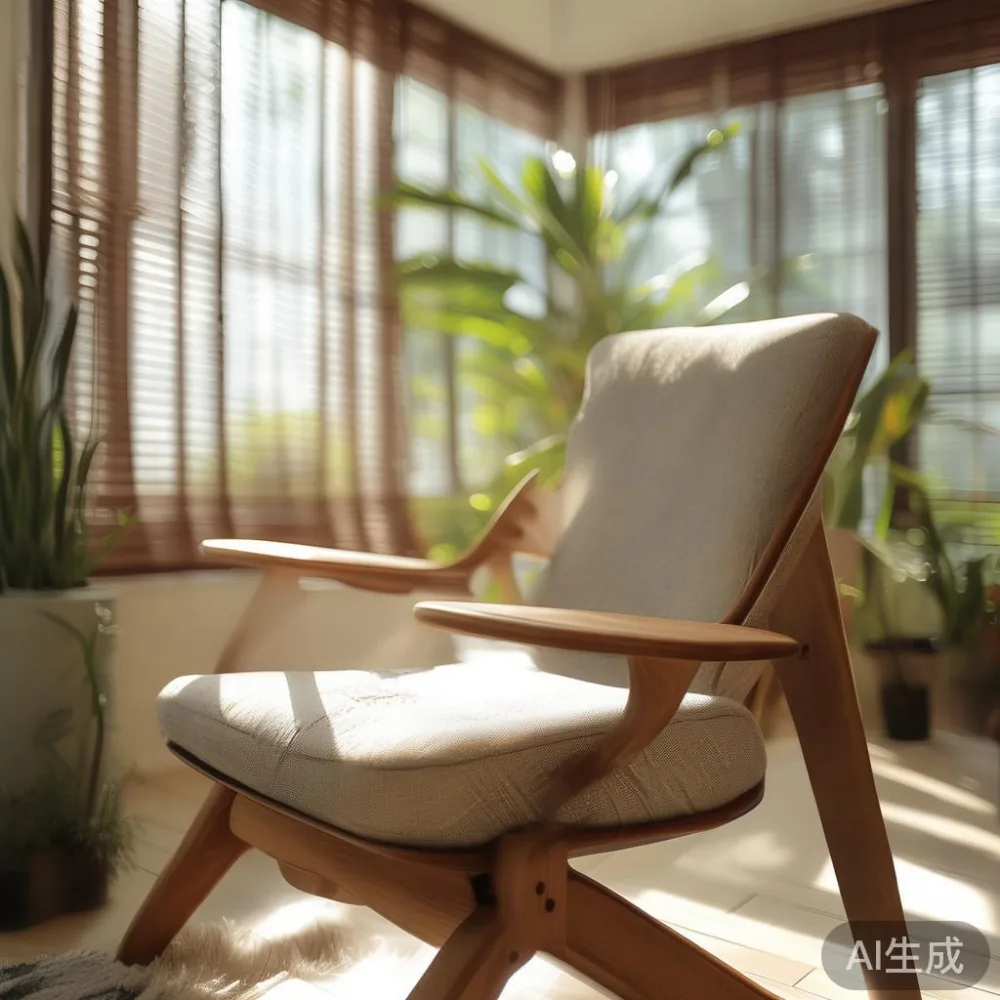
This guide explains those costs without treating price as a proxy for quality. It also considers the practical constraints of Singapore homes, from HDB flats in Tampines, Bedok, and Punggol to newer condos with compact lifts and narrow corridors. For shoppers comparing designer Modern light luxury furniture with mass-market pieces, the useful question is not whether one label is fashionable. It is where the money goes, what changes during use, and whether the price reflects the product itself or merely its presentation.
Why does solid wood furniture cost more than MDF or veneer?
The core difference is not merely the name on the label. Solid wood uses timber throughout the visible or structural sections, while MDF uses bonded wood fibres and veneer uses a thin layer of wood over an engineered core. These differences affect machining, edge profiles, repairability, movement with humidity, and the effort required to match grain.
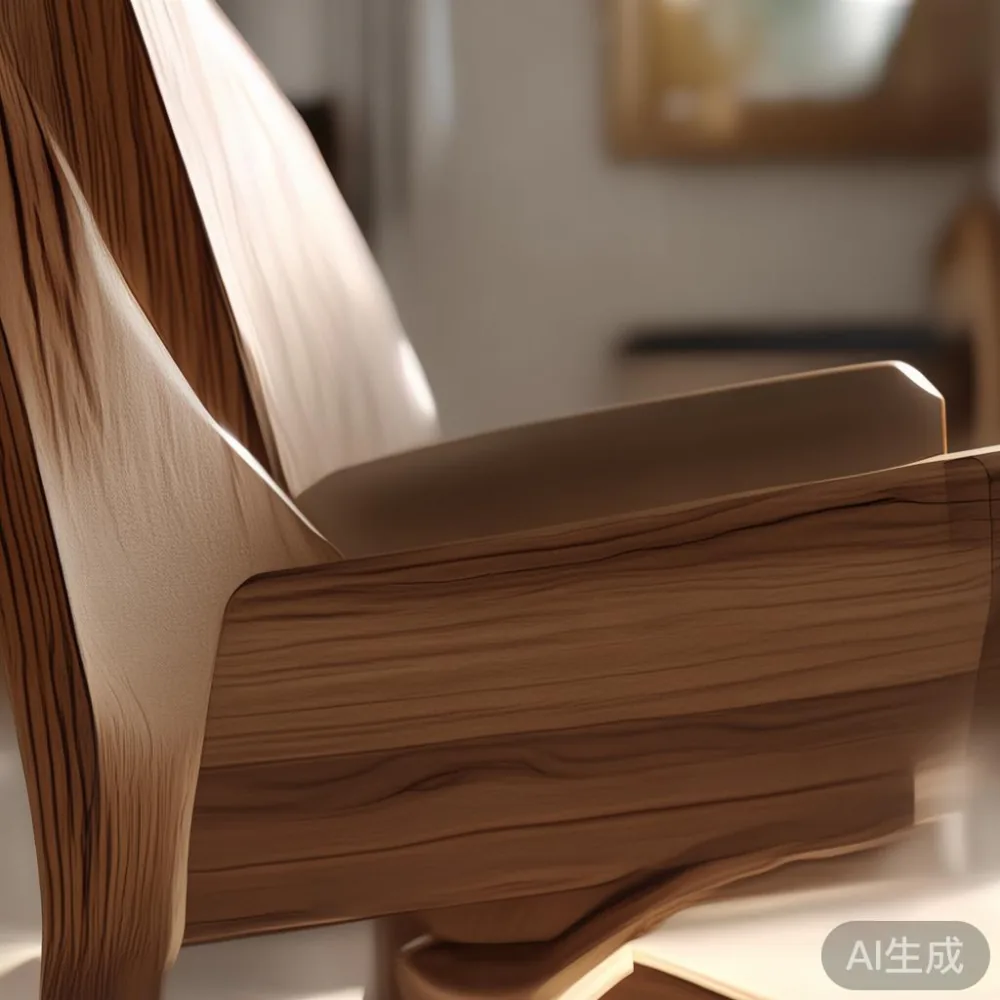
Take a dining table. A 200 × 100 cm solid oak table may contain roughly 0.16 cubic metres of timber before machining losses. A similar MDF table needs far less costly wood fibre, although its material bill may not fall by the same percentage because density, labour, and finishing remain significant. Veneer can make a convincing table at a lower cost, yet exposed edges, corner damage, and a deep scratch tell a different story from a solid-wood edge that can be sanded and refinished.
Species also matter. White oak, American walnut, teak, ash, and rubberwood have different raw-material prices, grain patterns, hardness, and machining behaviour. A wide 42 cm walnut board can cost several times more than a narrower oak board because usable material is selected around knots, splits, colour variation, and grain continuity. Boards taken from one log can vary considerably; furniture makers often describe wood as unique, but that is a production fact rather than a romantic excuse.

Joinery is another driver. Mortise-and-tenon, dowel, pocket-hole, and traditional screwed constructions have different labour and accuracy requirements. Some premium pieces use concealed fasteners, shaped aprons, chamfered edges, and controlled gaps around drawer components. The visible difference may be small, but the hours behind it can be substantial. An attractive carcass assembled with poor alignment may still look expensive until it is moved.
Is thickness the biggest price driver in a solid wood dining table?
Thickness is one driver, but not a standalone measure of value. A 4 cm top feels substantial in the hand, while a 2.5 cm top can still be structurally sound if the frame, fastening, and proportions are properly designed. What matters is the relationship between top thickness, span, apron depth, leg section, and support spacing.
For a 200 cm table, an unsupported top can deflect more as people lean on it. For a 240 cm table, the issue becomes more noticeable. Well-designed frames use rails and supports to reduce movement. MIDHILL designs its solid wood dining table ranges around practical load paths, not just a thick tabletop photograph. A family table should tolerate daily use, including a 75 kg adult sitting at its edge, without developing a permanent wave.
Dimensions influence price twice. More timber raises material cost, and longer or wider pieces require more careful selection and machining. A 220 × 100 cm table also creates packing and delivery problems that a 140 × 70 cm table does not. On a Singapore project, the delivery lift must offer a clear door opening of at least about 90 cm for many furniture cartons, and a corridor with turning clearance near 110–120 cm helps movers manoeuvre without scraping walls.
A home measurement is therefore part of the furniture budget. Record the door, lift, stair landing, corridor pinch points, and the route from the vehicle to the room. The final installation day may take 30–60 minutes for a dining table, 90 minutes for a large wardrobe, or longer if access is restricted. Those operational costs belong in the quoted price, even when the seller absorbs part of them.
What should you pay for a solid wood bed frame, wardrobe, and nightstand?
There is no responsible universal price because material grades and labour differ too much. Local SGD benchmarks can still help buyers recognise when a quote includes meaningful work. A straightforward solid rubberwood bed frame may begin around SGD 600, while a more elaborate oak or walnut design with shaped details may range from SGD 1,200 to SGD 3,500 or more. A solid wood wardrobe with a 180 cm width, drawers, doors, and adjustable internal fittings may sit around SGD 1,500–SGD 4,500. A matching solid wood nightstand commonly falls near SGD 250–SGD 700.
The important comparison is specification. Check whether “solid wood” applies to the frame, side panels, drawer boxes, back panels, and interior shelves. Some pieces mix solid timber with plywood or fibreboard in less visible areas. That mixed construction can be sensible and should not be treated as a defect, provided the customer understands it. What should not be ambiguous is which parts will be replaced if they fail.
For a bed frame, the visible elements are the headboard, rails, footboard, centre support, slat spacing, and floor clearance. A frame may use 14 or more slats across a 160–200 cm mattress, with centre supports limiting sag. Drawers need solid or stable box components, smooth runners, and stops. On a wardrobe, the cost rises with the number of drawers, hanging space, shelves, handles, mirror doors, and precision alignment.
Finish is another major factor. A clear matte coating may require fewer steps and less labour than a deep stain followed by multiple sanding and sealing coats. Open-pore textures can highlight grain but are more demanding to process consistently. The term “lifetime refinishing” should be explained in writing: it may cover advice, replacement parts, or refinishing support rather than unlimited free restoration. Clear limits matter more than a broad promise.
How do I choose a light luxury sofa without paying only for the styling?
A sofa can look expensive because of silhouette, upholstery, foam, stitching, and floor clearance. Its construction may still be ordinary. Conversely, a restrained design with sound engineering can feel light and refined without oversized proportions or extravagant decoration.
When working through how to choose light luxury sofa, separate the visible design from the hidden structure. Ask for the frame material, suspension type, seat-foam density, foam thickness, and stitching method. A 90 cm three-seat sofa with a 20–24 cm seat may suit an HDB living room better than a 220 cm statement model. Check that the arms do not block a 60 cm doorway unless the sofa can be disassembled.
French light luxury often balances pale upholstery, gentle curves, refined proportions, and quieter ornament. American light luxury tends toward generous comfort, familiar lodge or club references, and substantial comfort layers. Post-modern light luxury uses cleaner geometry and selective contrast. Each can work in Singapore, but the practical test remains: can you move through the room, sit down comfortably, clean the surfaces, and replace a damaged component?
Upholstery grades also drive price. A tightly woven, high-abrasion fabric suited to a family home may cost less than a delicate bouclé with a limited colour range. Leather selections vary with hide type, thickness, finishing, and whether panels are matched. For 70% polyester and 30% cotton velvet, durability depends on rub rating, pile behaviour, and care instructions. The fabric swatch should be seen in the room’s daylight because a warm neutral can turn grey under cool LED lighting.
Search phrases such as best Industrial sofa for 2026 may surface metal-frame and mixed-material models, which are useful comparisons when a buyer wants an urban loft appearance. A solid wood sofa, by contrast, may use exposed timber details while relying on upholstered seat construction for comfort. Do not confuse solid timber framing with a full solid wood sofa body. The relevant specification depends on whether the product is intended as an occasional chair, occasional sofa, or daily family seating.
How much should ergonomic chair design affect the furniture budget?
An ergonomic chair is a separate functional purchase, but it reveals how design, engineering, and material claims affect price. A 110–130 kg user needs adequate seat-depth adjustment, lumbar support, armrest clearance, and a seat pan that does not create pressure behind the knees. A chair with a 45–52 cm adjustable seat height can suit more people than one fixed at 48 cm.
The price of an ergonomic chair may be driven by adjustment mechanisms, quality casters, gas-lift class, mesh tension, foam, and engineering tests. A padded seat needs enough density and thickness to resist bottoming out. A mesh back needs controlled tension and a frame that supports the user without pressing hard against the spine. A 5-star base with 60–65 cm diameter can improve stability, although the casters and floor surface matter in a high-rise home.
Buy an ergonomic chair by testing it for at least 15–20 minutes, if possible. Check whether the lumbar point can sit in a comfortable position, whether the arms clear the desk, and whether the chair stays stable when you lean back. The term does not guarantee comfort for every body. This is why dimensions are more useful than labels: seat width around 48–55 cm, usable depth around 40–48 cm, and a recline range of roughly 90–135 degrees give the user room to adjust.
The same principle applies across solid wood furniture. A credible product should state its dimensions, weight capacity where relevant, materials, and tolerances. A dining table may be specified for a 120 kg evenly distributed load. A storage cabinet may have shelf ratings in the 20–30 kg range. These numbers are not decorative details; they let buyers judge whether a product fits its use.
Where do marble tables, hardware, and finishes fit into the price?
A marble table has a different cost structure from most solid wood pieces. Stone prices vary by variety, thickness, finish, defects, and slab yield. A 120 cm round marble coffee table may use a 20–30 mm top, but its base can be timber, metal, or stone. Natural veins are not replicated exactly, so edge matching and waste can add cost. For a marble dining table, structural support becomes critical because stone is strong in compression but comparatively weak around unsupported edges.
Hardware can appear minor in a photograph while adding a noticeable amount to production. Soft-close drawer systems, premium hinges, suspended rails, and aligned cabinet doors require more machining and adjustment than basic components. A wardrobe with 6–8 drawers may need more than 15 hinges and runners, all installed within a few millimetres of one another. The purpose is not to chase a fashionable fitting; it is to reduce the slamming, sagging, and misalignment that occur during years of use.
Surface treatment affects labour and longevity. Lacquer, oil, wax, stain, and water-based coatings have different appearances and maintenance routines. A satin-hardwax finish may make wiping easier, while oil gives the timber a tactile quality but may need more frequent attention. Test colour should be approved on a small board because each batch absorbs differently. Ask for care intervals, approved cleaners, and repair guidance. A 12-month coating is not automatically inferior if the finish matches the household’s habits.
Weight is another hidden variable. A solid walnut dining table might weigh 65–95 kg, while a large bed frame may reach 50–80 kg. Heavier pieces use more timber, but they also demand stronger packaging and safer handling. A wardrobe may ship as several protected panels rather than one immovable block. This can reduce damage risk and make installation in a Punggol lift easier, though assembly can take 2–3 hours.
How much should delivery and warranty really add to a Singapore furniture quote?
Delivery should be transparent about the route, not hidden inside the product price. Singapore has GST, and consumer-facing prices should display it clearly when required. For a furniture order, the cost may include warehouse handling, a local two-person delivery team, lift reservation, carrying, assembly, packaging removal, and damage inspection. Longer carry distances in a corridor or lift can justify a separate access fee.
Free delivery over a stated order value can help, but the threshold still needs comparison with the item’s dimensions. A low-cost nightstand under the threshold may cost SGD 25–SGD 45 to deliver locally. A large wardrobe may require a scheduled van and two or three workers, with a minimum service around SGD 80–SGD 180. These are practical planning ranges, not fixed quotations. Building access can change the final amount.
Delivery timing also depends on production. A made-to-order solid wood bed frame might take 4–8 weeks, while stocked items can be dispatched in 2–5 business days. Transit to Singapore can add several days, and peak production periods may extend the schedule. MIDHILL was established in 2008 and exports to more than 15 countries, which means pieces can be produced to international order specifications rather than only for local showroom display. Its stated 10-year structural warranty and lifetime refinishing support offer useful context, but buyers should confirm what each policy covers in writing.
Returns are another part of the economics. A 14-day return period needs to accommodate inspection, packaging, pickup, and restocking conditions. Custom dimensions or non-standard finishes may carry different rules because they cannot be resold in the same form. Damage claims should be photographed on arrival and recorded before packaging is removed. That takes 10 minutes and can prevent a dispute later.
How do light luxury and design styles change the price?
Style changes what is visible and how much design and machining are required. French light luxury furniture typically favours pale woods, upholstered forms, curved profiles, and decorative details that reward close inspection. American light luxury often uses darker woods, deep cushions, broad silhouettes, and solid-looking construction. Post-modern light luxury relies on geometry, proportion, and restrained contrast. These are stylistic directions, not fixed ingredient lists.
Top 10 Post-modern furniture lists are useful for comparing design languages, but a shortlist should be rechecked against dimensions and construction. The phrase luxury light luxury furniture can also be used too loosely in online retail. Ask whether “luxury” refers to a branded design, a custom finish, imported timber, special hardware, or simply a room photograph. Price should be tied to an itemised specification.
Designers sometimes charge for the concept rather than the physical complexity. Some sculptural pieces require expensive prototypes, large cutting forms, and a lower yield of usable timber. Others gain visual interest through proportion, which costs little in material but demands skilled design. A carved solid wood nightstand may cost more than a plain one because every groove needs shaping, sanding, and inspection. A dining table with a waterfall edge may add material and glue-up work. A simple table can be more expensive if its curves require precision fixtures.
For styling, anyone researching how to style light luxury bed in room should begin with space rather than a purchased set. Measure the mattress, headboard, bedside tables, and circulation route. Keep roughly 60–75 cm beside a bed where possible, and allow about 90 cm in front of a wardrobe door. Use one dominant material, one quieter supporting material, and a limited accent palette. The bed frame should anchor the room, not make every remaining object compete.
What proof should you ask for before paying for solid wood furniture?
Ask for a written specification that lists the species or timber type, core and veneer areas, finish, hardware, dimensions, weight, load rating, assembly method, care instructions, delivery lead time, and warranty exclusions. For a large order, request a photograph of the actual production stage or a material sample. If a supplier calls a colour “natural walnut,” inspect the board because stain can imitate a species or grain pattern.
Last month I visited a Singapore showroom where a solid wood dining table looked convincing under evening light. The following morning, I noticed that the end grain and underside had a markedly different tone from the sunlit top. The retailer explained that natural finishing would continue to vary with light and age. That conversation was more informative than the polished showroom photograph, because it showed exactly how the customer should expect the piece to change.
Compare quotes by writing the same specification on both sides. Price differences then become meaningful. A 4 cm tabletop, a 2.5 cm solid frame, and a 1 cm veneer panel are not equivalent products. A 10-year structural warranty on the frame is also different from a 10-year warranty covering every surface and working part. Check the fine print on replacement labour, freight, and finish coverage.
Finally, consider the furniture’s second life. A piece that can be disassembled, repaired, refinished, and fitted into different rooms can justify more than a disposable alternative. This is the practical side of light luxury: fewer frustrations, a longer usable period, and a quieter visual presence. The price is justified when the material, engineering, service, and fit all support the same claim.