Singapore Humidity and Solid Wood Furniture: A Practical Guide for HDB and Condo Homes
I live in a fifth-floor walk-up in Tampines, and the first piece of solid wood furniture I ever bought was a 1.8-metre dining table. Within three months of the Chinese New Season rains, the top had cupped by roughly 4 mm across the width. That experience pushed me to learn how tropical humidity actually behaves inside an HDB flat versus a private condo, and what that means for anyone shopping for a solid wood bed frame, a dining table, a wardrobe, or even an ergonomic chair with a timber frame. This guide pulls together the numbers, the local delivery context, and the buying logic worth knowing before the next monsoon arrives.

What Singapore's climate does to solid wood, in plain numbers
Singapore's relative humidity sits between 70% and 90% for most of the year, and afternoon temperatures in a west-facing Bedok HDB can climb to 32 °C while night-time corridors cool down to about 24 °C. Solid wood is hygroscopic, meaning it absorbs and releases moisture until it matches the surrounding air. The rule of thumb used by Foshan factory workshops: timber moves roughly 1% across its width for every 4% change in moisture content. On a 60 cm-wide dining tabletop, that works out to about 6 mm of seasonal movement, which matches what I measured with a steel ruler on my own table.
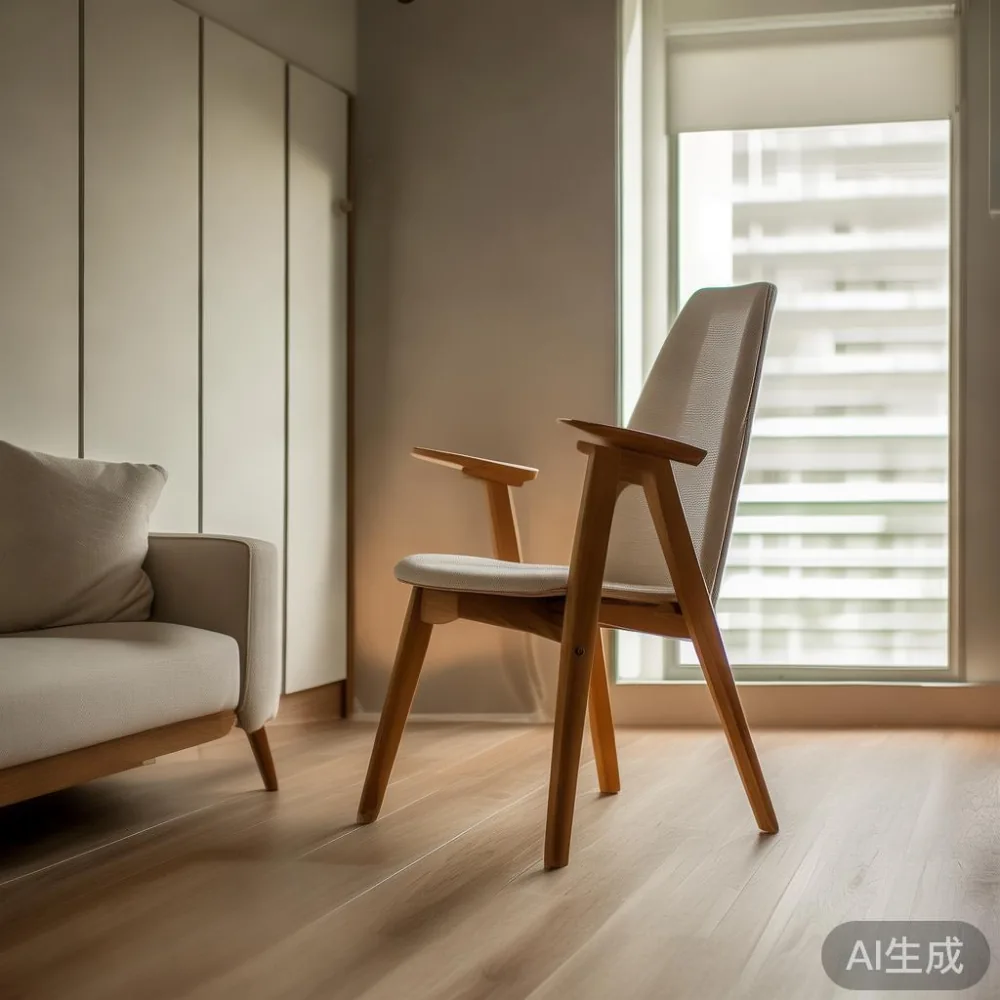
The wood species you choose changes the picture. Teak and white oak are the most dimensionally stable picks for the local market, with movement coefficients around 1.8% to 2.2% tangential and 0.9% to 1.1% radial. Rubberwood, which is common in entry-level pieces sold in local furniture stores along Sungei Kadut, moves closer to 3% tangentially, which is why budget tables warp faster. North American walnut sits in the middle at roughly 2.4% tangential movement. For an ergonomic chair with a curved timber backrest, those 2% to 3% numbers translate into a visible gap at the joints if the wood was kiln-dried below 8% MC before being shipped to a 28 °C, 80% RH Singapore room.
How does HDB layout make humidity problems worse?
Three HDB-specific factors stack the deck against timber furniture. First, ventilation. Older HDB blocks in Bedok and Toa Payoh were designed with cross-ventilation in mind, but many owners have replaced original louvred windows with sealed aluminium frames, which traps moisture. Second, floor plan. About 65% of 4-room HDB flats in Punggol are under 92 sqm, so a 220 cm wardrobe sits roughly 10 cm from the air-conditioning vent and 25 cm from the bathroom door. Every shower pushes 600 ml to 800 ml of water vapour into the air, and a closed bedroom door does almost nothing to stop it from migrating. Third, floor level. Units above the 12th floor get about 15% more airflow than ground-floor flats, so ground-floor furniture dries faster after a humid spell, while higher floors stay damp for longer stretches.
Private condos with floor-to-box window sealing can be worse because the air-conditioning runs almost continuously. The room humidity drops to 45% to 55% under the split unit, but the corners of the wardrobe, where air does not circulate, can still sit at 68% to 72% RH. The result is uneven moisture content inside the same board, which is the number one cause of cupping on dining tables and side panels on wardrobes.
Will my dining table or wardrobe actually crack in Singapore?
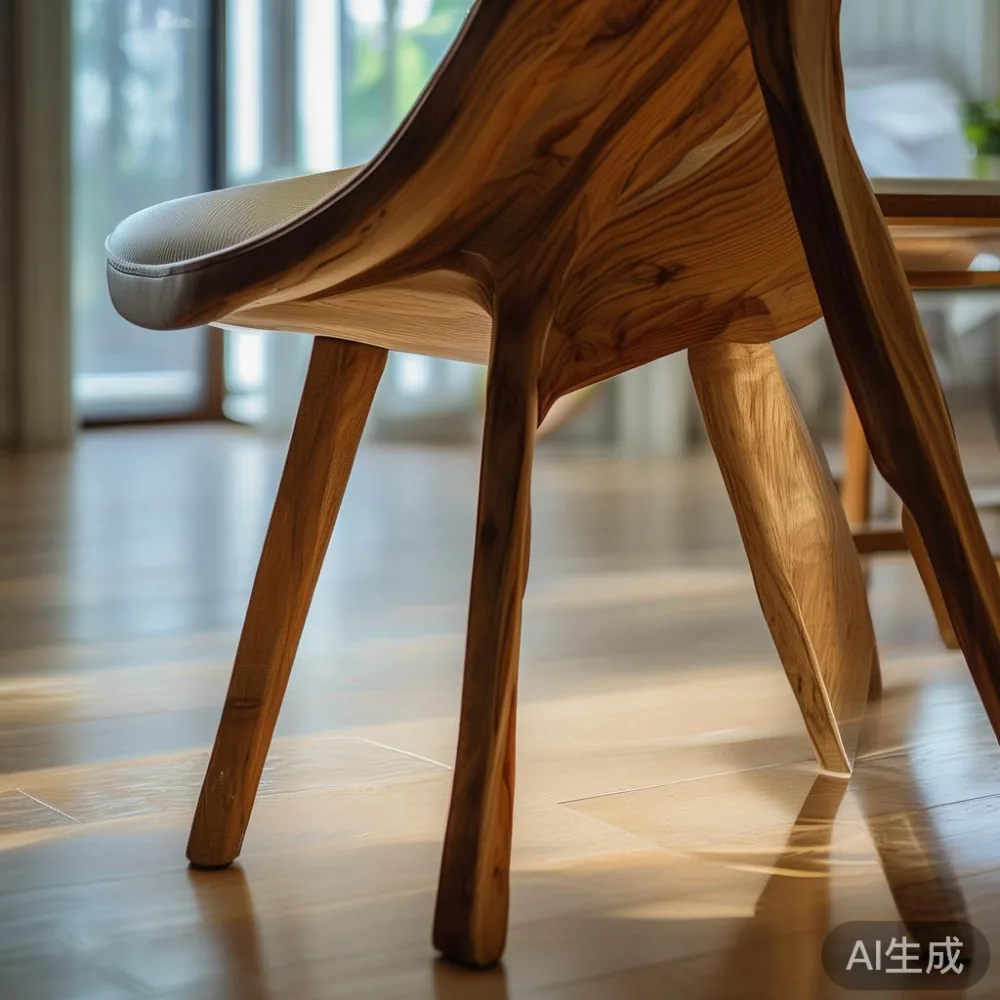
Short answer: not usually, if the piece is built for export-grade humidity. Long answer: kiln-dried solid wood that has been conditioned to 10% to 12% MC before assembly will absorb moisture slowly enough that the worst you should see is hairline checks under 1 mm wide on the end grain, plus the seasonal cupping I mentioned earlier. Painted MDF or plywood cores behave differently: a 25 mm MDF panel in a wardrobe door can swell by 0.8% to 1.2% across its width in the first humid month, which is roughly 2 mm on a 200 cm panel. That is enough to make the hinges bind and the door refuse to close.
Last month I visited a friend's resale condo near Punggol Point, where she had a 2-metre white oak dining table from a Foshan factory supplier. The table had been acclimatised in her dining room for 14 days before finishing, and 18 months later the top was flat to within 1 mm over the full 2-metre length. Her neighbour had bought a similar-priced table from a different brand and skipped the acclimatisation step; the neighbour's table had a 6 mm bow across the centre within six months. Same wood species, same climate, different outcome. The lesson is that the kiln-dry schedule at the factory matters more than the species label on the brochure.
Which pieces are worth the solid wood premium, and which are not?
For the local market, I treat solid wood as worth the premium for dining tables, bed frames, and ergonomic chairs with visible timber frames, because those pieces take the most physical stress and benefit most from the rigidity. For wardrobes, I recommend a hybrid: solid wood face frame and door fronts, with plywood or moisture-resistant (MDF) for the side panels and shelves. That hybrid build keeps the 220 cm carcass square while the visible surfaces age gracefully.
For nightstands and side tables, the calculus changes. A 50 cm-wide nightstand in a Tampines HDB bedroom usually sits directly above the air-conditioning return, where humidity swings are widest. Solid wood here is more about looks than performance; the wood will move, but on a small surface the movement is hardly visible. Marble tables and stone-topped side tables are popular in this category for exactly that reason: the stone does not move at all.
What is the right budget for light-luxury solid wood in Singapore?
For a Singapore buyer looking at under 2000 light luxury furniture options for a full three-bedroom package, the realistic split in 2024 SGD looks like this: dining table SGD 1,200 to SGD 1,800, bed frame SGD 900 to SGD 1,400, four-door wardrobe SGD 1,800 to SGD 2,500, and a pair of nightstands around SGD 400 to SGD 600. That puts a coherent French light luxury or American light luxury package at roughly SGD 4,500 to SGD 6,500 before GST. Add 9% GST and you are looking at SGD 4,900 to SGD 7,100 all-in. Post-modern light luxury pieces with marble table accents and brushed brass hardware tend to sit at the top of that range.
One useful comparison: an American sofa vs Modern sofa in the same 2.4-metre length. American sofas in this tier run about SGD 2,800 to SGD 4,200, while Modern sofas from the same Foshan factory supply chain run SGD 1,600 to SGD 2,800. If you are comparing sets rather than single pieces, a Modern sofa combined with a solid wood dining set usually delivers more wood content per dollar than a matching American sofa and loveseat package.
How do I get a 2.2-metre wardrobe through a HDB corridor and lift?
This is the question I get asked most often, and the answer matters more than people realise. Older HDB blocks in Bedok and Marine Parade have cargo lifts about 1.5 m wide by 2.1 m deep, with door openings around 0.9 m wide. Newer Punggol BTO blocks have wider lifts, typically 1.8 m wide by 2.4 m deep, with 1.2 m door openings. A 2.2-metre-tall wardrobe will not fit flat in the older cargo lift; it has to be tilted, which means the wardrobe must be designed to ship in two halves with a field-assembly step on site.
MIDHILL ships most wardrobes taller than 2 metres in two bolted halves, and the field-assembly is included in the delivery fee. Corridor access is the next constraint. HDB corridor widths run about 1.2 m to 1.5 m, and any turn at the stairwell corner needs at least 2.4 m of clearance for a 0.6 m-deep wardrobe to pivot through. The delivery teams I have watched work in Tampines HDB blocks usually plan for a 90-minute window from lift arrival to the wardrobe standing in the bedroom, and that includes removing the doors for safe transit.
What should I ask the showroom before I pay the deposit?
Five questions, in this order. (1) What is the kiln-dried moisture content of the timber, and what tolerance does the factory allow? Look for 8% to 12% MC and a tolerance under 2 percentage points. (2) Is the piece built with breadboard ends or floating planks on the tabletop? Breadboard ends control seasonal movement far better on dining tables wider than 90 cm. (3) What is the joinery on the chair or ergonomic chair frame: mortise and tenon, dowel, or pocket screws? Mortise and tenon is the only joinery I trust for a chair that will see daily use. (4) How is the piece packed for the sea voyage from the Foshan factory to Singapore, and how long is the acclimatisation window once it lands? A responsible supplier in pre-monsoon months should recommend at least 14 days of acclimatisation in your home before any finishing. (5) What is the warranty on structural joints, and is refinishing included? A 10-year structural warranty with lifetime refinishing is a fair benchmark in this category.
On refinishing, MIDHILL has offered lifetime refinishing on its export pieces for years, and in my experience the turnaround from Singapore to the Foshan factory workshop and back is about 90 to 120 days, including sea freight. That is a useful number to keep in mind if you are buying a piece you want to keep for 15 to 20 years.
Do I need a dehumidifier for solid wood furniture?
You do not strictly need one, but a small dehumidifier set to 55% RH will cut seasonal wood movement by roughly a third. In a 12 sqm HDB bedroom, a 12-litre dehumidifier running 8 hours a night uses about 1.4 kWh, which works out to around SGD 0.25 per night at the current 2024 electricity tariff of SGD 0.28 per kWh. Over a 90-day humid stretch that is roughly SGD 22, a small price compared to refinishing a cupped tabletop.
For living areas, an air-conditioner running in dry mode is usually enough. The trick is to leave a 5 cm to 10 cm gap behind wardrobes and beds so air can circulate. Furniture jammed against an external wall will trap moisture and develop surface mould within two humid seasons, even if the wood itself is stable.
Is there a 2026 model worth waiting for?
Showrooms I have spoken with in the last month are pointing buyers toward the best Modern sofa for 2026, with deeper seats (62 cm to 66 cm), lower backrests (78 cm to 82 cm), and removable performance-fabric covers. For buyers comparing a French provincial for hotel-style interiors against a Modern sofa for 2026 in the same room, the deciding factor in Singapore is almost always fabric weight and washability, not frame style. A French provincial for hotel look with a fabric that cannot be wiped clean will not survive three humid seasons in a ground-floor HDB.
For buyers scanning listings for sale Minimalist furniture, the same logic applies. Minimalist pieces show every scratch and every seasonal gap, so the underlying timber quality matters more than on an ornately carved French provincial. Ask to see the underside of the tabletop and the inside of the wardrobe before you commit.
How do I choose a French wardrobe without overpaying for the name?
If you are working out how to choose French wardrobe pieces for a Singapore resale flat, focus on three details. First, carcass material: a plywood or moisture-resistant (MDF) carcass with a solid wood face frame will outlast a fully solid wood carcass in a humid bedroom. Second, hardware: soft-close hinges rated for 100,000 cycles and full-extension drawer slides are worth the SGD 80 to SGD 150 premium. Third, finish: a sprayed matte lacquer seals the wood far better than a hand-applied oil finish in this climate. Hand-rubbed oils look beautiful in a Paris showroom, but in a Tampines bedroom they need a fresh coat every 9 to 12 months.
Practical budget for a 2.4-metre, four-door French-style wardrobe with internal drawers and adjustable shelves: SGD 2,800 to SGD 3,800 before GST from a direct-from-Foshan-factory supplier, versus SGD 4,500 to SGD 6,500 for the same look at a Singapore retail showroom. The price gap is mostly margin and rental cost, not wood quality.
Delivery, GST, and what actually happens on the day
Delivery timelines from a Foshan factory to a Singapore warehouse run 18 to 24 days by sea, plus 3 to 5 days for customs clearance and last-mile delivery. Free shipping usually kicks in above a single-order threshold, often around SGD 480 in this category. Document order put a 14-day return window in writing before paying the deposit; the supplier's policy on re-stocking fees matters more than the headline return promise.
On delivery day, plan for a two-person crew and a 60-minute to 120-minute window for a single wardrobe or bed frame. For a full three-piece package, budget three to four hours. Most suppliers will remove packing material at no charge, but confirm whether disposal of the wooden crate is included; the crates are heavy enough to require a separate disposal trip if not.
Final thoughts on keeping timber happy in Singapore
Solid wood furniture in Singapore is not a set-and-forget purchase, but it is also not the high-maintenance commitment many buyers fear. The combination of kiln-dried timber from a responsible Foshan factory, two weeks of acclimatisation before any finishing, a dehumidifier set to 55% RH, and a 10 cm airflow gap behind every large piece will deliver a dining table, bed frame, wardrobe, and ergonomic chair that look good in year one and look even better in year ten. MIDHILL has been shipping pieces through this route for the better part of two decades, and the pieces that survive Singapore's climate best are the ones built for export markets first. With the right spec sheet in hand, the humid months stop being a threat and become just another season.