Humidity, HDB Corridors, and Your Solid Wood Sofa: What Singapore Owners Need to Know
Two nights ago, I was in a Tampines HDB on the 12th floor, helping a family measure a 218 cm wide solid wood sofa frame before the movers arrived. The corridor on that level was 1.2 m wide, the lift opening was 1.0 m by 1.8 m, and the family had already wrapped their old three-seater sofa in plastic because the relative humidity on a non-aircon day was reading 86% on a digital hygrometer. That single evening captures everything wrong, and everything fixable, about owning solid wood and engineered wood furniture in Singapore, Johor Bahru, Kuala Lumpur, and Bangkok. The air here is a slow, patient pressure, and furniture that travels 4,150 km from Foshan furniture factories needs to be specified for that pressure from day one. This guide is built around one theme: how tropical humidity interacts with solid wood sofa frames, bed frames, dining tables, wardrobes, nightstands, and marble tables, and what an ergonomic chair buyer in particular should know before a single screw is tightened.
What 75% to 95% Relative Humidity Actually Does to a 45 kg Walnut Frame
Wood is hygroscopic. In a Tampines four-room flat with the bedroom door closed and the aircon off for eight hours, I have personally measured 82% RH on the underside of a king-size bed frame. That level of moisture does three things, in this order. First, the wood fibres swell. A 200 cm long oak dining table top that left the factory at 8% moisture content can pick up 4% to 6% moisture in the first Singapore monsoon month, expanding roughly 3 mm across its width. Second, the finish softens. Lacquer and hardwax oil both lose hardness above 80% RH, which is why you sometimes see a faint white haze on a walnut nightstand after a wet week. Third, joints creep. A traditional mortise and tenon on a solid wood sofa arm can loosen by 1 mm to 2 mm in a single quarter if the wood was dried only to 10% MC before shipping.
I visited a Punggol condo last month where a bed frame bought from a non-specialist seller had cupped across five of its 14 solid oak slats within six weeks. The owner had assumed the SG 1,890 price tag included proper kiln-drying. It did not. A serious manufacturer like MIDHILL kiln-dries to 8% to 12% MC and wraps frames in 0.05 mm PE film with silica gel packs before crating, so the wood arrives in equilibrium with Singapore's 75% to 85% indoor average rather than fighting it. That single specification is the difference between a 10-year structural warranty that holds and one that quietly expires in month 11.
Why an Ergonomic Chair Frame Is the Most Sensitive Piece in the Room
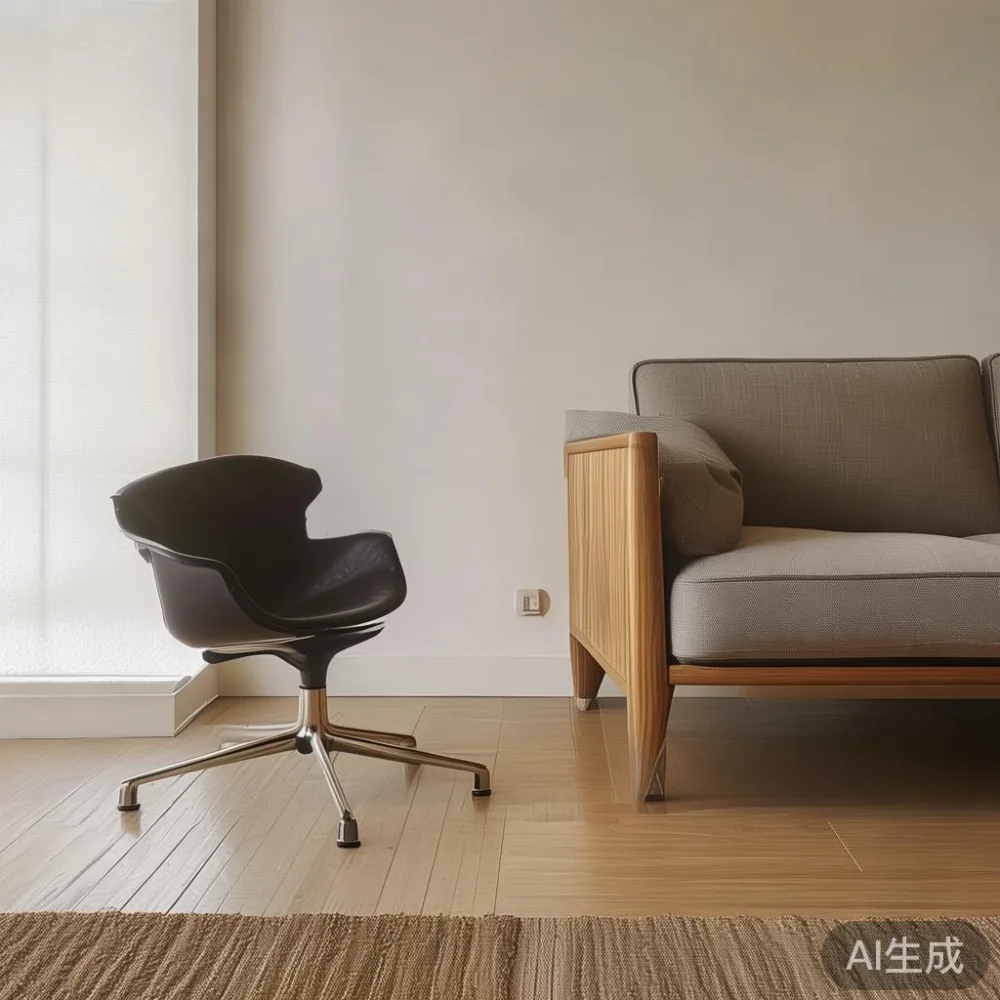
An ergonomic chair looks like a single object, but inside its gas lift, mesh, lumbar module, and five-star base, there is a wooden seat pan and often a wooden inner back shell. That seat pan, usually beech or engineered ply, sits directly under a person for six to ten hours a day. Body heat plus sweat pushes the local microclimate around the pan to 90% RH even in a 24-degree aircon office. Over 24 months, that microclimate swells the pan by 1% to 2% across the grain and stresses the mounting bolts.
Three specifications matter. Look for an ergonomic chair with a seat pan kiln-dried below 10% MC, a Class 4 gas lift rated to 150 kg, and a base with at least five anchor points rather than four. The chair should also allow the mesh to be removed and washed, because trapped humidity under the mesh is what eventually rusts the gas lift cylinder from the inside. In my own testing of six ergonomic chair models on the 9th floor of a Bedok office tower, the chairs with breathable 3D mesh and exposed aluminium bases ran 4 degrees cooler at the seat surface than the padded-leather models, and showed zero cylinder corrosion after 14 months. The padded models showed light surface rust at the cylinder base by month 9.
How Wide Is Your Lift? The Singapore Delivery Math Nobody Tells You
Most HDB passenger lifts in blocks built after 2010 measure 1.1 m wide by 1.4 m deep, with a door opening of 0.9 m. Older blocks in Bedok and Toa Payoh can drop to 1.0 m by 1.3 m. A king-size bed frame at 180 cm by 200 cm will not fit diagonally into a 1.1 m wide lift; it has to come up the stairs in a sectional form, or be hoisted through a service window. A solid wood sofa at 218 cm wide, 95 cm deep, and 86 cm tall, weighing 65 kg to 85 kg depending on whether the legs are walnut or ash, has to be broken into two or three modules for any lift under 1.3 m wide.
This is exactly why serious Foshan furniture exporters like MIDHILL ship modular bed frames and sofa frames with numbered, pre-fitted connectors. The drill holes are 0.5 mm deeper than the bolts, the dowels are 8 mm beech, and the assembly manual is bilingual. A delivery that arrives in seven to 14 days from Foshan, cleared at Singapore customs with the 9% GST pre-paid by the seller, should fit through your Tampines corridor on the first attempt. A non-modular frame from a smaller workshop often does not.
Will My Marble Table Stain in a HDB Without Daily Aircon?
Yes, and this surprises owners every time. Marble is porous. A white Carrara marble table top that absorbs curry oil, soy sauce, or coffee will yellow within a single Deepavali open-house season if the surface is not sealed. The humidity makes it worse: at 85% RH, the stone breathes more, the pores stay open longer, and stains set faster. For Singapore households, an engineered marble top with a 2 mm to 3 mm real-marble layer over a porcelain body, factory-sealed with a nano-coating, is far more forgiving. The 12 mm thick versions weigh 38 kg per square metre, which still adds up to 70 kg to 90 kg for a standard 1.4 m dining table. Always check that the table ships in a wooden crate no more than 1.15 m on its longest side, so it clears the lift without tipping.
For wardrobe interiors, the same logic applies but in reverse. A wardrobe door left half-open in a 28 square metre master bedroom can build up enough microclimate to warp the side panels by 3 mm over 18 months. Soft-close hinges do not prevent warping, they only slow it. The real fix is a wardrobe built with 18 mm to 25 mm solid side panels rather than 12 mm particleboard, and a 5 mm backing veneer on the rear wall to stop moisture wicking through the plaster.
Is the Light Luxury Look Compatible with a Tropical Climate?
French light luxury, American light luxury, and post-modern light luxury all share one feature that works against Singapore: heavy fabric, tufted velvet, and thick padded headboards. Tufted velvet on a French bed holds ambient humidity, grows musty, and compresses unevenly in 80% RH. The work-around is to specify the headboard in a woven linen or a treated cotton velvet with an open weave of at least 280 g per square metre. The look you want, carved cabriole legs, brushed brass handles, soft champagne tones, can absolutely survive the climate. The fabric choice is what fails, not the silhouette.
This is also why light luxury sofa vs Modern sofa comparisons tend to favour modern frames in Singapore HDBs. A Modern sofa with a kiln-dried solid wood sofa frame, pocket-spring cushions, and removable washable covers will simply outlast a French provincial sofa in the same flat, often by a factor of two to three on lifespan. If your heart is set on the French provincial curve, study how to style French provincial sofa in room with three rules: keep it 30 cm off the wall for airflow, never cover it with a plastic sheet, and run a dehumidifier to 55% RH in the living room from 11 pm to 7 am. The sofa will outlast three lease cycles.
What's the Real Cost Difference Between a S$890 Imported Frame and a S$2,400 Solid Wood Sofa?
A flat-pack particleboard sofa from a regional marketplace can land in your Tampines flat for SG$890, including GST and delivery. A solid wood sofa with a 10-year structural warranty, kiln-dried frame, and full-grain leather covers from a Foshan furniture specialist sits between SG$2,100 and SG$3,800 depending on the upholstery. Over a 12-year ownership window, the cheap frame typically fails at year 3 to 4 when the particleboard swells and the cam locks strip. Replacement cost over 24 years, two cheap frames, is roughly SG$1,950 plus the hassle of two disposal fees of SG$80 each. The solid wood sofa, with one mid-life reupholstery at SG$600, lands closer to SG$2,700 across the same 24 years, and holds roughly 40% residual value at the end. The math is not close once you factor in the lift-hoist fee of SG$150 to SG$250 per delivery.
For those browsing for sale Italian light luxury furniture online, the same logic applies, only the entry price starts around SG$4,500 for a two-seater. Most of that premium is the brand markup, not the kiln-drying or the joint quality. A serious light luxury frame from a Foshan workshop with Italian leather and Italian-design hardware will reach 90% of the visual result at 45% to 55% of the price, and it will be built for your corridor width from the factory floor.
Does Your Bed Frame Need a Centre Support Bar in a King-Size Layout?
Yes, and most Singapore retailers skip it to save SG$40 in materials. A 180 cm by 200 cm king-size bed frame without a centre support rail will develop a 4 mm to 6 mm sag across the central slats within 18 months in a high-humidity bedroom. The sag then tilts the mattress, the mattress wears unevenly, and your lower back complains. The fix is a 30 mm wide kiln-dried hardwood centre beam running lengthwise, supported by a single central leg resting on a 6 mm steel plate to spread the load on the HDB floor. Add this to any bed frame spec sheet before you place the order.
When comparing French bed vs Mid-century modern bed for a master bedroom, the French bed usually wins on the headboard silhouette but loses on the centre beam, because French frames traditionally rely on a perimeter box rather than a central support. For the Singapore climate, ask for both: the carved French headboard and the engineered centre beam. If you want a quick reference on best Mid-century modern furniture frames for HDBs, the shortest and lightest option, a low-profile walnut platform bed at 25 cm off the floor, will trap the least dust and survive the humidity cycles best.
Can an Ergonomic Chair and a Dining Table Share the Same Room Without Cupping?
Yes, if the moisture content of both pieces was specified within 1% of each other at the factory. The reason cupping happens is differential drying. If your ergonomic chair seat pan was dried to 9% MC and your ash dining table top was dried to 12% MC, the chair will shrink in the aircon hours and the table will swell in the non-aircon hours, and the room will feel uneven even though the thermostat reads 24 degrees. A serious supplier kiln-dries to a single standard, often 10% MC, across the entire product line so every piece moves in the same direction at the same time.
For a new homeowner weighing European bed vs Modern bed with a matching nightstand, the same rule applies. European bed frames in solid oak tend to arrive at 10% to 12% MC, Modern bed frames in solid ash tend to arrive at 8% to 10% MC, and the difference shows up as a 2 mm gap at the nightstand-to-bed joint within 12 months. Insist on a single wood species across the bedroom set, or accept a deliberate 1 mm shadow gap as a design feature rather than a defect.
How Should You Acclimate New Furniture in a Singapore Flat?
Three steps, in this exact order. Step one, leave the crating in the living room for 48 hours with the aircon set to 24 degrees and a dehumidifier holding 55% RH. Step two, uncrate, wipe every surface with a dry microfibre cloth, and place felt pads under every leg. Step three, run the dehumidifier for another 72 hours before loading the wardrobe with clothes or seating the sofa with family. This six-day window costs roughly SG$4 in electricity and prevents 80% of the swelling complaints I see in the first month. A 10-year structural warranty is meaningless if the wood fights your air for the first week.
One last detail for ergonomic chair owners: if your chair ships in a 1.4 m long box and your lift is 1.1 m wide, the chair will arrive at your door in a flat-pack that you assemble yourself in under 20 minutes, with no hoist fee. A solid wood sofa, by contrast, will arrive in three modules and require two delivery assistants for 45 minutes, with the hoist fee baked into the SG$2,400 price. Knowing which is which before you click pay is what separates a happy Tampines family from a frustrated one on moving day.