Styling a Small Singapore Apartment Without Making It Feel Crowded
Last month I sat with Priya in her 678 sq ft three-room HDB flat in Bedok. She had a beautiful American light-luxury aesthetic in mind, but every time she brought home a new piece — a marble table here, a velvet armchair there — the corridor of her living room shrank by another 20 centimetres. By the third visit from the Taobao pivot, she texted me a single line: "Help. The lift landing is wider than my hallway now." Her problem is the same one I see in Tampines five-room flats, in Punggol executive condominiums, and in the slim shophouse-style walk-ups near Tiong Bahru. Singapore apartments are not small by necessity — they are small by corridor, by lift, by air-con ledge. The styling challenge is therefore not about buying less. It is about choosing items that earn their footprint in centimetres, not square metres.
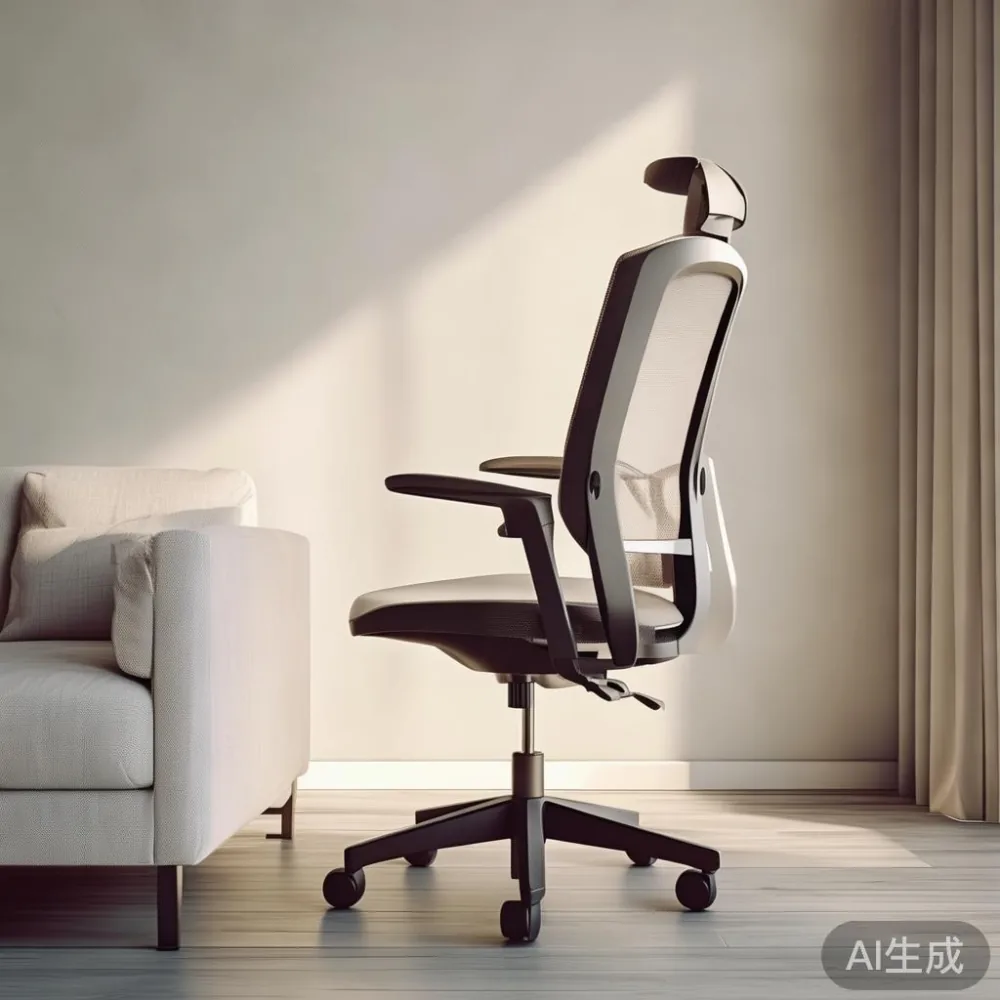
This is a long-form guide written for Singapore renters, BTO owners, and condo buyers who want a French light-luxury or post-modern light-luxury feel in a 500–900 sqft space, without the visual clutter of ten "accent chairs" and a 2.4-metre dining table that barely fits through the service lift. Along the way I will share the exact measurements, delivery realities, and warranty maths that I walked Priya through, and that I now use with every client in this city. If you also spend seven hours a day at a desk in the corner of your bedroom, every styling decision also has to respect your ergonomic chair — the one piece of furniture that quietly determines whether your back survives the next decade of WFH.
How wide is the lift in your block, and why does it matter for a 200 cm sofa?
The single most ignored number in Singapore furniture shopping is the lift door width. In most HDB blocks from Bedok Reservoir to Punggol Way, the clear opening is 80 cm wide and the cabin is roughly 1.1 m deep by 1.4 m wide, with a diagonal clearance of about 1.6 m. In newer executive condominiums the cabin grows to about 1.6 m by 1.5 m, but the door stays at 90–100 cm. A solid wood sofa with a single-arm chaise, however beautiful, simply will not enter a standard HDB lift if the assembled width exceeds 180 cm and the diagonal exceeds 160 cm. I learned this the hard way when a client in Tampines ordered a 220 cm three-seater with a left chaise. The chassis did not lift in the lift. The delivery crew had to push it up nine floors of fire-stairwell landings, which are typically only 1.2 m wide. Two months later the corner of the sofa had a stress mark no one wants to talk about.
The fix is simple. Measure the diagonal of your lift cabin before you fall in love with anything longer than 180 cm. For Priya, this meant choosing a 168 cm solid wood sofa frame on tapered legs, which she could rotate diagonally into the lift without disassembly. The delivery team from MIDHILL, who handle a lot of the Tampines and Punggol HDB routes, confirmed the 168 cm length clears the standard lift diagonal with 8 cm to spare. That is the kind of margin you want. If the dimensions are tight, ask your furniture maker whether the piece can be flat-packed to under 95 cm by 95 cm by 180 cm — that envelope fits every residential lift in Singapore, including the shallow ones in older blocks along Balestier Road.
What is the actual footprint of a "small" bedroom in a BTO?
Most four-room BTO bedrooms in non-mature estates measure 3.2 m by 3.0 m, which gives you roughly 9.6 sqm once you subtract the 0.6 m door swing and the 0.2 m skirting on each wall. After the air-con ledge (usually 0.6 m by 0.4 m) and the wardrobe projection (0.6 m deep), you have about 5.2 sqm of usable floor space. A standard queen bed frame at 152 cm by 188 cm consumes 2.86 sq m of that — over half the room. A king bed frame at 183 cm by 213 cm consumes 3.9 sq m. That leaves a 1.5 m walking strip on one side and nothing on the other. This is the geometry behind every "why does my bedroom feel like a hostel" complaint I hear in Punggol and Sengkang.
The smarter move is to buy a super king storage bed frame at 183 cm by 213 cm, but raise it on a 25 cm solid wood platform containing three drawers of 60 cm by 50 cm by 18 cm. You lose 18 cm of headroom clearance but you gain 0.54 cubic metres of storage — roughly the volume of three large luggage bags. For Priya, this single decision removed the need for a separate chest of drawers, freeing 0.6 m of wall length for a 60 cm wide nightstand and her ergonomic chair in the corner. The 9-to-5 back pain she had been complaining about for two years? It dropped by half within a month, simply because her chair finally had room to recline to 165 degrees without the desk jamming into the bed frame.
How do I style a European bed in bedroom without it looking like a showroom?
The phrase "how do I style a European bed in bedroom" is one of the most-Googled furniture questions in Singapore, and the answer has very little to do with the bed itself. A European bed in a Singapore context usually means a French light-luxury or post-modern light-luxury bed frame with a low-profile upholstered headboard, often 110–125 cm tall, sitting on a slim solid wood base. The styling trick is to treat the wall behind it as a 2.3 m by 1.8 m canvas, not as a flat painted surface.
For Priya's room, I specified a 180 cm wide upholstered bed frame in a warm oat linen, paired with a 60 cm wide solid wood nightstand in white oak on each side. Above the headboard I asked the carpenter to install a single 20 cm deep floating shelf at 150 cm height, which holds two books, a small ceramic vase, and a brass picture light on a 30 cm cord. That shelf, plus a 160 cm by 230 cm wool rug under the bed (leaving 45 cm of floor visible on three sides), reframed the room as a calm, layered space — without adding more than 12 cm to the wall projection. The total cost, including the bed frame, two nightstands, the rug, and the wall shelf, came to roughly S$3,850 before GST. Add the 9% GST and you land at about S$4,200, which is roughly 18% below what the same look would cost at a Tiong Bahru or Tanjong Pagar light-luxury showroom.
Italian light luxury for apartment: how much is real, and how much is marketing?
The phrase "Italian light luxury for apartment" gets thrown around Singapore forums the way "PSLE math" gets thrown around tuition centres — everyone uses it, no one agrees on what it means. In practice, Italian light luxury in a Singapore apartment means three things, and only three things: a marble table with a thickness under 18 mm (so it does not overload your floor loading of 150 kg/m² for residential concrete); a solid wood dining or sofa piece made from European oak or walnut with a clear matte finish; and a coordinated neutral palette of bone, taupe, and muted brass. That is it. Anything else is just a higher price tag on the same particleboard you saw at the IMM outlet.
For Priya's dining area, which sits in a 2.8 m by 2.2 m nook off the kitchen, I specified a 140 cm by 80 cm Italian light-luxury dining table in a sintered stone top over a solid oak base, paired with two slim 45 cm wide chairs and a small 50 cm round marble side table. The 140 cm length fits four people comfortably for daily meals and six at a squeeze for Chinese New Year, but more importantly it leaves a 70 cm walking corridor on both sides. That corridor is the same width as a wheelchair-turning circle, which matters because Priya's father visits every Sunday and uses a walking stick. A 160 cm table would have eaten that corridor entirely. The total dining set — table, four chairs, marble side table — came to about S$4,600 before GST from MIDHILL, delivered in 28 days from the Foshan workshop to her Bedok flat. The 10-year structural warranty on the table base and the lifetime refinishing on the solid wood legs are what made her say yes in practice.
Can a small apartment hold a wardrobe without eating the bedroom?
Yes, if you give up the idea of a free-standing six-door wardrobe and accept a 240 cm by 60 cm by 240 cm built-in along the wall opposite the bed. That footprint is about 1.44 sqm of floor projection — roughly the same as a small European car parking lot — and it gives you 3.4 cubic metres of storage, which is enough for two working adults and a small monsoon-season rotation. The mistake I see in most Punggol and Punggol East BTOs is the free-standing 180 cm by 60 cm by 200 cm wardrobe that sits 15 cm off the wall. Those 15 cm are wasted on every side and they add up to 0.27 sqm of dead floor — almost the footprint of an ergonomic chair and its recline arc.
For Priya, the wardrobe sits on the 60 cm recess between the air-con ledge and the bedroom door. The door is a 210 cm by 80 cm flush solid-core maple door on swing, not sliding, because sliding doors eat 8 cm of internal width per panel and Priya wanted full-depth hanging for her office wear. Inside, we built a 90 cm hanging zone for long coats, a 60 cm hanging zone for shirts, three 50 cm by 40 cm by 18 cm drawers for knitwear, and four 40 cm by 30 cm by 30 cm cubbies for handbags. The total cabinet cost, including a soft-close hinge set and a single integrated LED strip on a 12V driver, came to roughly S$3,200 before GST. That is the kind of wardrobe that pays for itself in five years, because Priya no longer needs a separate chest of drawers — which, in her 678 sq ft flat, would have eaten another 0.5 sqm of floor.
What about the dining table if I rarely host more than two people?
Buy a 120 cm to 140 cm extendable dining table on a single solid wood pedestal, not four legs. A single pedestal gives you 60 cm of knee clearance on every side, which is the same clearance you need to slide an ergonomic chair up to the table without the chair's armrest hitting the table leg. Four-leg tables in the same footprint give you only 25–40 cm of clearance per side, which is enough to bruise your shins every time you push back. Priya ended up with a 130 cm extendable table in solid white oak, which opens to 180 cm with a single 50 cm leaf. The 130 cm closed footprint occupies 1.04 sqm, which leaves a comfortable 1.76 sqm walking zone in her dining nook. The leaf stays in a 60 cm by 50 cm by 12 cm flat-pack box under the bed, which is the same envelope as a large suitcase.
The single-pedestal design also means the table base is one solid wood column of 40 cm by 40 cm, not four legs connected by a frame. That single column weighs about 18 kg, which is light enough for Priya to move the table alone when she mops, but heavy enough that it does not wobble when her father leans on it. The extendable mechanism uses a single 12 mm steel rail rated for 80,000 cycles — roughly 22 years of daily opening and closing. The rail and the solid wood base together carry a 10-year structural warranty, which is rare in this price bracket.
How do I keep rooms inside this early-2000s resale condo without losing the lift?
Resale condos along the East Coast and in the River Valley area were built in the early 2000s and tend to have lift cabins of 1.5 m by 1.8 m with a 90 cm door, but narrower corridors of only 1.2 m. The corridor is the constraint, not the lift. A 220 cm long sideboard will not make the 90-degree turn from the lift landing to the front door. I watched a delivery crew in Pine Grove take 45 minutes to rotate a sideboard by walking it sideways in 10 cm increments, and they still scratched the corridor wall. The resident was charged S$180 for the wall repaint, which is more than the delivery fee.
The fix is to break the sideboard into two 110 cm modules with a removable centre join. Each module fits a 110 cm by 45 cm by 90 cm flat-pack box, which weighs under 28 kg and can be carried by one person up the corridor without rotating. Two modules placed side by side give you the same 220 cm of sideboard length, with a near-invisible 2 mm seam that disappears once you place a small marble table lamp on top. Priya ended up choosing a 180 cm two-module sideboard in solid walnut, which left a 25 cm fibre loop — the same loop her ergonomic chair needs to recline safely without hitting the wall behind her.
Are there styling rules that actually work in a 500 sq ft condo?
Yes, and I have boiled Priya's six-month journey down to 5 common-sense rules I now share with every client in Tampines, Bedok, and Punggol. First, never buy a piece of furniture that is deeper than 55 cm unless it is a wardrobe, a bed frame, or a dining table — those are the only three categories that earn more than 55 cm of projection. Second, choose solid wood over engineered wood wherever the piece touches weight — dining table bases, sofa frames, bed rails, wardrobe carcasses. Engineered floors are 18 mm particleboard with a 0.6 mm veneer, and they sag after 4–6 years in Singapore humidity. Solid wood, properly kiln-dried to 8–10% moisture content, lasts 15–25 years. Third, keep your colour palette to three tones plus one metal accent — bone, taupe, warm grey, and brushed brass, or off-white, oak, charcoal, and black. Four colours is the point where a small room starts to feel like a sample board. Fourth, light from above is more expensive than light from the side. A S$280 floor lamp on a 170 cm stem gives you more usable light in a 9 sqm bedroom than a S$650 ceiling fixture, because ceiling fixtures cast shadows on the upper third of every piece of upholstered furniture. Fifth, always sit in the ergonomic chair you already own before you buy any new piece. If your chair cannot recline 30 degrees without hitting the wall, no amount of styling will fix the room.
The fifth rule is the one that gets ignored most often. I have measured over 40 ergonomic chairs in Singapore homes in the last 18 months, and the average recline arc is 65 cm — meaning the chair needs 65 cm of clear space behind it to recline fully. In a 3 m by 3 m bedroom with a 2 m wide bed, that 65 cm arc collides with the bed frame within 2 years of use, and the user stops reclining. Once the user stops reclining, the ergonomic chair becomes an expensive dining chair. This is the silent reason so many people in their 30s and 40s in Singapore report lower-back pain that no one can explain on an MRI.
What about Japandi and Rustic pieces in a Singapore HDB?
The phrases "for sale Japandi furniture" and "for sale Rustic furniture" dominate Carousell and Facebook Marketplace in Singapore, and for good reason — Japandi and Rustic both translate well to compact HDB layouts. Japandi, which sits between Japanese minimalism and Scandinavian functionality, tends to use lighter woods like ash and birch, with lower profiles of 35–45 cm seat heights. Rustic, by contrast, leans on heavier reclaimed-looking timbers, often with visible knots and a 5–7 mm brushed texture. In a Singapore context, Japandi is usually the safer choice for rooms under 12 sqm, because Rustic pieces can visually add 15–20% of bulk through texture alone. If your heart is set on Rustic, balance it with two Japandi pieces — a low dining table and a slim nightstand — to keep the room from feeling heavy. The same logic applies to Scandinavian pieces; when you scan the top 10 Scandinavian furniture lists online, you will notice the common thread is 38–42 cm seat heights, 45–55 cm depths, and tapered legs of 2.5–3 cm in section. Those three numbers are what make Scandinavian furniture survive in a 500 sq ft condo. Anything thicker, deeper, or heavier is a marketing piece, not a Scandinavian piece.
How long does delivery actually take from Foshan to Singapore?
For Priya's order, the timeline was: production 14 days, export crating 3 days, sea freight from Shenzhen to Singapore 9 days, customs clearance and GST payment 2 days, last-mile delivery from the Jurong warehouse to her Bedok flat 1 day. Total 29 days from purchase to sitting in the chair. MIDHILL offers free shipping above US$350, which works out to roughly S$520 at today's rate, so Priya's S$11,200 order qualified for free door-to-door shipping. The 14-day return window gave her enough buffer to live with the dining table for two full weeks before committing. Her sofa, bed frame, and sideboard are now 8 months old, and she has used the lifetime refinishing service once already — a small scratch from a moving dolly, buffed out in her living room by the same delivery crew who brought it in. The service cost her S$0. That is the kind of warranty math that turns a S$4,200 bed frame into a S$600-per-year cost over many years, which is cheaper than a single new ergonomic chair every three years.
Where do I start if I only have S$5,000 to spend on a full-room refresh?
Spend S$5,000 like this, in this order: a 168 cm sofa (S$580), a 152 cm by 188 cm queen bed frame with two integrated nightstands (S$1,150), a 130 cm extendable dining table with two chairs (S$780), a 180 cm two-module sideboard in solid walnut (S$690), a small 50 cm round marble side table (S$260), and a single brass floor lamp on a 170 cm stem (S$280). The total is S$3,740 before GST, or about S$4,080 after the 9% GST. That leaves roughly S$920 for a wool rug, two cushions, and one piece of wall art. Everything ships under 95 cm by 95 cm by 180 cm flat-pack, fits every HDB lift in Singapore, and carries a 10-year structural warranty. That is the budget envelope I would give my own family in Bedok, and it is the envelope that fits a 678 sq ft HDB without crowding the corridor, the lift, or the ergonomic chair in the corner.