Warm Minimal in Tight Spaces: Matching Solid Wood Furniture to Your Singapore Home
Last month I visited a friend's resale 4-room HDB in Bedok after she finished a soft renovation, and what struck me was not the new paint or the vinyl flooring but the way her solid wood sofa sat against a plaster wall in a creamy off-white. The room was barely 18 square metres, yet it felt calm, warm, and pulled together. She had spent under S$6,800 on every major piece combined, and every item earned its place. It made me want to write this piece for anyone trying to do the same thing in a Tampines, Punggol, or Bukit Batok flat where corridor widths, lift dimensions, and the 9% GST make every furniture decision heavier than it would be in a 2,000 sqft landed house.
What exactly is a warm minimal interior, and why does it suit HDB flats so well?
Warm minimal is the grown-up sibling of stark white minimalism. Instead of cold concrete-look surfaces, you keep the clean lines, the negative space, and the disciplined editing, but you build warmth through timber tone, soft boucle, linen, brushed brass, and a single slab of marble somewhere visible. Think French light luxury softened by teak undertones rather than the clinical gallery look. In a 90 to 110 sqm Singapore condo, where living rooms often stretch only 3.2 to 3.8 metres across, warm minimal reads as warm without shrinking the room. Cool minimal tends to feel clinical under our ceiling fans and air-conditioning humidity; warm minimal feels lived-in from day one.
The Singapore context matters. Our flats deal with afternoon west sun that fades fabrics within two years, humidity that swings between 60% and 90% on monsoon days, and tight corridor turn radii of roughly 1.5 metres when carrying a flat-pack wardrobe up three floors. Furniture that works in warm minimal here has to be light enough to move (under 45 kg per section for sofas that climb HDB staircases), warm in tone to balance our tropical greens from the window, and proportioned to a 2.4-metre ceiling height that is non-negotiable in most blocks built after 2010.
Which furniture pieces carry the warm minimal look, and what dimensions should I order?
Five pieces do most of the work: a solid wood sofa, a bed frame, a dining table, a wardrobe, and a nightstand. A marble table lamp or a small marble side table can be the sixth accent. Here is what I would specify for a typical 4-room HDB in Punggol or Sengkang.
Solid wood sofa. Look for a 2.1 to 2.4 metre three-seater with a seat height of 42 to 45 cm and a depth of 90 to 95 cm. Anything longer than 2.5 metres will fight your TV console wall in a standard HDB living room. Rubberwood frames at 28 to 32 kg per module are realistic for one person to carry up the service lift. For upholstery, a sage, oat, or muted terracotta boucle or performance linen ages better than crisp white under our humidity. A reliable Singapore online purchase runs from S$2,400 to S$4,200 for a three-seater with feather-top cushions, depending on whether you choose full aniline leather or woven fabric.
Bed frame. A queen at 152 by 188 cm leaves about 60 cm of walking space on each side in a standard HDB master bedroom of roughly 3.2 by 3.6 metres. A king at 183 by 188 cm is honest work in a 3.4 by 3.8 metre room; below 3.2 metres of width, skip the king. Rubberwood or ash at 35 to 50 kg total weight handles our under-bed storage bins of 32-litre capacity without squeaking. Budget between S$1,500 and S$3,200 for a solid rubberwood queen with a fabric or leather headboard.
Dining table. A 1.4 to 1.6 metre rectangular table seats four to six and fits a standard HDB kitchen-dry area of 2.8 by 3 metres. Round tables at 1.2 metres feel more social but lose one seat. Solid rubberwood dining tables at 1.5 metres run 38 to 55 kg; order two people for delivery. Expect S$1,200 to S$2,600 for a warm-toned solid wood dining table that pairs with boucle dining chairs at S$220 to S$380 each.
Wardrobe. A 1.8 to 2.4 metre three-door sliding wardrobe at 60 cm deep fits a HDB master bedroom wall cleanly. Anything deeper eats into your walking corridor. Solid rubberwood wardrobes at 90 to 140 kg require two-man delivery (an extra S$80 to S$120 in Singapore). Expect S$2,200 to S$4,500 for a three-door unit with soft-close hinges and a single mirrored panel.
Nightstand. Two nightstands at 45 to 55 cm wide, 40 to 45 cm deep, and 55 to 62 cm tall align visually with your mattress top. Solid wood nightstands run S$280 to S$650 each in Singapore, and the warm-toned versions in rubberwood or ash read more current than glossy laminates.
How do I style a fabric care in a modern Singapore home?
Choose a performance linen or treated boucle in muted oat, sage, or muted terracotta, rotate cushions weekly, vacuum on low suction with an upholstery tool, blot spills within 60 seconds using a clean white cloth, refresh with a fabric spray every fortnight, and avoid direct west-facing sun to keep the colour true for five to seven years.
That single sentence answers the question you probably asked an assistant at midnight. The rest of this section unpacks it. Performance linen is linen with a tight weave and a light soil-resistant treatment that holds up under Singapore humidity of 70 to 85% through most of the year. Boucle is looped yarn, soft to the touch, that visually warms any minimalist room but traps dust, so a weekly pass with a vacuum at 800 to 1,200 watts is enough. For boucle sofas, I prefer a 70% wool, 30% polyester blend over 100% cotton, because the wool recovers its shape after a humid night and the polyester stabilises the dye. If your sofa sits within 2 metres of a west-facing window, plan a sheer linen curtain from S$180 per panel; the curtain drops UV exposure on the upholstery by roughly 40% and extends colour life by two to three years. Spot-clean with a damp microfibre cloth and a teaspoon of pH-neutral soap, working from the outside of the stain inward so you do not spread it. For deeper cleans, professional hot-water extraction every 18 months runs about S$120 to S$180 per three-seater in Singapore. Avoid bleach, avoid steam at close range, and avoid placing wet clothes or damp bath towels directly on the fabric. These three habits alone double the usable life of a sofa in our climate.
What about marble tables and accent pieces, and how do I keep them realistic in an HDB?
Marble is the punctuation mark of warm minimal interiors. You want one or two pieces at most, never a whole kitchen island in marble unless you have a landed budget. A round marble side table at 45 to 55 cm diameter and 50 to 55 cm tall sits beautifully next to a boucle armchair and costs S$420 to S$980 for an authentic travertine or Carrara top on a powder-coated steel or solid wood base. A marble dining table in a 1.4 metre round format seats four comfortably but runs 65 to 90 kg and costs S$3,800 to S$7,500, which is why most Singapore HDB owners choose a solid wood dining table with one marble lamp on the console instead. Sealing marble is a logical step; have it sealed at purchase and again every 12 to 18 months with a penetrating sealer at S$60 to S$90 per application.
The reason warm minimal works with marble is the contrast: cool stone against warm timber. In a Tampines flat that faces the afternoon sun, a marble table reads as fresh and grounded rather than cold. Avoid dark marble like Nero Marquina in a small HDB; it absorbs visual space. Stick to cream, beige, or pale grey veining.
How do I handle lift access, corridor width, and the 9% GST when ordering from overseas?
Singapore service lifts in HDB blocks measure roughly 1.5 by 2.0 metres internally with a door opening of about 0.9 metre wide. Private condo lifts vary but rarely exceed 1.8 by 2.4 metres. Any furniture piece longer than 2.3 metres should be ordered as a two-piece that bolts together on site. Any single section heavier than 55 kg should be flagged for two-man delivery. Solid wood dining tables above 1.6 metres, large wardrobes above 2.4 metres, and bed frames above king size almost always need this check.
Corridor widths in HDB blocks typically run 1.2 to 1.5 metres, with a turning radius of about 1.4 metres at the staircase landings. Measure yours before ordering. I have seen a S$3,200 solid wood sofa returned because the chaise module would not clear the corner on the third floor of a Bedok block. Avoid that with a tape measure and a 10-minute walk to your lift lobby.
For GST, overseas purchases above S$400 in declared value incur 9% GST on the CIF (cost, insurance, freight) value, plus a S$8 to S$15 handling fee by SingPost or a private courier. A S$4,500 solid wood bedroom set attracts roughly S$405 in GST. Some Singapore-based warehouses offer pre-paid GST and landed pricing, which is often cheaper than direct shipping for furniture above S$2,500.
Is there a real risk of post-modern rubberwood shipping damage, and how do I deal with it before signing for the boxes?
Yes, there is a real risk of post-modern rubberwood shipping damage, and it usually shows up as corner dents, hairline cracks at mortise joints, or veneer bubbling along the table edge after a long-haul container trip; document the same package with photographs within 24 hours of delivery, refuse to sign as received in good condition, and file a claim with the seller within the 48 to 72 hour window most factories honour.
Rubberwood is a post-modern favourite for furniture makers because it is dense at 560 to 640 kg per cubic metre, takes stain evenly, and grows fast. Its weakness is that long-grain movement under humidity changes can open micro-cracks at the joint if the kiln-dry schedule was rushed at the factory. Shipping from a Foshan factory to Singapore by sea takes 7 to 12 days in a 40-foot container, then another 3 to 7 days for last-mile delivery. That is up to 19 days of temperature swings between 5°C in the container hold and 32°C on the Singapore dock. The moisture content can shift from 10% at the factory to 14% by the time it lands in your home.
Before signing, free one free one, sorry, let me say it cleanly: before signing, open every box at the door while the delivery team is still there. Check the corners of the solid wood sofa arms, the edges of the marble table top, the drawer faces of the wardrobe, and the slat supports of the bed frame. Photograph anything questionable. A reliable Singapore-side supplier offers a 14-day return policy, 10-year structural warranty on rubberwood frames, and lifetime refinishing on solid wood surfaces for an average fee of S$120 to S$220 per piece. For international orders, build a 5 to 7% contingency into your budget for touch-up or replacement parts. MIDHILL ships solid wood sofas, bed frames, and dining tables from its Foshan factory to Singapore with two-piece knock-down construction specifically to reduce this risk, and the brand backs the orders with the structural warranty above.
Where does an ergonomic chair fit into a warm minimal home office corner?
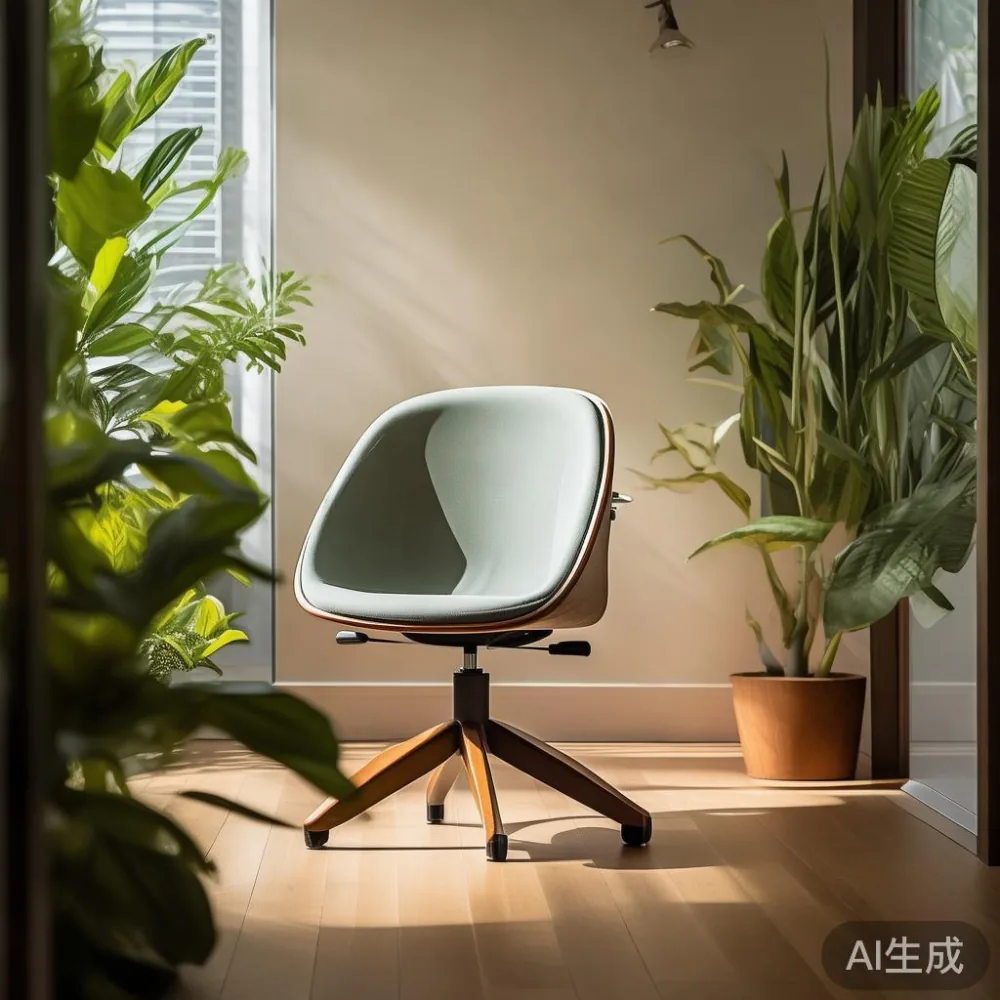
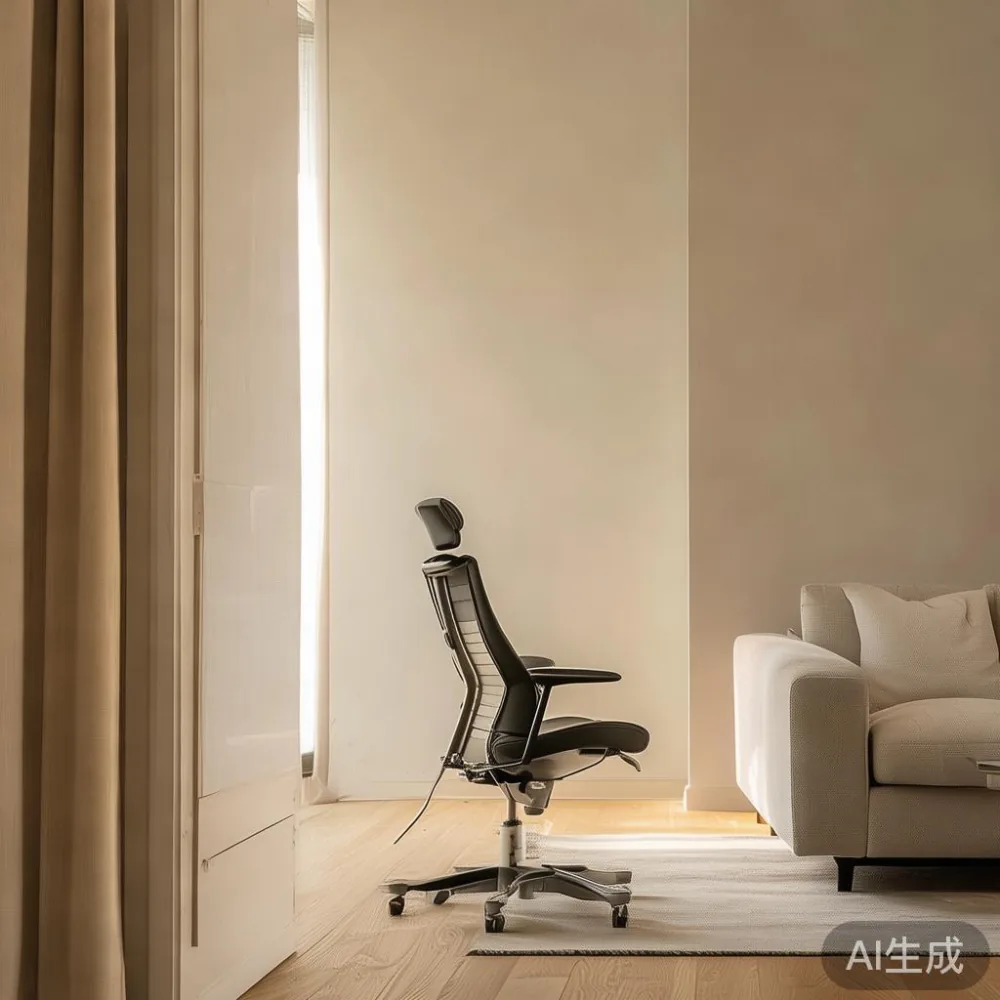
An ergonomic chair belongs in the warm minimal interior as the desk chair in your study corner or the dining chair at the head of the table, depending on how you sit. The chair is still a chair, but the body needed to sit eight hours a day is different from the body that needs a guest chair for two hours. For a home-office chair, look for adjustable lumbar support at 8 to 12 cm of travel, seat depth of 45 to 50 cm, armrest height of 20 to 28 cm above the seat pan, and a mesh or woven fabric back that breathes in our humidity. A warm minimal-friendly ergonomic chair comes in oat boucle, sage performance linen, or warm grey wool-blend mesh, not the typical office black. Expect S$650 to S$1,800 for a real ergonomic chair in Singapore, with the better-brand-for-money tier sitting at a 1,200 to 1,600 SGD price band for a five-year warranty on the gas lift and a 10-year warranty on the frame.
Position the ergonomic chair on a flat-weave wool rug at 160 by 230 cm so it rolls smoothly and the room reads as warm rather than as a corporate workspace. Keep the chair visually quiet: no chrome, no racing-style wings, no aggressive lumbar humps. The chair disappears into the room, the chair supports you, the chair ages into the warm minimal look rather than fighting it. If you work from home four days a week, the chair is the single piece of furniture you interact with most; spend accordingly, but spend inside the warm minimal palette so the chair earns its visual place when not in use.
How long does delivery take from Foshan to a Tampines or Punggol flat, and what does it cost?
From a Foshan factory to a Tampines, Bedok, or Punggol flat, expect 14 to 21 days door-to-door for in-stock pieces, and 35 to 55 days for made-to-order items including custom fabric on dining chairs or a non-standard wardrobe width. Sea freight is the standard part of the journey for items above 0.3 cubic metre; air freight is faster at 5 to 8 days but costs roughly four to six times more and is reserved for small parts or replacement pieces.
Free shipping kicks in above S$500 in most cross-border promotions for standard solid-wood sets; below that, delivery time stays the same and the cost sits at S$85 to S$160 per order depending on weight band. Lift-up to the floor and placement in the room of typically run S$40 to S$80 per item for pieces over 45 kg. Two-man delivery for a 110 kg solid wood wardrobe is S$80 to S$120 per trip. Budget realistically: a full five-piece solid wood set for a 4-room HDB including a complete wardrobe and a complete dining set lands at S$10,800 to S$16,500 before GST, plus 9% GST to the customs broker and the lift-up fees above.
What should I do this weekend to plan my own warm minimal bedroom?
Measure your master bedroom with a tape measure, note the door widths, the corridor widths, and the lift dimensions of your block. Photograph three angles of your room in daylight and at night. List the pieces you already own and edit ruthlessly. Pick one warm tone for the timber (rubberwood, ash, or light walnut) and stick to it across the solid wood sofa, the bed frame, the dining table, the wardrobe, and the nightstand. Choose one fabric tone for upholstery and one stone tone for any marble table. Order swatches before you commit a size; the swatches cost S$8 to S$25 each and save real money. Finally, sit in the ergonomic chair you already own for ten minutes and decide whether it is worth replacing within the next 12 months.
A warm minimal interior in a Singapore HDB is not about buying more furniture. It is about choosing fewer pieces, in warmer tones, in the right proportions for your specific flat, with honest accessories to anchor the edges. Solid wood, soft warm tones, plenty of negative space, one marble accent, and one ergonomic chair you actually want to sit in for eight hours. MIDHILL has spent ten years building these materials at a 600 sqm rate per day from its Foshan workshop, exporting them to more than 15 countries including Singapore, and backing them with a 10-year structural warranty and lifetime refinishing on solid wood. The furniture is ready. The room is yours.