Ergonomic Chair Pairings for a Warm Minimal Interior in Singapore HDBs
I spent a quiet Sunday last month walking through the Tampines Mall furniture wing, and what struck me was how many ergonomic chairs were parked in front of glossy dining sets that had zero relationship to the chair beside them. Buyers were clearly thinking about back support and lumbar curves, yet the room itself was screaming warm minimal — clay walls, white oak console, a low-slung marble table under the window. The mismatch wasn't about price. It was about texture and proportion. After fifteen years of fitting out HDB flats and condos across Bedok, Punggol and the East Coast, I've learned that an ergonomic chair only does its job when it visually agrees with the rest of the room. A chair that saves your spine but fights your living room is a chair that gets shoved into a corner within six months.
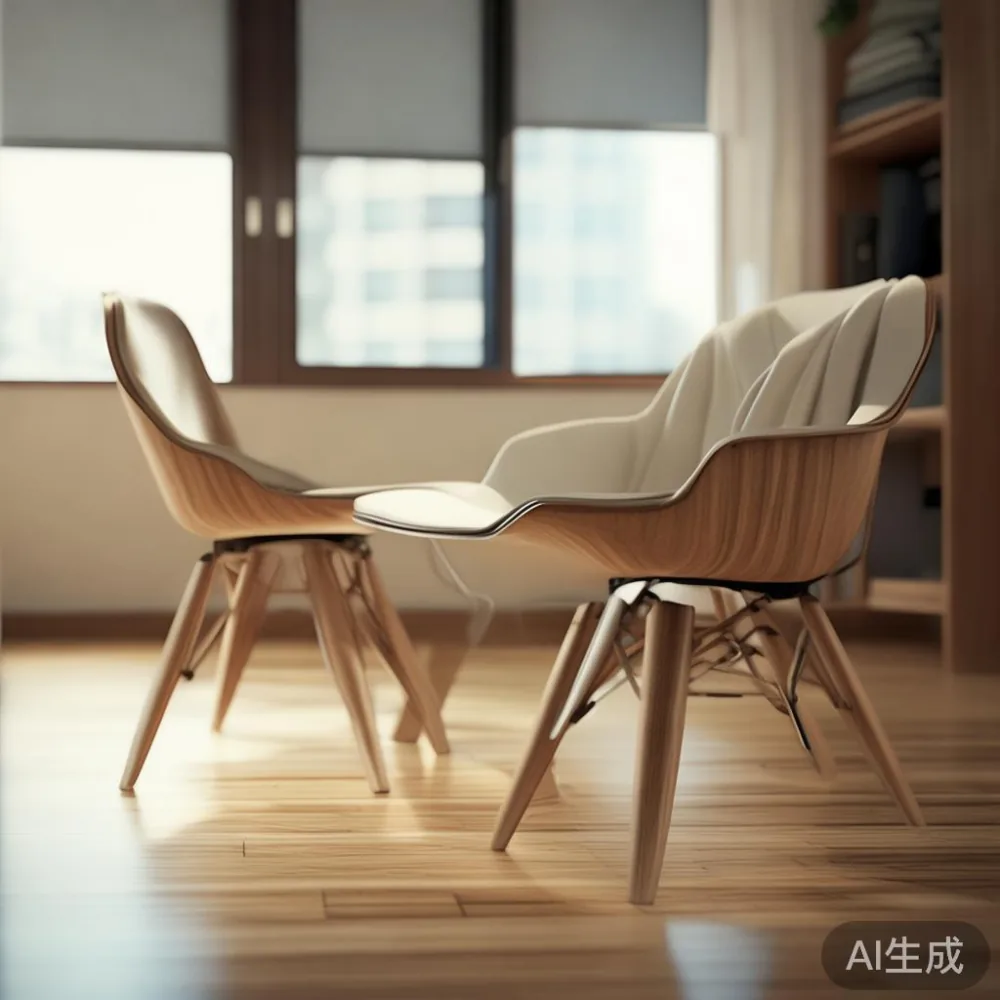
Warm minimalism in Singapore isn't a strict style. It's a temperature reading. You start with warm whites — think 1 coat of Dulux Banana Split 50YY, roughly 65 SGD per 4-litre tin — then layer in light oak or ash solid wood furniture, and you hold the whole thing together with one or two objects that have genuine weight to them. A floor lamp in brushed brass. A marble table with grey veining. An ergonomic chair with a tan saddle leather seat. The palette is short, the materials are honest, and nothing on the floor is louder than the person sitting on it. The job of this article is to walk you, piece by piece, through how to assemble that kind of room without losing either comfort or restraint, while keeping in mind that the lift to your block is probably 1.2 m wide and the corridor outside your door is 1.5 m, which is going to govern every delivery you book.
What does warm minimal actually mean for a 4-room HDB in Tampines?
Warm minimal is Scandinavian restraint wearing a linen shirt. It borrows the negative space and the soft daylight of Nordic design, then warms it up with honey-toned solid wood, brushed brass hardware and one or two stone moments. I helped a colleague style her resale flat in Bedok last year, and the transformation was almost entirely colour-driven — we kept her original wardrobe, her dining table, and her existing bed frame, and re-keyed the scheme around a warm white (Nippon Vinilex 9102, around 58 SGD per 4-litre) and a brushed brass handle set. The room looked completely different, and she spent under 1,400 SGD.
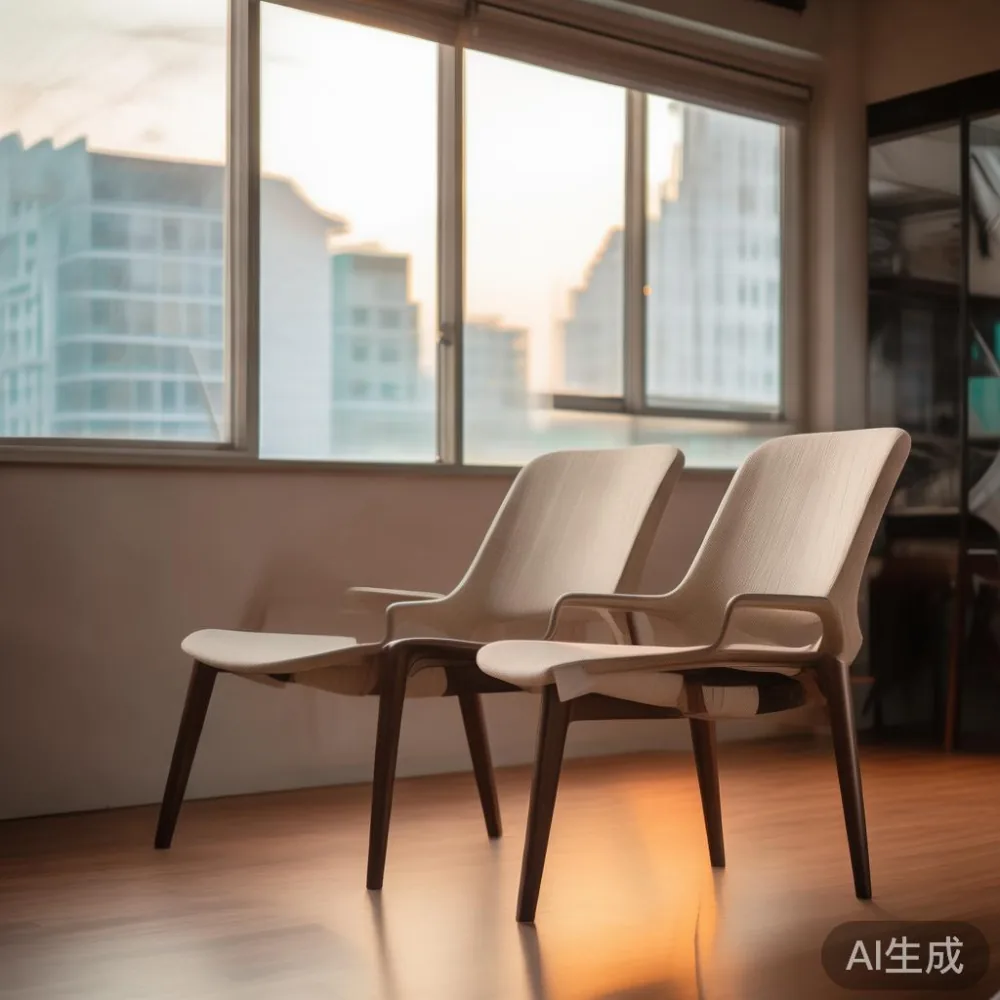
The materials are the anchors: solid oak or ash for the sofa frame, the bed frame, the dining table and the nightstand; brushed brass or blackened steel for hardware; boucle, linen or tan saddle leather for upholstery; and one marble table or marble tray as the visual punctuation. Colours stay inside a 6-stop palette — warm white, cream, sand, light oak, soft taupe, charcoal. Anything beyond that risks turning warm minimal into something else. A pastel mint sofa is not warm minimal. A glossy black lacquer sideboard is not warm minimal. A neon acrylic chair is the opposite of warm minimal.
Which ergonomic chair actually suits warm minimal?
This is the question I get most often from buyers in Punggol and Sengkang, and the honest answer is that most ergonomic chairs don't. The category is dominated by matte black mesh, racing-red accents and chrome five-star bases — a look that belongs in a co-working space, not next to a warm oak bed frame. The ergonomic chair that suits warm minimal usually has at least four of these six qualities: a wood or wood-look backrest, a tan leather or boucle seat pad, a brushed metal base (not chrome), a quiet colour (oat, sand, cocoa, charcoal — no red), visible joinery, and a height range from roughly 46 cm to 56 cm so it tucks under a 75 cm desk. If your chair hits four of those, it will live happily in the room. If it hits two, it will look like office equipment wearing a linen jacket.
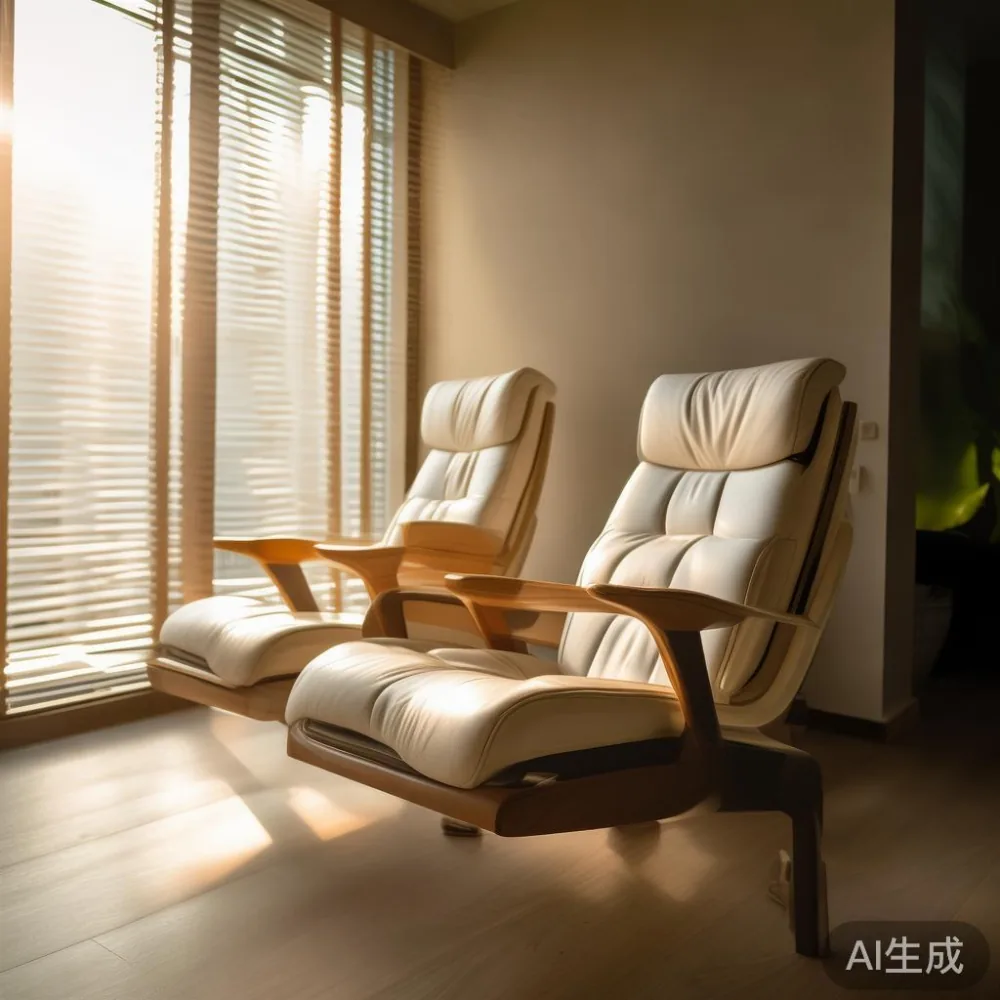
When you are comparing an American sofa vs Nordic sofa for the same room, the same logic applies — you want the chair to share a colour, a finish or a material with at least one other piece in the room, usually the dining table or the solid wood sofa. A walnut ergonomic chair will argue with an ash dining table. An oak ergonomic chair will agree with an oak dining table. The geometry also matters: a high-back ergonomic chair pairs better with a tall headboard on the bed frame, and a low-back ergonomic chair pairs better with a low side table and a low-profile nightstand. I keep returning to this rule — if a piece would look correct in a french sofa gallery photos layout, it will usually look correct in a warm minimal HDB. The proportions translate because the daylight is similar.
How do you build the rest of the warm minimal room?
You build it the same way you'd build a sentence — subject, verb, object. The subject is your largest piece, usually the solid wood sofa or the bed frame. The verb is the action of the room, which is rest or gathering. The object is the small detail that gives the room meaning, usually a marble table or a brass lamp. If you get those three in the right order, everything else is decoration.
For a 4-room HDB around 92 sqm, I'd suggest: a 2.4 m to 2.6 m solid wood sofa in cream boucle at roughly 2,800 to 3,800 SGD, a 1.8 m dining table in light oak at roughly 1,400 to 1,900 SGD, a queen-size bed frame in ash at roughly 1,200 to 1,600 SGD, two nightstands at around 280 to 380 SGD each, a 1.8 m wardrobe in light oak or ash at roughly 1,500 to 2,200 SGD, one marble table (a coffee table or a side table) at around 480 to 780 SGD, and one ergonomic chair at roughly 550 to 1,100 SGD. That puts the full room between roughly 8,000 and 12,000 SGD, before GST — and GST adds 9% from 1 January 2024 onward, so budget about 720 to 1,080 SGD more for the tax line alone.
Under 2,000 SGD, you can still build a Japandi-leaning warm minimal room, but you have to pick your battles. Skip the marble table for now and use a solid oak tray on a rattan base. Skip the brass handles and live with finger-pull edge grooves on the wardrobe. Pick one Japandi furniture hero piece — usually the dining table or the bed frame — and let everything else be quieter. If you're looking at under 2000 Japandi furniture sets from local makers likeMIDHILL — a Foshan-based atelier that exports to more than fifteen countries and offers a 10-year structural warranty and lifetime refinishing — you'll find that even entry pieces are built from solid ash and oak, not veneer over chipboard. That matters when you're running a humid HDB at 28°C and 80% relative humidity nine months a year, because MDF swells and solid wood simply breathes.
Is a light luxury bed worth the extra spend in a Singapore HDB?
This is the question I'd ask myself before spending on it. A French light luxury bed, an American light luxury bed and a European light luxury bed all live in the same price band — usually 2,800 to 5,500 SGD for a queen — but they behave differently in a warm minimal HDB. The French version tends toward carved headboards and linen upholstery in oatmeal or chalk. The American version tends toward deep tufting, dark walnut and brass nailheads. The European version tends toward low profiles, pale ash and soft-close drawers. In a small HDB bedroom of about 12 sqm, the European version almost always wins, because its silhouette stays below the ceiling line and lets the room breathe. The American version, with a 1.4 m tall headboard, can crush a low ceiling. If you're still weighing European light luxury bed vs modern bed options, the practical question isn't style — it's whether the headboard height works with your bedroom's proportions, and whether the slat frame can handle a 28 cm thick mattress without bowing.
For most HDB buyers I'd spend the extra on the bed frame and skip the matching ottoman, then put the savings into the ergonomic chair, because you sit in the chair for eight hours and you sleep in the bed for eight hours, but you look at the ottoman for eight seconds. A light luxury bed is worth it if you'll live with it for ten years. If you're a tenant on a two-year lease, buy a solid wood bed frame in ash at around 900 SGD instead and save the difference for the ergonomic chair and a marble coffee table.
How do you choose a European wardrobe that doesn't darken the room?
European wardrobes are usually 60 cm deep — same as a Singapore default — but they're typically 2.4 m tall rather than 2.2 m, which is the HDB standard. That extra 20 cm of height matters, because a warm minimal room wants to reach up before it reaches out. When you're working out how to choose European wardrobe sizing for your HDB, measure your ceiling height first, then subtract 15 cm to 20 cm for the top gap. If you have 2.6 m of ceiling, a 2.4 m wardrobe leaves you 20 cm of breathing space, which is correct. If you have only 2.55 m of ceiling — common in older BTOs in Punggol — you need a 2.35 m or a 2.4 m unit with a made-to-measure top filler.
Material-wise, an ash or light oak front will agree with the rest of a warm minimal room. A dark walnut front will fight it, unless you're going for an American light luxury direction rather than a French or European direction. Hardware should be brushed brass or recessed finger pulls — never chrome, and never high-gloss black, both of which belong to post-modern light luxury rather than warm minimal. The internal layout should give you at least 40 cm of hanging depth, two drawers per vertical bay, and one full-width top shelf. Most Foshan makers, including MIDHILL, will configure the inside for free when you order a 1.8 m or 2.0 m unit, which saves you about 200 to 350 SGD on internal fittings you'd otherwise buy from a third party.
How do you get delivery through a 1.2 m lift without damaging the marble?
This is the practical question most buyers forget until the truck is outside the block. A 4-door HDB lift is roughly 1.2 m wide by 1.5 m deep by 2.3 m tall. A queen-size bed frame in a flat-pack box is usually 2.1 m long, 45 cm wide and 20 cm tall — it fits diagonally if the lift is empty. A solid wood dining table at 1.8 m long will not fit flat; it has to go diagonally, and even then you'll lose 5 to 8 cm of clearance. A marble table at 1.2 m long is the tightest piece, because marble is 60 kg to 80 kg for a coffee table and cannot be tilted. Most Singapore furniture makers ship marble tables with a declared lift-clearance requirement, and if yours doesn't fit, you pay a stair-climb fee of around 120 to 220 SGD per floor.
Plan the room before you buy. Measure the lift door, the corridor turn, and the front door of the unit. A 2.4 m solid wood sofa in one piece will not fit a standard HDB door, which is roughly 0.9 m wide and 2.05 m tall, so order modular sofas that split into 1.2 m sections. Order the bed frame and the dining table in flat-pack — both fit through a 0.9 m door when flat-packed. Order the marble table last, and confirm with the maker that it disassembles into a top and a base, because a one-piece marble top will not clear a HDB door. Free shipping over US$350 applies to most Foshan makers shipping to Singapore, and typical sea freight from Shenzhen or Foshan to Singapore Tuas checkpoint runs 7 to 12 days, plus 3 to 5 days for last-mile delivery to Bedok, Tampines or Punggol. Plan a 14-day returns window around your renovation timeline so you have time to swap a wrong-sized piece.
How do you keep the room warm minimal after the children arrive?
Warm minimal and family life are not opposed — they just need a few rules. Stick to performance boucle on the sofa, because it resists stains and recovers its pile. Skip the cream linen sofa and order a sand-coloured performance weave instead. Keep the marble table but choose a honed finish, not a polished one, because honed marble hides etching from juice cups and crayon marks. Keep the ergonomic chair but pick a leather or vinyl seat pad, because fabric pads absorb spills. Add one rattan storage basket at 60 to 90 SGD for toys, and one solid wood toy chest at around 220 to 320 SGD. Keep the palette honest — six colours, no more. When something new enters the room, something else has to leave. That's the contract.
The discipline is what holds the style together, not the price tag. A 12,000 SGD room that obeys the six-colour rule will look calmer than a 35,000 SGD room that doesn't. A solid wood sofa in cream boucle at 3,200 SGD will outlast three leather sofas at the same price. An ergonomic chair with a 10-year warranty will outlast four ergonomic chairs at the same price. A light luxury bed in European ash at 3,800 SGD will outlast a particle-board bed at 1,200 SGD bought twice. Spend once, on the pieces you'll touch every day — the ergonomic chair, the bed frame, the dining table, the wardrobe, the solid wood sofa — and spend less on the pieces you'll only glance at. Browse the full collection and the technical specs at www.midhill.co before you order, and you'll have a much shorter list of regret to deal with two years in.